Software & Web Development

Data Science & Robotics Development

Calc LLC provide high quality services at very competitive rate

Early May 2026 U.S. Ag Weather Outlook and Field Guidance

Early May 2026 U.S. Ag Weather Outlook and Field Guidance

Early May U.S. ag weather remains variable: scattered, brief storms across Plains, Corn Belt, and Mid-South amid warm, humid South; mostly dry California and Desert Southwest; periodic light precip Pacific Northwest. Expect alternating fieldwork windows with breezy days; localized severe, flooding, and fire risks; monitor disease, irrigation, and heat stress.

Weather
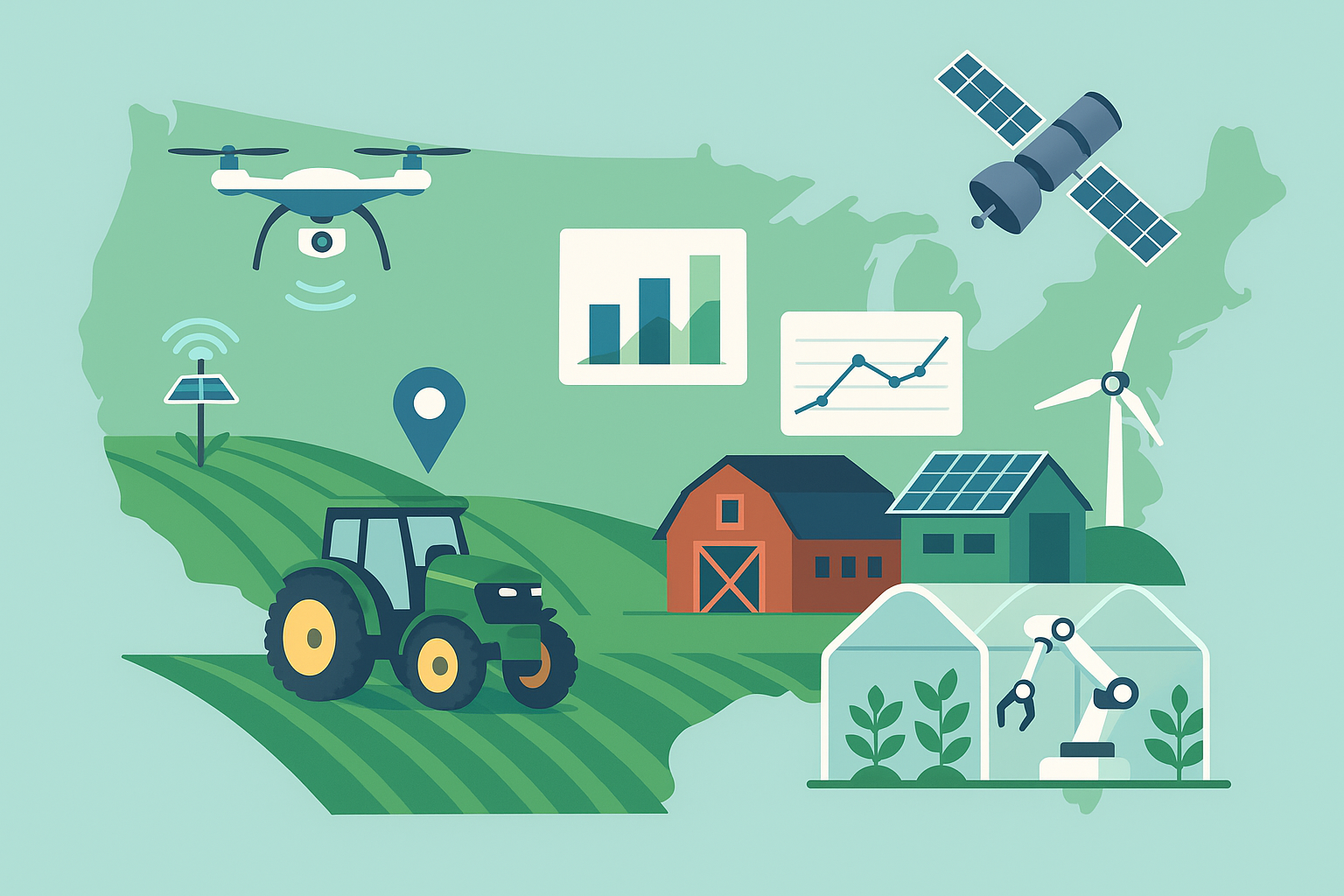
Cold Plasma Comes to the Farm: Cleaner Seeds, Safer Produce, and Nitrogen from Air

Cold plasma, a room-temperature ionized gas, offers farms residue-free seed priming and sanitization, produce disinfection, plasma-activated water, and on-site nitrate production from air. Benefits include reduced chemicals, water, and logistics; modular, renewable-ready hardware. Success depends on dose control, uniform exposure, energy efficiency, and validation, with smarter, integrated systems improving ROI.

Tech

Quiet Moves, Big Stakes: Incremental Budget and Rulemaking Steps Are Steering U.S. Agriculture This Week

U.S. ag policy saw positioning, not headlines, across budgets, USDA/EPA rules, biofuels credits, labor, water, and interstate standards. Stakeholders pressed for clarity on timelines, funding, and compliance. Expect incremental notices and guidance shaping planting, contracts, and investments; monitor pesticide/ESA, animal health, and trade risks as appropriations and rulemakings advance.

Politics
September 14: The Quiet Fulcrum of U.S. Agriculture

September 14: The Quiet Fulcrum of U.S. Agriculture

September 14 has repeatedly reshaped U.S. agriculture: Florence’s floods devastated Carolina farms (2018); a deadly cantaloupe-linked Listeria alert rewrote produce safety (2011); Roosevelt’s accession set irrigation and conservation in motion (1901); the Gregorian switch standardized planting records (1752); and OPEC’s founding redefined energy costs—underscoring resilience and systems-level risk management.

September 13’s Disasters: How One Date Keeps Reshaping American Farming

September 13’s Disasters: How One Date Keeps Reshaping American Farming

September 13 has repeatedly tested U.S. agriculture, from 2008’s Hurricane Ike to Colorado’s 2013 floods and California’s 2015 Valley Fire, with 2018 Florence preparations and 2020 smoke compounding. Mid-September shocks disrupted harvests, livestock, and infrastructure, spurring reliance on federal aid, insurance, hardening, irrigation upgrades, and faster regional coordination.

September 12: A Pivotal Date in U.S. Agriculture—from Borlaug’s Legacy to Floods and Market-Moving Reports

September 12: A Pivotal Date in U.S. Agriculture—from Borlaug’s Legacy to Floods and Market-Moving Reports

September 12 threads U.S. agriculture’s science, risk, and markets: remembering Norman Borlaug’s Green Revolution and World Food Prize; recalling 2013 Colorado floods that wrecked farms and irrigation; noting USDA September reports that sway prices and plans; and marking mid-September’s harvest pivot, conservation tasks, and risk management across diverse regions.

September 11’s Imprint on U.S. Agriculture: Security Shocks, Natural Disasters, and the Rise of Resilience

September 11’s Imprint on U.S. Agriculture: Security Shocks, Natural Disasters, and the Rise of Resilience

Across multiple September 11 anniversaries, shocks reshaped U.S. agriculture: 2001 security disruptions spawned modern food defense; 2013 Colorado floods battered crops and irrigation; 2017 Irma devastated Florida farming; 2020 wildfire smoke strained West Coast harvests. The throughline: resilient logistics, biosecurity, hardened infrastructure, trained networks, and risk programs sustain food systems.

September 10 at Hurricane Peak: From Donna to Irma, the Day U.S. Agriculture Is Tested

September 10 at Hurricane Peak: From Donna to Irma, the Day U.S. Agriculture Is Tested

September 10, the climatological peak of Atlantic hurricanes, has repeatedly reshaped U.S. agriculture—most notably via Florida landfalls by Donna (1960) and Irma (2017). Their wind and flood damage spurred huge losses, policy shifts (disaster aid, insurance), and enduring farm practices: pruning, windbreaks, drainage, hardened structures, power redundancy, and diversified harvests.

September 9: Turning Points in American Agriculture—Statehood, Strikes, Storms, and Smoke

September 9: Turning Points in American Agriculture—Statehood, Strikes, Storms, and Smoke

September 9 repeatedly marks turning points in U.S. agriculture: California’s 1850 statehood propelled irrigated specialty crops; the 1965 Delano strike galvanized farmworker rights; 2017 Hurricane Irma forced Florida into emergency resilience; and 2020’s wildfire smoke threatened grape quality—highlighting enduring battles over land, water, labor, risk, and adaptation.

Rails, Storms, Statutes, and Strikes: September 8’s Turning Points in American Agriculture

Rails, Storms, Statutes, and Strikes: September 8’s Turning Points in American Agriculture

On September 8, events reshaped U.S. agriculture: Northern Pacific railway integrated Plains markets, Galveston hurricane exposed coastal vulnerability, Defense Production Act imposed wartime supply controls, and the Delano grape strike advanced farmworker rights—showing how infrastructure, climate risk, security policy, and labor justice steer the food system.

Standards, Screens, and Shipping: September 7’s Quiet Power in U.S. Agriculture

Standards, Screens, and Shipping: September 7’s Quiet Power in U.S. Agriculture

On September 7, pivotal moments shaped U.S. agriculture: "Uncle Sam" meatpacking practices cemented standards; Farnsworth's 1927 TV breakthrough accelerated farm information flows; and the 1977 Panama Canal treaties stabilized grain logistics. Together they highlight enduring pillars: trustworthy standards, rapid information, reliable infrastructure, reflected in early September fieldwork and market timing.