Software & Web Development

Data Science & Robotics Development

Calc LLC provide high quality services at very competitive rate

Early May 2026 U.S. Ag Weather Outlook and Field Guidance

Early May 2026 U.S. Ag Weather Outlook and Field Guidance

Early May U.S. ag weather remains variable: scattered, brief storms across Plains, Corn Belt, and Mid-South amid warm, humid South; mostly dry California and Desert Southwest; periodic light precip Pacific Northwest. Expect alternating fieldwork windows with breezy days; localized severe, flooding, and fire risks; monitor disease, irrigation, and heat stress.

Weather
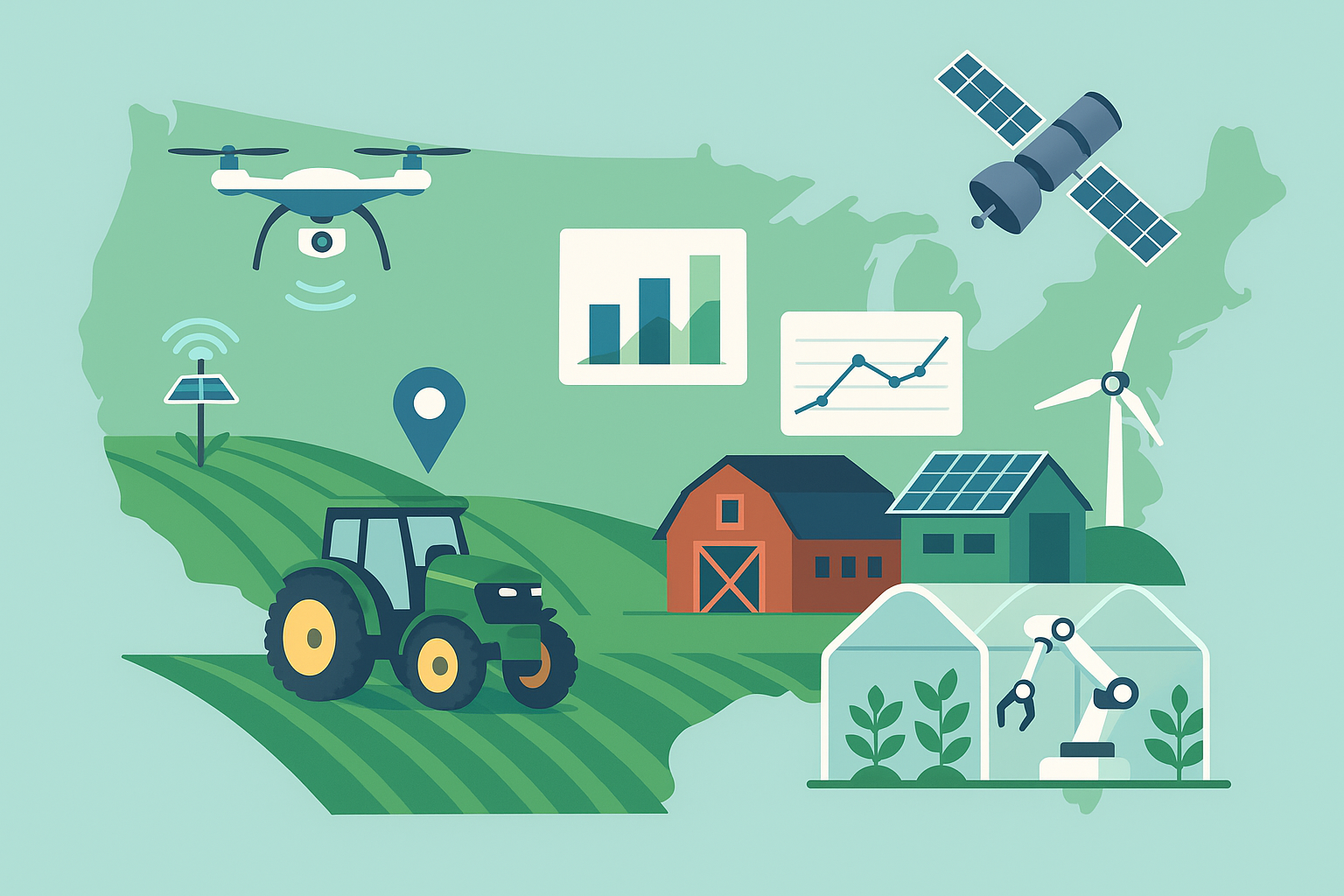
Cold Plasma Comes to the Farm: Cleaner Seeds, Safer Produce, and Nitrogen from Air

Cold plasma, a room-temperature ionized gas, offers farms residue-free seed priming and sanitization, produce disinfection, plasma-activated water, and on-site nitrate production from air. Benefits include reduced chemicals, water, and logistics; modular, renewable-ready hardware. Success depends on dose control, uniform exposure, energy efficiency, and validation, with smarter, integrated systems improving ROI.

Tech

Quiet Moves, Big Stakes: Incremental Budget and Rulemaking Steps Are Steering U.S. Agriculture This Week

U.S. ag policy saw positioning, not headlines, across budgets, USDA/EPA rules, biofuels credits, labor, water, and interstate standards. Stakeholders pressed for clarity on timelines, funding, and compliance. Expect incremental notices and guidance shaping planting, contracts, and investments; monitor pesticide/ESA, animal health, and trade risks as appropriations and rulemakings advance.

Politics
August 27: A Pivotal Date in American Agriculture

August 27: A Pivotal Date in American Agriculture

August 27 repeatedly shaped U.S. agriculture, from hurricanes Laura, Irene and Bonnie disrupting late-season harvests, to the 2018 U.S.–Mexico trade breakthrough and a 2015 WOTUS court pause. It also marks LBJ’s birth, Drake’s oil well, and Krakatoa’s distant effects—underscoring preparedness, stable trade, and policy’s everyday impact.

Storms, Suffrage, and the Seasonal Pulse: August 26 in U.S. Agriculture

Storms, Suffrage, and the Seasonal Pulse: August 26 in U.S. Agriculture

August 26 marks agriculture’s crossroads: Hurricane Andrew (1992) and Harvey (2017) exposed vulnerabilities from cane to cotton and spurred resilience: anchored storage, hardened infrastructure, insurance reforms, and emergency tools. The 19th Amendment’s certification broadened rural leadership. Late August remains a high-risk window, underscoring preparedness, layered risk management, and inclusive representation.

August 24 in U.S. Agriculture: Storms, Shocks, and Safeguards

August 24 in U.S. Agriculture: Storms, Shocks, and Safeguards

On August 24, U.S. agriculture has repeatedly hit turning points: 1992’s Hurricane Andrew devastated South Florida’s nurseries and tropical fruit sector, spurring insurance uptake and policy reforms; 1857’s Ohio Life failure triggered the Panic, collapsing grain prices and credit; 1912’s creation of the Alaska Territory enabled research and settlement that seeded today’s niche northern farming; and 2010’s massive Salmonella-linked egg recall tightened biosecurity and traceability. Together, these episodes highlight how weather, finance, governance, and food safety shape farm resilience.

On This Day in U.S. Agriculture: Andrew’s Landfall, the 1857 Panic, and the Patent Office Spared

On This Day in U.S. Agriculture: Andrew’s Landfall, the 1857 Panic, and the Patent Office Spared

On August 24, pivotal moments reshaped U.S. agriculture: in 1992, Hurricane Andrew ravaged South Florida’s nurseries, tropical fruit, and vegetables, spurring stronger structures, risk management, and insurance reforms; in 1857, the Ohio Life collapse triggered a panic that crushed grain prices and credit, tying farm fortunes to finance and trade; and in 1814, the Patent Office’s survival preserved agricultural innovation. Together, they underscore today’s priorities—climate resilience, financial preparedness, and sustained R&D—to protect production, markets, and labor across vulnerable specialty-crop and commodity regions.

August 24 in U.S. Agriculture: Hurricane Andrew, the Salad Bowl Strike, and the Napa Quake

August 24 in U.S. Agriculture: Hurricane Andrew, the Salad Bowl Strike, and the Napa Quake

On August 24, U.S. agriculture has faced pivotal shocks and shifts: Hurricane Andrew (1992) devastated South Florida’s nurseries and tropical fruit sector, prompting stronger building codes and risk management; the Salad Bowl strike (1970) ignited in Salinas, driving boycotts and reforms that culminated in California’s Agricultural Labor Relations Act; and the South Napa earthquake (2014) damaged winery infrastructure, spurring seismic upgrades and continuity planning. Together, these moments underscore resilience—hardening critical infrastructure, centering fair labor, and layering insurance, diversification, and contingency tools to navigate compounding climate and market risks.

Ag in History - Aug 14, 1935 — Social Security Act Signed: Farmworkers Left Out at First

Ag in History - Aug 14, 1935 — Social Security Act Signed: Farmworkers Left Out at First

On this day, President Franklin D. Roosevelt signed the Social Security Act, creating federal old-age benefits and a broader social insurance framework. But the original law excluded agricultural and domestic workers, leaving much of the U.S. farm labor force outside the new safety net. Coverage was later expanded—regularly employed farm and domestic workers began to be included in 1950, and remaining groups (including many farmworkers and self-employed farmers) were brought under the program in 1954.