Software & Web Development

Data Science & Robotics Development

Calc LLC provide high quality services at very competitive rate

Late‑Winter U.S. Ag Weather Outlook: National Summary, Regional Impacts, and 7‑Day Hazards

Late‑Winter U.S. Ag Weather Outlook: National Summary, Regional Impacts, and 7‑Day Hazards

Late-winter U.S. agriculture faces rapid swings: intermittent rain/snow, brisk post-frontal winds, and patchy frost from the Southeast to western valleys. Fieldwork windows are short and regional. Watch West Coast storm-track pulses, Gulf-front showers/storms, and Southern High Plains fire weather. Protect blooming crops and livestock; consult local NWS forecasts.

Weather

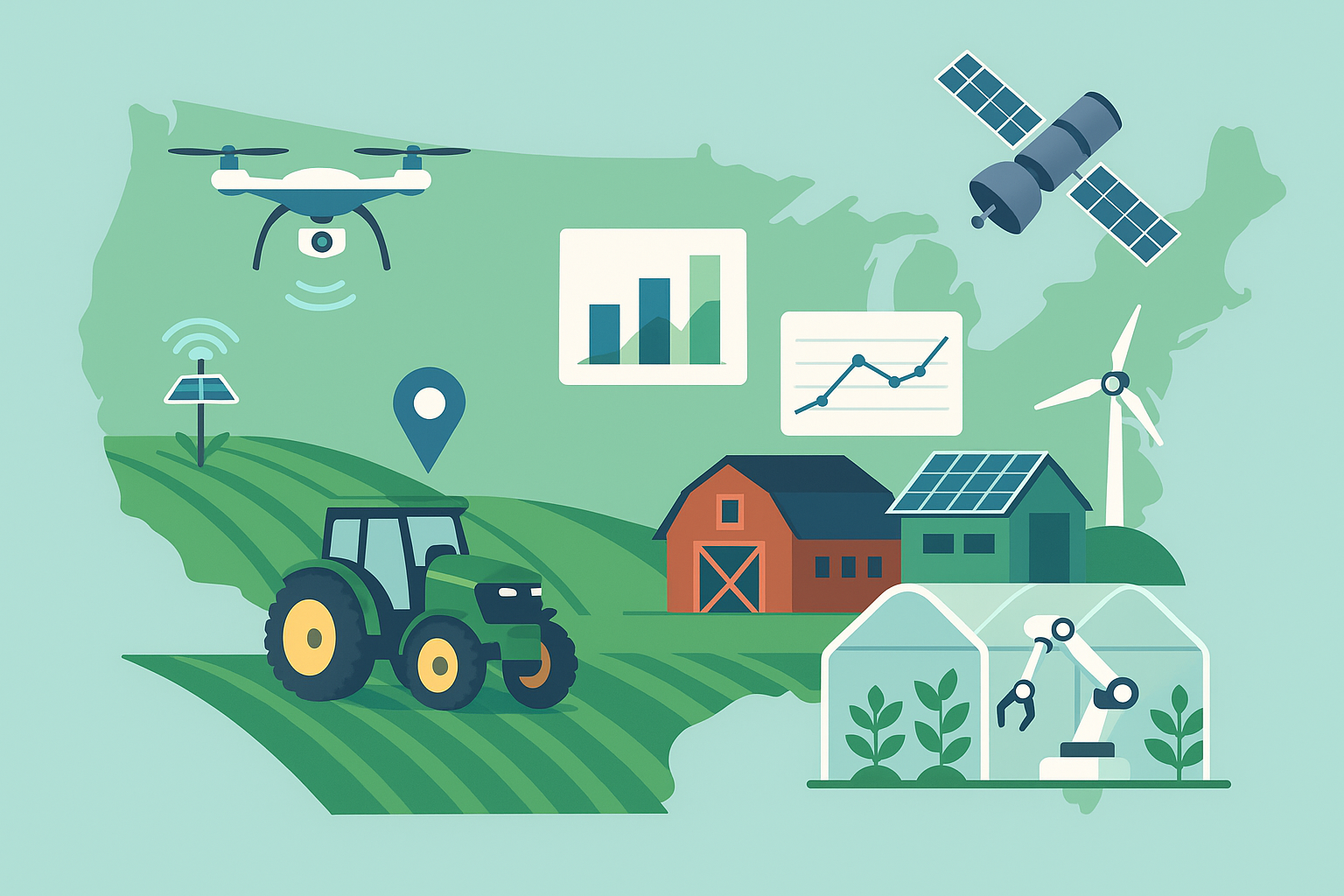
At Field Speed: On-the-Go Soil Sensing Powers Closed-Loop, Variable-Rate Agronomy

On-the-go soil sensors mounted on planters map soils in real time, calibrated with lab cores to guide variable-rate seeding, nitrogen, lime, and planter downforce. Fusing EC/EMI, vis–NIR, gamma, and compaction data improves input efficiency, yield stability, and sustainability, with payback in 1–3 seasons despite moisture, residue, and calibration challenges.

Tech

U.S. Agriculture Policy: Seven-Day Outlook on Funding, Farm Bill Talks, and Regulatory Moves

U.S. farm policy this week centers on securing funding, negotiating farm-nutrition packages, and clarifying environmental, water, and trade rules. Expect congressional oversight, draft text, USDA and EPA updates, and trade signals. Producers watch crop insurance, conservation enrollments, compliance guidance, biofuels incentives, and export data shaping risk management and planting decisions.

Politics
Mid-October U.S. Ag Weather: Stop-and-Go Harvest, Patchy Frost, Rainy Northwest, Cooler East

Mid-October U.S. Ag Weather: Stop-and-Go Harvest, Patchy Frost, Rainy Northwest, Cooler East

Mid-October brought scattered showers in the Corn Belt/Great Lakes and Pacific Northwest, with drier windows across the Plains, Southwest, and California; patchy frost surfaced north. The next week features west-to-east systems, alternating harvest windows, PNW rain and mountain snow, a cooler East, and risks of wind, disease, and fire.

Mid-October U.S. Ag Forecast: Wet Northwest, Intermittent South Rains, Broad Plains/Midwest Harvest Windows, Northern Frost Risk

Mid-October U.S. Ag Forecast: Wet Northwest, Intermittent South Rains, Broad Plains/Midwest Harvest Windows, Northern Frost Risk

Mid-October brings variable conditions: frequent Pacific Northwest/northern Rockies storms, intermittent Gulf-fed rain from the Southern Plains to the Southeast, and broad dry harvest windows across the Plains and Midwest. Near to cooler northern temperatures support patchy frost; mostly dry Southwest/California face elevated fire danger. Livestock and specialty crops need precautions.

Mid-October U.S. Agriculture Weather Planner: 7-Day Outlook, Field Priorities, and Risk Watch

Mid-October U.S. Agriculture Weather Planner: 7-Day Outlook, Field Priorities, and Risk Watch

Mid-October brings frequent fronts, scattered showers, breezy winds, and cooler, drier air; frost risk expands south. PNW wetter; California/Southwest mostly dry; Gulf/Southeast humid with onshore showers. Expect alternating fieldwork windows; risks: frost/freezes, wind, localized heavy rain, fire weather, tropical threats. Prioritize harvest, wheat timing, aeration, and fire safety.

Mid-October U.S. Ag Weather Outlook: Regional Briefing and Fieldwork Guidance

Mid-October U.S. Ag Weather Outlook: Regional Briefing and Fieldwork Guidance

Mid-October U.S. ag weather features frequent fronts, expanding fieldwork windows between brief, windy showers; elevated frost/freezes north and high terrain; early rains in the Pacific Northwest; mostly dry Southwest and California with fog. Monitor late-season tropical threats along Gulf/Southeast. Time operations behind fronts; manage frost, wind erosion, and safety.

Mid-October U.S. Agricultural Weather Outlook: Fast-Moving Fronts, Patchy Frost, and Harvest Windows

Mid-October U.S. Agricultural Weather Outlook: Fast-Moving Fronts, Patchy Frost, and Harvest Windows

Mid-October brings quick fronts across the northern U.S., breezy drying behind, and lingering warmth/humidity south. The Pacific Northwest turns wetter while California and the Southwest stay mostly dry. Expect intermittent light showers, patchy frost/freeze in northern/high valleys, variable winds, brief fire-weather episodes, and good harvest windows 12–36 hours post-front.

Mid-October U.S. Ag Weather Outlook: Harvest-Friendly Windows, Northern Showers and Expanding Frost, South Mostly Dry

Mid-October U.S. Ag Weather Outlook: Harvest-Friendly Windows, Northern Showers and Expanding Frost, South Mostly Dry

A progressive mid-October pattern brings alternating fronts: periodic showers across the Pacific Northwest, Northern Rockies/Plains, and Upper Midwest, while the southern tier stays mostly dry and warm. Frost/freeze threats expand southward; fire weather episodically elevates in the Southwest/SoCal. Harvest windows remain broadly favorable with brief, windy, showery interruptions.

U.S. Farm Weather Outlook: Favorable Harvest Windows, PNW Showers, and Patchy Frost Risk

U.S. Farm Weather Outlook: Favorable Harvest Windows, PNW Showers, and Patchy Frost Risk

U.S. farm weather stayed mostly favorable, with dry or light, brief showers and breezy fronts mainly across northern regions. The Pacific Northwest turns periodically wet; California and the Southwest remain dry. Next week features quick disturbances, cooler nights, and patchy frost risk, supporting ongoing harvest and winter wheat progress.

U.S. Ag Weather Weekly: Harvest Windows, Frost Risk, and a Practical 7-Day Outlook

U.S. Ag Weather Weekly: Harvest Windows, Frost Risk, and a Practical 7-Day Outlook

A region-by-region U.S. ag weather update reports variable mid-October fronts, cool nights, and spotty rains. Expect intermittent showers in central/eastern states, frequent Pacific Northwest moisture, and mostly dry California/Southwest. Key themes: brief harvest windows, frost risk in northern/interior areas, periodic gusty winds, uneven winter wheat moisture, localized fire weather.