Software & Web Development

Data Science & Robotics Development

Calc LLC provide high quality services at very competitive rate

Next 7 Days in U.S. Ag Weather: Patchy Frost, Western Moisture, and Drier Southern Plains

Next 7 Days in U.S. Ag Weather: Patchy Frost, Western Moisture, and Drier Southern Plains

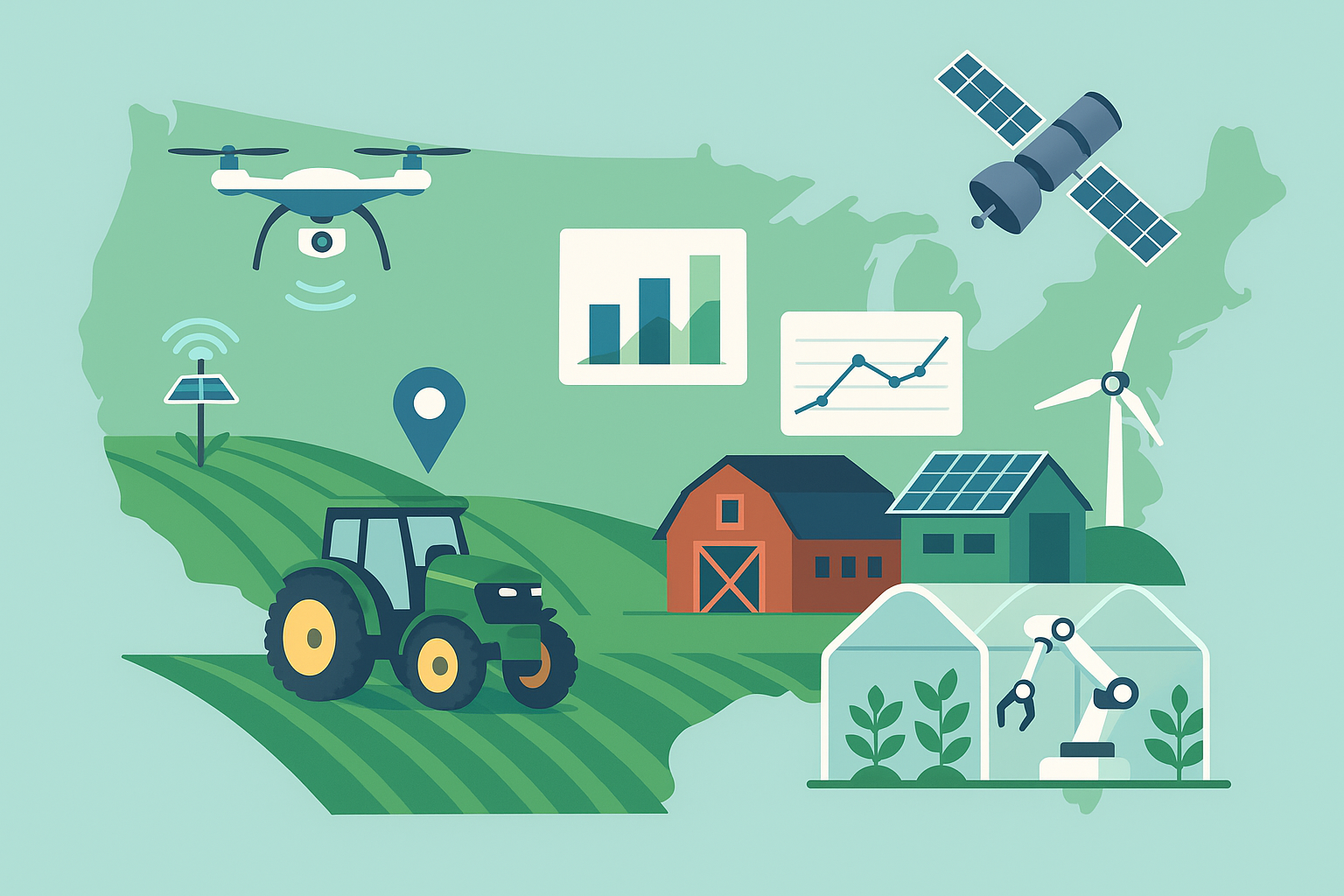
U.S. ag weather stays seasonally cold with recurring frost, especially in northern valleys. Intermittent precipitation favors the Pacific Northwest, northern Rockies, and northern tier; Southern Plains and Southwest trend drier. Expect foggy mornings, brief fieldwork windows, livestock wind chill; prioritize wheat moisture recharge, drainage, frost protection, and equipment maintenance.

Weather

Microbe-Powered Soil Sensors: Battery-Free, Always-On Farm Monitoring

Microbe-powered soil sensors use microbial fuel cells to harvest energy, enabling maintenance-free, duty-cycled measurements (moisture, EC, temperature, nitrates, redox) and LoRaWAN uploads. Early pilots show multi-season operation, 5–15% water and 10–20% nitrogen savings, with limits in dry/cold soils and calibration drift. Integration automates irrigation/fertigation; hybrids and improved probes are coming.

Tech

Seven-Day U.S. Ag Policy Outlook: Key Levers, Compliance Risks, and Market Signals

Update outlines U.S. ag policy levers shaping farm finances—appropriations, safety net, conservation/climate funds, pesticide-ESA rules, biofuels, trade, labor, water, animal health. Near-term watch: congressional schedules, agency notices, litigation, state rules. Producers should verify USDA sign-ups, labels, wages, biosecurity, export requirements. Price impacts hinge on funding, pesticide, biofuel, and trade outcomes.

Politics
Thanksgiving Week Market Playbook: Thin Liquidity, Data Cluster, and Retail Signals

Thanksgiving Week Market Playbook: Thin Liquidity, Data Cluster, and Retail Signals

With U.S. markets holiday-thinned around Thanksgiving, liquidity is light and moves exaggerated. Investors focus on pre-holiday data (claims, durable goods, PCE, GDP, inventories) and retail checks, plus month-end rebalancing. Upcoming ISM, JOLTS, ADP and claims guide rates, dollar and leadership amid Treasury supply risks and soft-landing vs. inflation/growth-scare scenarios.

November 27: How a Single Date Shaped American Agriculture—from the Washita Attack to Thanksgiving and Native Food Sovereignty

November 27: How a Single Date Shaped American Agriculture—from the Washita Attack to Thanksgiving and Native Food Sovereignty

November 27 recurrently shapes U.S. agriculture: the 1868 Washita attack accelerated Plains dispossession and ranching; Macy’s 1924 parade cemented Thanksgiving’s food‑market cadence; 1941 fixed the holiday’s fourth‑Thursday clock; and 2009 launched Native American Heritage Day, highlighting Indigenous stewardship—all influencing supply chains, policy, and food sovereignty.

Late-November U.S. Ag Weather Outlook: Quick Fronts, Frost Pockets, and Western Mountain Snow - 7-Day Planning Guide

Late-November U.S. Ag Weather Outlook: Quick Fronts, Frost Pockets, and Western Mountain Snow - 7-Day Planning Guide

Fast-moving fronts bring frequent temperature swings, light, variable precipitation, and recurring frost/freeze risks, especially Plains–Midwest–interior South. Pacific Northwest stays wet with mountain snow; California, Southwest, and Delta see mostly dry windows. Best fieldwork Days 4–5. Monitor livestock cold stress, wind-driven erosion, interior frost, and Central Valley fog.

Cold Plasma Seed Treatment: Engineering, Efficacy, and Economics at Scale

Cold Plasma Seed Treatment: Engineering, Efficacy, and Economics at Scale

Cold plasma seed treatments use reactive, low-temperature gases or plasma-activated water to boost germination, improve wettability, and suppress pathogens, enabling reduced chemical coatings. Scalable conveyor or drum systems are emerging, but benefits are species- and dose-dependent, requiring careful calibration, QC, ventilation, and integration with existing processes for ROI and compliance.

U.S. Ag Policy Pulse: Farm Bill Stakes, Funding Deadlines, and a 7-Day Watchlist

U.S. Ag Policy Pulse: Farm Bill Stakes, Funding Deadlines, and a 7-Day Watchlist

U.S. agriculture faces Farm Bill reauthorization balancing SNAP, crop insurance, and IRA-backed conservation amid budget limits, while appropriations uncertainty persists. Trade and biotech disputes, biosecurity, renewable fuel rules, H‑2A labor costs, competition and environmental rulemakings, and varied state policies shape markets, with a holiday-week watchlist across Congress, USDA, and trade.

Thin Liquidity, Thick Data: A Thanksgiving Week Cross-Asset Playbook

Thin Liquidity, Thick Data: A Thanksgiving Week Cross-Asset Playbook

Markets entered holiday-thin liquidity, consolidating as investors positioned for a compact data cluster—PCE inflation, GDP, durable goods, and jobless claims—guiding rate expectations. Equities and credit tracked macro; Treasuries split by tenor; the dollar followed rate differentials. Upcoming ISM, JOLTS, ADP, and holiday sales will shape cross-asset leadership.

November 26 and the American Table: Harvest, Resilience, and Remembrance

November 26 and the American Table: Harvest, Resilience, and Remembrance

This article traces November 26’s recurring role in U.S. food history—from Washington’s 1789 Thanksgiving and Lincoln’s 1863 decree to WWII rationing, the 1970 National Day of Mourning, 2015 bird flu, and 2020 pandemic—showing how agriculture, culture, and supply chains shape traditions, policy, and resilience.

7-Day U.S. Agricultural Weather Outlook: Stormy Northwest, Late-Week Gulf Rains, Cooler North, Dry Southwest

7-Day U.S. Agricultural Weather Outlook: Stormy Northwest, Late-Week Gulf Rains, Cooler North, Dry Southwest

U.S. agriculture faces late-autumn variability: stormy Pacific Northwest and northern Rockies with rain and mountain snow; mostly dry Southwest and California interior. Periodic fronts cross central/eastern states, with late-week Gulf moisture boosting rain from Southern Plains to Lower Mississippi/Southeast. Temperatures swing—colder north, near/above normal south—affecting fieldwork, winter wheat, and livestock.