Software & Web Development

Data Science & Robotics Development

Calc LLC provide high quality services at very competitive rate

Cold Plasma Goes Farm-Ready: Cleaning Seeds, Produce, and Water Without Chemicals

Cold plasma is moving into agriculture as a chemical-free tool for seed sanitation/priming, produce surface decontamination, and plasma-activated water. 2026 advances add compact, safe, modular systems. Benefits include residue-free sanitation and lower water use, with ROI situational. Limits involve dose tuning, coverage, throughput, and regulatory variability; pilots and monitoring recommended.

Tech

U.S. Agriculture Policy Watch: 7-Day Outlook, Signals, and Producer Playbook

Guide to tracking U.S. ag policy: monitor Congress, USDA/EPA/DOL/USTR, courts, and states. Core themes include farm bill, appropriations, input regulation, labor, climate, trade, competition, and tech. Over the next week, watch funding talks, EPA decisions, labor guidance, and court orders; verify enrollments and contingency plans for inputs and labor.

Politics
January 4’s Imprint on U.S. Agriculture: Safety, Trade, and Water

January 4’s Imprint on U.S. Agriculture: Safety, Trade, and Water

January 4 repeatedly marks turning points in U.S. agriculture: FSMA’s prevention-first food safety regime (with 2026 traceability), Carter’s 1980 grain embargo reshaping trade, and Utah’s 1896 statehood cementing Western irrigation. The date also launches policy agendas, underscoring how safety, trade, and water decisions shape today’s food system.

U.S. Agricultural Weather Briefing: Past 24 Hours, 7-Day Outlook, and Planning Guide

U.S. Agricultural Weather Briefing: Past 24 Hours, 7-Day Outlook, and Planning Guide

Winter conditions across U.S. farm regions brought cold, fog, precipitation, and wind, affecting field access, logistics, and livestock. The week ahead features northern-tier snow and swings, Gulf/Southeast wet intervals, unsettled Pacific Northwest, variable Plains, California fog/frost, and mixed precipitation in Ohio/Tennessee corridor. Plan short windows, protect livestock and specialty crops.

Season-Long Data, Zero E-Waste: Biodegradable Soil Sensors for Precision Agriculture

Season-Long Data, Zero E-Waste: Biodegradable Soil Sensors for Precision Agriculture

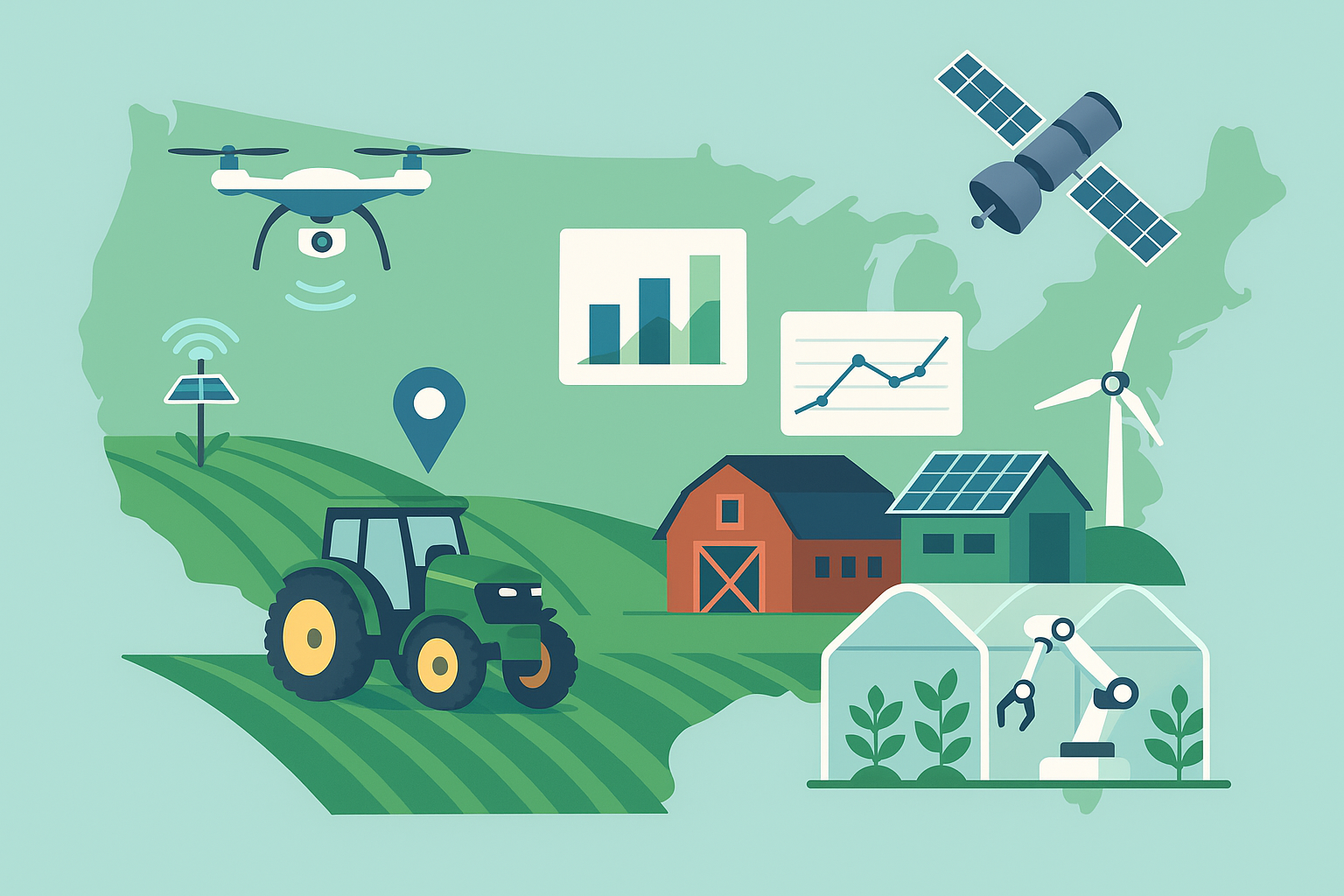
Biodegradable soil sensors promise dense, season-long monitoring of moisture, salinity, nitrate, pH and temperature without retrieval or e-waste. Powered by passive readout, soil energy or colorimetric chemistries, they integrate into farm workflows, inform irrigation and nitrogen prescriptions, cut inputs and labor, but face calibration, RF, shelf-life and standardization challenges.

Setting the Agenda for U.S. Agriculture: Early January Policy Signals and Seven-Day Outlook

Setting the Agenda for U.S. Agriculture: Early January Policy Signals and Seven-Day Outlook

Early January sets U.S. agriculture’s policy tempo: farm bill and funding decisions, biofuel credit guidance, labor rules, pesticide/ESA actions, animal health, trade, and conservation signups. The past day was positioning; the week ahead brings committee notices, agency rules, energy and drought indicators—informing spring planning, compliance, marketing, and staffing.

US Macro Wrap: Fed Repricing, Turn-of-Year Flows, and the Week Ahead

US Macro Wrap: Fed Repricing, Turn-of-Year Flows, and the Week Ahead

Markets were driven by shifting Fed expectations, thin turn‑of‑year liquidity, and early corporate signals. Rates moved with real yields and supply; equities hinged on breadth and guidance; credit eyed January issuance; USD tracked real‑yield dynamics. Upcoming ISM, labor data, and FOMC minutes will steer risk appetite and volatility.

January 3: The Quiet Date That Keeps Reshaping U.S. Agriculture

January 3: The Quiet Date That Keeps Reshaping U.S. Agriculture

January 3 marks pivotal shifts in U.S. agriculture: Alaska’s 1959 statehood expanded northern land and research; the 1961 Cuba rupture reshaped sugar supply and trade; and Congress’s January 3 start, set by the 20th Amendment, resets farm bill agendas, showing how geopolitics, governance, and geography steer food and fiber systems.

Early January U.S. Ag Weather Outlook: 7-Day Fieldwork Windows, Regional Risks, and Planning Tips

Early January U.S. Ag Weather Outlook: 7-Day Fieldwork Windows, Regional Risks, and Planning Tips

Early January U.S. ag outlook: Colder Northern Plains/Upper Midwest; milder Gulf/Florida. West sees Pacific systems with rain and mountain snow; California fog persists. Central U.S. gets light, fast-moving snow/mix. Delta/Southeast: multiple showers, locally heavy along Gulf. Watch frost, icing, wind/dust, and livestock, disease, and field-access risks.

From Wire to Code: Virtual Fencing and Software-Defined Grazing

From Wire to Code: Virtual Fencing and Software-Defined Grazing

Virtual fencing uses GPS collars, audio cues, and mild stimuli to replace physical fences, enabling software-defined, adaptive grazing. Systems work offline, integrate pasture data, and support conservation goals while shifting costs to collars and software. Welfare, reliability, cybersecurity, and regulation require oversight. Adoption is expanding with improving hardware and connectivity.