Software & Web Development

Data Science & Robotics Development

Calc LLC provide high quality services at very competitive rate

Early May 2026 U.S. Ag Weather Outlook and Field Guidance

Early May 2026 U.S. Ag Weather Outlook and Field Guidance

Early May U.S. ag weather remains variable: scattered, brief storms across Plains, Corn Belt, and Mid-South amid warm, humid South; mostly dry California and Desert Southwest; periodic light precip Pacific Northwest. Expect alternating fieldwork windows with breezy days; localized severe, flooding, and fire risks; monitor disease, irrigation, and heat stress.

Weather
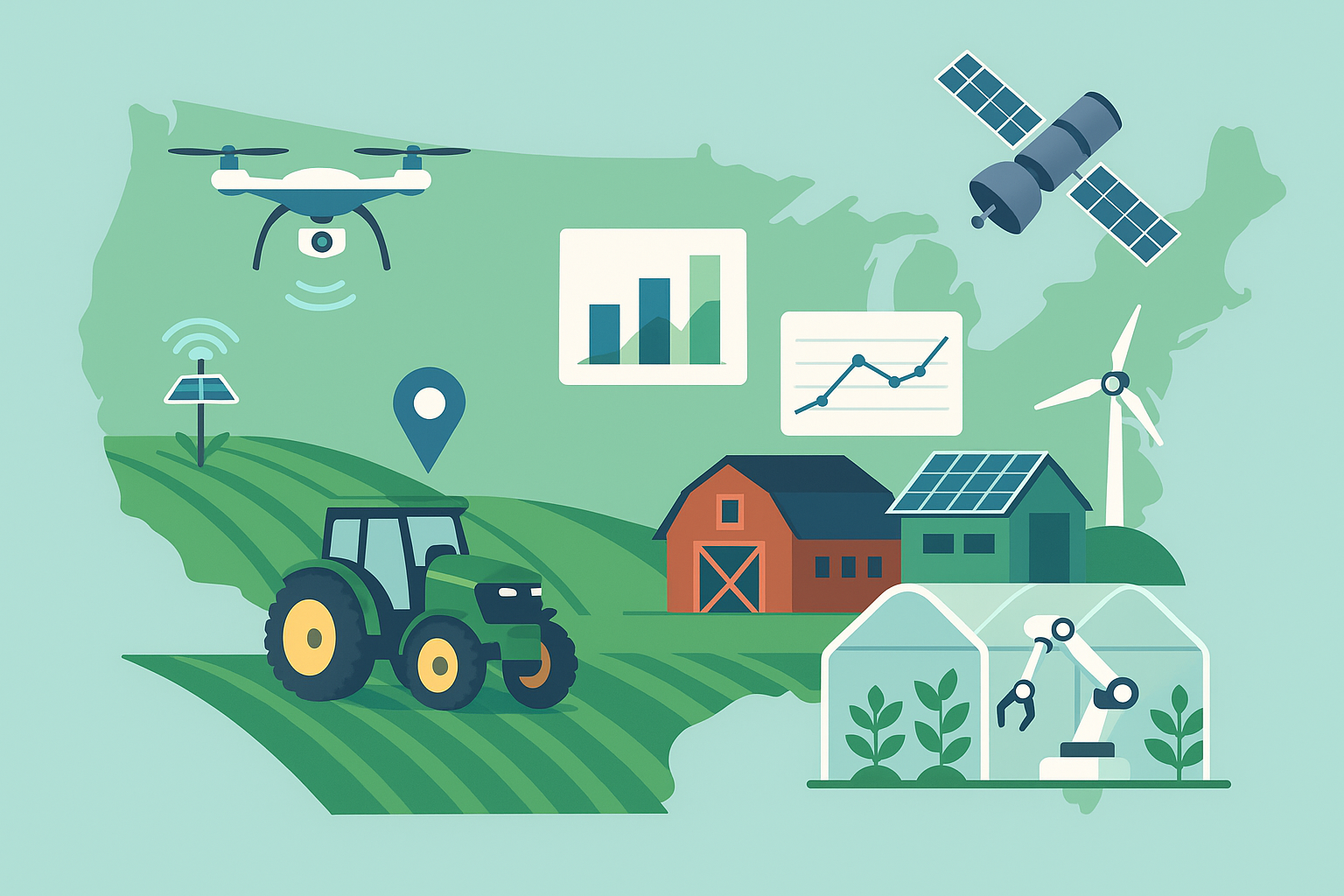
Cold Plasma Comes to the Farm: Cleaner Seeds, Safer Produce, and Nitrogen from Air

Cold plasma, a room-temperature ionized gas, offers farms residue-free seed priming and sanitization, produce disinfection, plasma-activated water, and on-site nitrate production from air. Benefits include reduced chemicals, water, and logistics; modular, renewable-ready hardware. Success depends on dose control, uniform exposure, energy efficiency, and validation, with smarter, integrated systems improving ROI.

Tech

Quiet Moves, Big Stakes: Incremental Budget and Rulemaking Steps Are Steering U.S. Agriculture This Week

U.S. ag policy saw positioning, not headlines, across budgets, USDA/EPA rules, biofuels credits, labor, water, and interstate standards. Stakeholders pressed for clarity on timelines, funding, and compliance. Expect incremental notices and guidance shaping planting, contracts, and investments; monitor pesticide/ESA, animal health, and trade risks as appropriations and rulemakings advance.

Politics
Markets Hold Steady Ahead of Inflation Data, Fed Signals, and Treasury Auctions

Markets Hold Steady Ahead of Inflation Data, Fed Signals, and Treasury Auctions

Markets consolidated amid low volatility as investors awaited key U.S. inflation, labor, and Treasury-auction catalysts. Focus centered on the Fed’s path, services inflation, and 2026 earnings guidance. Quality outperformed; credit demand stayed firm; the dollar tracked rate differentials. Positioning and risk management dominate until data reset narratives.

February 10’s Imprint on U.S. Agriculture: Treaty, Deep Freeze, and Tractorcade

February 10’s Imprint on U.S. Agriculture: Treaty, Deep Freeze, and Tractorcade

February 10 marks turning points in U.S. agriculture: the 1763 Treaty of Paris redirected settlement and farm development; the 1899 arctic freeze devastated Southern crops and spurred resilience measures; and 1979’s Tractorcade thrust farm policy into national view—together revealing how land, climate, markets, and politics shape enduring agricultural systems.

Early February U.S. Ag Weather Playbook: Regional Outlook and Fieldwork Priorities

Early February U.S. Ag Weather Playbook: Regional Outlook and Fieldwork Priorities

Early February brings frequent fronts and sharp temperature swings, creating brief fieldwork windows, frost risks from Southern Plains to Florida, and periodic Western storms with rain/snow affecting water and access. The brief offers regional checklists, a seven-day outlook, operational tips, and forecast cues for spraying, livestock care, and logistics.

Bee Vectoring: Precision Biocontrol at Bloom for Sustainable Crop Protection

Bee Vectoring: Precision Biocontrol at Bloom for Sustainable Crop Protection

Bee vectoring recruits pollinators to deliver beneficial microbes directly to blossoms, providing precise, frequent doses that curb bloom-time diseases like gray mold. Suited to berries and greenhouse crops, it cuts sprays and residues, supports IPM, and sustainability. Success depends on hive management, weather, regulation; innovations and safeguards advance adoption.

U.S. Ag Policy Watch: Likely Weekend Moves and a Seven-Day Outlook

U.S. Ag Policy Watch: Likely Weekend Moves and a Seven-Day Outlook

With no confirmed federal moves in the past day, this guide flags where U.S. ag policy updates typically appear, the week’s likely action lanes and rhythms, why changes matter for risk, trade, labor, energy and conservation, and provides a checklist and official sources for producers to verify developments.

US Macro Weekly: Late-Disinflation Drivers and a Cross-Asset 7-Day Playbook

US Macro Weekly: Late-Disinflation Drivers and a Cross-Asset 7-Day Playbook

Markets remain driven by inflation and labor data, earnings guidance, Treasury supply, Fed signals, and energy. In a late‑disinflation, restrictive-policy backdrop, small surprises move rates, equities, credit, FX, and commodities. The week’s catalysts and auctions will steer yields, breadth, and risk appetite, with inflation, labor, and supply shocks the risks.

February 8 and the American Farm: Dawes, Confederate Secession, and Sherman’s Long Shadow

February 8 and the American Farm: Dawes, Confederate Secession, and Sherman’s Long Shadow

February 8 anchors pivotal shifts in U.S. agriculture: the Dawes Act’s allotment and lasting land fractionation in Indian Country (1887); Confederate secession’s war, sharecropping, and federal agricultural institutions (1861); and Sherman’s legacy from destructive campaigns to 'forty acres' hopes (1820). Together, they redefine land, labor, and agricultural equity.

Early February U.S. Ag Weather Brief: Regional 7-Day Outlook and Operational Guidance

Early February U.S. Ag Weather Brief: Regional 7-Day Outlook and Operational Guidance

Early February U.S. farm weather features fast-moving systems, variable precipitation, and temperature swings. Expect narrow fieldwork windows, frost/freezes, mixed precipitation, mud, disease pressure, livestock cold stress, and Western snowpack impacts. Time protectants before wetting, avoid compaction, manage storage, and monitor thresholds (wheat cold, citrus below 28°F, leaf wetness) with forecasts.