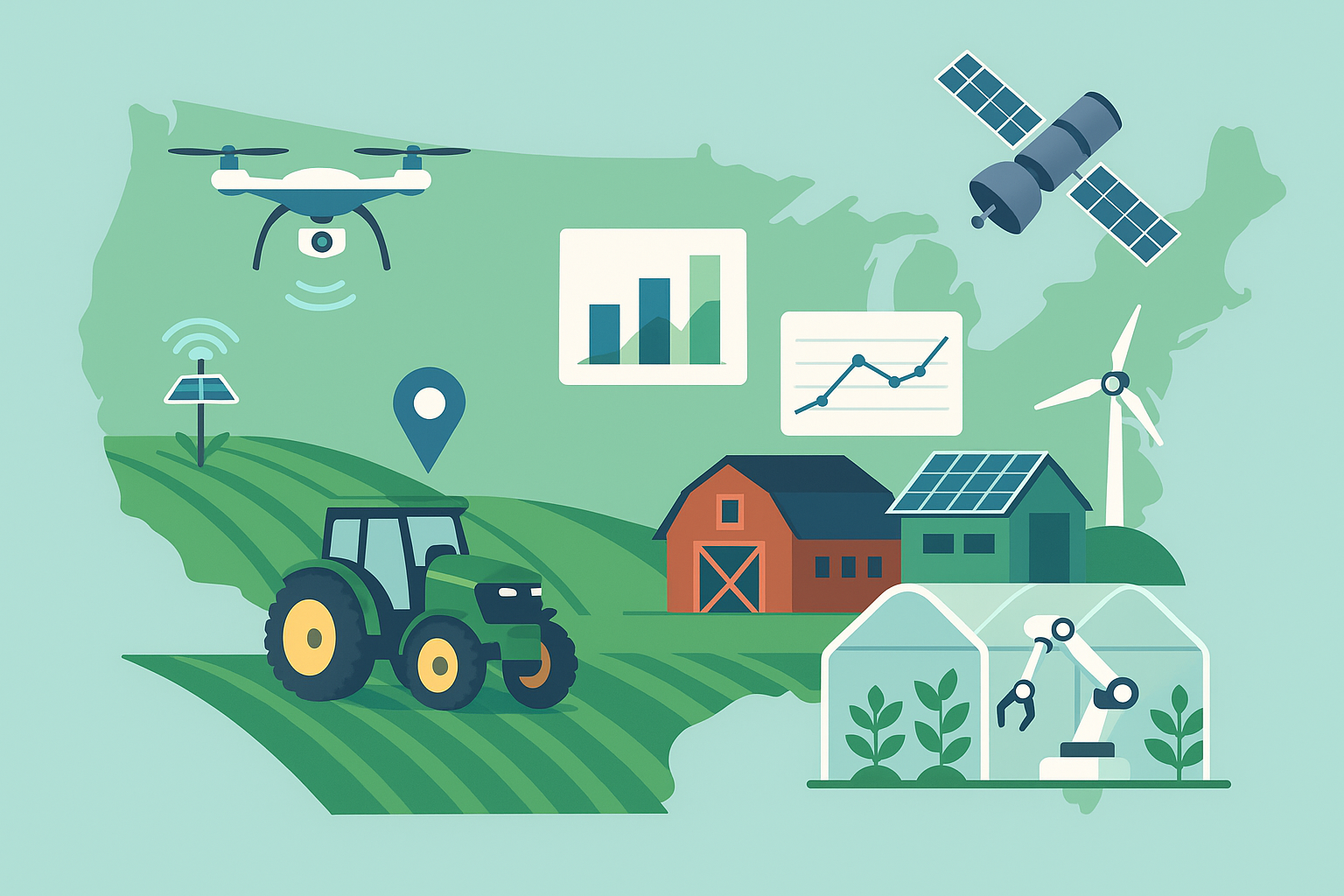
A new generation of biodegradable soil micro-sensors is emerging from research labs and early field pilots, promising to make precision irrigation accessible far beyond large, capital-intensive farms. Made from compostable substrates and printed with conductive inks, these paper-thin devices can be buried in the root zone, read wirelessly with a smartphone or low-cost field reader, and left to safely break down after harvest. The vision is simple: put inexpensive, disposable intelligence directly where crops need it, then use those data points to irrigate less often and more precisely—without adding another stream of e-waste to the countryside.
Key takeaways
- Biodegradable, battery-free sensors can measure soil moisture and related parameters right in the root zone, then communicate via near-field or low-power radio.
- They aim to lower costs and complexity for small and mid-sized farms by leveraging mobile phones and cooperative readers instead of towers and subscriptions.
- If proven at scale, these devices could curb water use, stabilize yields during dry spells, and reduce the environmental footprint of modern sensing.
- Challenges include calibration drift, variable biodegradation rates, ruggedness during field operations, and ensuring data interoperability.
What are biodegradable soil micro-sensors?
Unlike traditional soil probes that rely on plastic housings, metal rods, and replaceable batteries, biodegradable micro-sensors are fabricated on substrates such as cellulose or compostable biopolymers. Many use printed electronics: thin layers of carbon, graphene, or silver nanoparticle inks form the traces and electrodes of capacitive or resistive moisture sensors. A tiny flexible chip handles signal processing and communication. Power comes from energy harvesting (for example, from a reader’s magnetic field in the case of NFC) or from small compostable supercapacitors designed to degrade.
The form factor varies—from postage-stamp tags that slip into seed rows to slender strips that can be pinned at multiple depths. Placement aligns with crop rooting depth and soil texture. After deployment, readings can be taken by briefly passing a phone or handheld reader over the site, or by leaving a low-power gateway at the field edge to collect data when conditions allow.
How the technology works
1) Sensing physics
Soil moisture can be inferred by measuring how water changes the electrical properties of the soil. Capacitive sensors detect changes in the dielectric constant as pores fill with water; resistive sensors track changes in conductivity. Some devices add a tiny temperature element to correct moisture readings, and research prototypes are exploring nitrate and pH indicators using ion-selective materials or colorimetric layers read by an optical photodiode.
2) Printed, flexible electronics
Conductive patterns are printed onto a biodegradable substrate using screen or inkjet techniques. A microcontroller or application-specific integrated circuit is mounted using low-temperature processes. The entire assembly is encapsulated with a compostable coating to slow water ingress just enough for a growing season while still allowing eventual breakdown.
3) Battery-free communication
Two approaches dominate early designs:
- Near Field Communication (NFC): A phone held within a few centimeters powers and reads the sensor via magnetic coupling. It’s simple and avoids radio interference, but requires physical proximity.
- Backscatter radio: The sensor reflects and modulates an incoming radio signal from a nearby reader, enabling meters to tens of meters of range at ultra-low power. This supports semi-automated data sweeps with a backpack or ATV-mounted reader.
4) End-of-life by design
After weeks to months in the soil—depending on formulation, temperature, and microbial activity—the substrate and encapsulant are intended to fragment and biodegrade, leaving only trace mineral content from the inks within allowable limits. The goal is to eliminate the need for retrieval and to avoid microplastic contamination.
Why this matters now
Irrigation decisions often rely on experience, rules of thumb, or single-point sensors that don’t capture how conditions vary across a field. Overwatering can leach nutrients and waste energy; underwatering can cut yields and quality. More measurements placed where roots actually take up water translate into better timing and smaller, more frequent watering events—especially valuable during heat waves and in sandy soils where water moves quickly.
Historically, the barrier has been cost and complexity: rugged sensors, data loggers, cables, and connectivity plans add up, and moving a few probes around is labor-intensive. Biodegradable micro-sensors aim to flip that equation by making the hardware so inexpensive and easy to deploy that dozens or hundreds of points per field become practical, even for smallholders. With mobile-first workflows, growers can get decision-ready insights without installing permanent infrastructure.
Practical use cases on farms
- Irrigation scheduling: Place tags at two depths—one near the surface and one near typical root depth—to decide when to start and stop sets. The upper tag helps avoid shallow saturation; the lower tag ensures deeper roots stay in the optimal moisture band.
- Fertigation timing: Combine moisture trends with simple salinity indicators to reduce nutrient loss and keep fertilizer in the root zone.
- Drought stress alerts: Configure threshold notifications via a cooperative’s shared reader so growers are pinged when multiple points in a block dip below target.
- Field variability mapping: Sample grids ahead of planting to identify lighter and heavier patches, informing zone-based planting density and irrigation set design.
- Greenhouse and hoop house tuning: Use dense sensor placements to fine-tune substrate watering and airflow, where small changes can dramatically affect disease pressure.
Economics and deployment models
The promise of printed, compostable sensors is that per-unit costs can be brought down through roll-to-roll manufacturing and minimal packaging. While exact price points vary by design and volume, many efforts target costs low enough to treat sensors as a seasonal input rather than a capital asset. That changes how growers plan: instead of shifting a few probes between blocks, they can blanket key zones once and leave them in place.
Deployment can follow several models:
- Mobile-only: Growers or scouts walk rows with a phone, tapping and logging readings as part of regular field checks.
- Shared readers: A cooperative or irrigation district provides backpack or ATV-mounted readers that auto-collect from dozens of tags in minutes.
- Edge gateways: A battery-solar reader at the field edge gathers daily snapshots from nearby tags and relays summaries when it has connectivity.
In all cases, the value proposition hinges on saving water, stabilizing yields, and reducing inputs relative to the combined cost of sensors, readers, and data services. Savings can also show up in labor—fewer manual digs, less guesswork, and more confident set adjustments.
How they compare to traditional tools
- Tensiometers and gypsum blocks: Proven and affordable, but require manual maintenance and often provide limited spatial coverage. Biodegradable tags trade some absolute accuracy for density and convenience.
- Buried probes with cables: High accuracy and continuous data, but installation is invasive and cables complicate operations. Disposable tags avoid trenching and retrieval.
- Satellite and drone imagery: Great for canopy-level stress detection but can lag behind root-zone changes. Soil tags can trigger irrigation before visible stress appears and can help interpret imagery.
What could hold the technology back
- Calibration and drift: Printed electrodes can change characteristics as they absorb water or encounter salts. Robust, crop- and soil-specific calibration workflows are essential.
- Ruggedness: Devices must survive installation, cultivation, and harvest, yet still biodegrade on schedule. Encapsulation thickness and material choice are a balancing act.
- Biodegradation variability: Cooler soils or low microbial activity can slow breakdown. Transparent labeling and third-party compostability certifications can build trust.
- Interference and read range: Wet soils, metal equipment, and field geometry affect radio performance. Farm-tested antenna designs and reader placement matter.
- Data lock-in: If each vendor uses a proprietary format, growers bear switching costs. Open schemas and APIs will be a competitive advantage.
Environmental implications
E-waste is an underappreciated issue in digital agriculture. Disposable, battery-free sensors reduce the risk of leaving plastics and lithium cells in fields. Still, “biodegradable” is not a monolith: materials should meet recognized standards for soil biodegradability, and inks must be selected for agronomic safety. Clear end-of-life documentation helps agronomists and certifiers understand any residue pathways and ensures compatibility with organic and regenerative practices.
From raw readings to actionable decisions
The utility of low-cost sensors depends on the software layer. Growers don’t want voltage curves; they want “Wait 24 hours before the next set” or “Run 90 minutes tonight for Block C.” Effective systems:
- Normalize for soil type and temperature to avoid misleading comparisons.
- Fuse sensor data with short-term weather forecasts and irrigation system flow rates.
- Offer thresholds tailored to crop stage—bloom versus fill can require different moisture bands.
- Flag sensor anomalies automatically, so one bad tag doesn’t trigger a wrong decision.
Over time, dense ground-truth data can also improve variable-rate irrigation prescriptions and train local models that anticipate when a given block will cross stress thresholds under different weather patterns.
Policy and procurement considerations
For public agencies and buyers supporting climate-smart irrigation, procurement language can encourage:
- Use of documented, soil-biodegradable materials and safe ink chemistries.
- Open data access and interoperability with common farm management systems.
- Training and support for smallholders, including shared readers and offline-capable apps.
- Measurement and verification plans that link sensor-guided irrigation to water savings outcomes.
On the regulatory side, adherence to local spectrum rules for low-power devices and clear labeling of compostability claims will help the category mature responsibly.
Field notes: what early adopters report
Growers testing early versions highlight the convenience of quick, tap-to-read workflows during scouting, and the confidence that comes from seeing consistent moisture trends at multiple depths. They also note learning curves: tags need to be placed with simple, repeatable methods; soil maps help choose representative spots; and readers benefit from route planning to avoid dead zones near metal structures. Many are pairing the tags with periodic physical checks—hand-feel, shovel slices—to calibrate intuition with data.
What to watch next
- Multi-parameter tags: Adding temperature, salinity, and simple nitrate indicators could turn each placement into a mini soil lab.
- Longer read ranges: Advances in backscatter and reader sensitivity may enable drive-by collection from field roads.
- Standardized data models: Adoption of open schemas would unlock cross-vendor analytics and reduce perceived risk for growers.
- Integration with insurance and financing: Verified irrigation improvements could support better loan terms or premiums.
- Regional service ecosystems: Custom manufacturing and service co-ops could tailor tags and workflows to local soils and crops.
If biodegradable soil micro-sensors can deliver reliable, field-ready readings at scale, they could become as routine as flags and drip tape—quietly embedded in everyday operations, guiding water with data instead of guesswork, and disappearing when the season ends.