Software & Web Development

Data Science & Robotics Development

Calc LLC provide high quality services at very competitive rate

Late‑Winter U.S. Ag Weather Outlook: National Summary, Regional Impacts, and 7‑Day Hazards

Late‑Winter U.S. Ag Weather Outlook: National Summary, Regional Impacts, and 7‑Day Hazards

Late-winter U.S. agriculture faces rapid swings: intermittent rain/snow, brisk post-frontal winds, and patchy frost from the Southeast to western valleys. Fieldwork windows are short and regional. Watch West Coast storm-track pulses, Gulf-front showers/storms, and Southern High Plains fire weather. Protect blooming crops and livestock; consult local NWS forecasts.

Weather

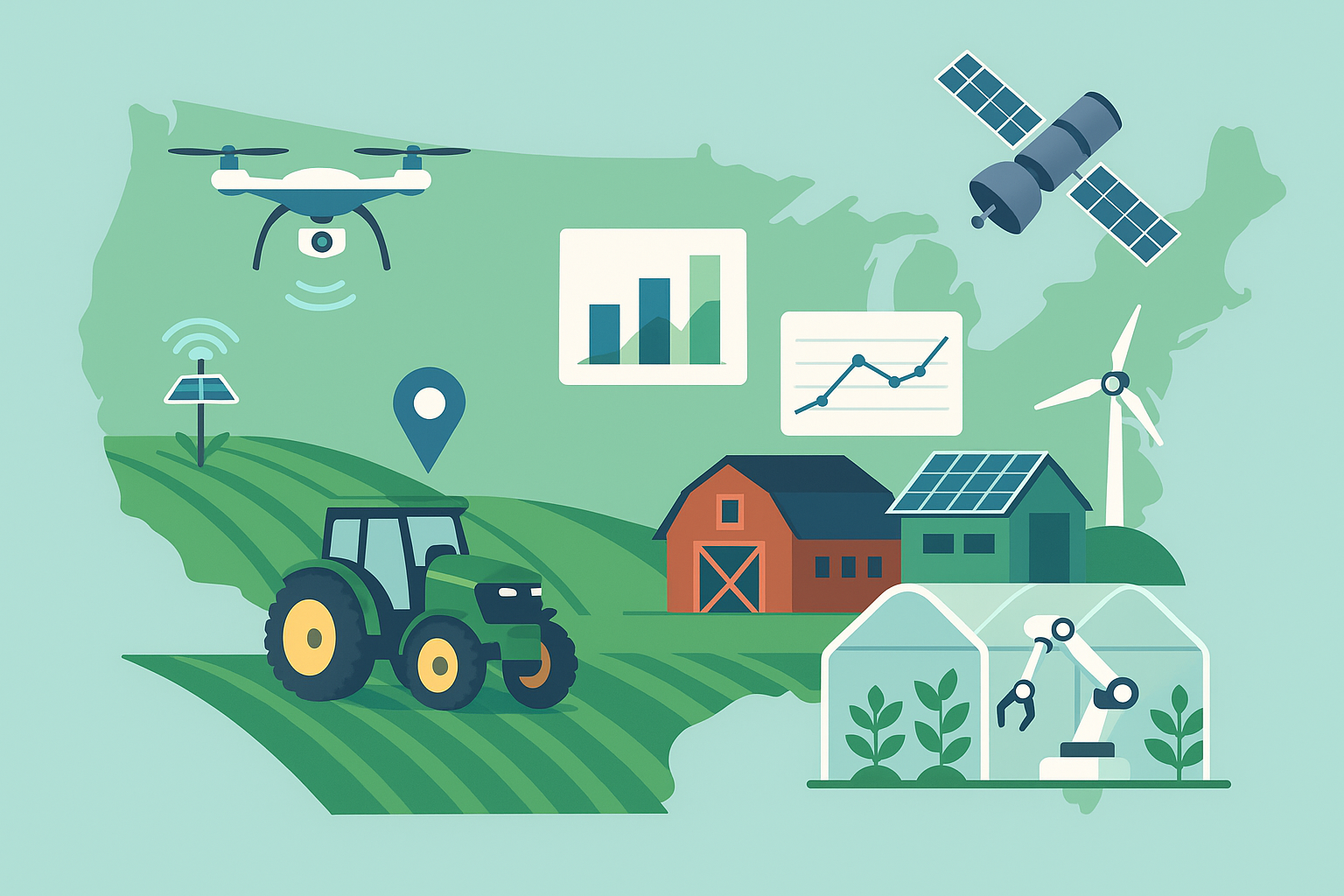
At Field Speed: On-the-Go Soil Sensing Powers Closed-Loop, Variable-Rate Agronomy

On-the-go soil sensors mounted on planters map soils in real time, calibrated with lab cores to guide variable-rate seeding, nitrogen, lime, and planter downforce. Fusing EC/EMI, vis–NIR, gamma, and compaction data improves input efficiency, yield stability, and sustainability, with payback in 1–3 seasons despite moisture, residue, and calibration challenges.

Tech

U.S. Agriculture Policy: Seven-Day Outlook on Funding, Farm Bill Talks, and Regulatory Moves

U.S. farm policy this week centers on securing funding, negotiating farm-nutrition packages, and clarifying environmental, water, and trade rules. Expect congressional oversight, draft text, USDA and EPA updates, and trade signals. Producers watch crop insurance, conservation enrollments, compliance guidance, biofuels incentives, and export data shaping risk management and planting decisions.

Politics
Ag in History - Aug 14, 1935 — Social Security Act Signed: Farmworkers Left Out at First

Ag in History - Aug 14, 1935 — Social Security Act Signed: Farmworkers Left Out at First

On this day, President Franklin D. Roosevelt signed the Social Security Act, creating federal old-age benefits and a broader social insurance framework. But the original law excluded agricultural and domestic workers, leaving much of the U.S. farm labor force outside the new safety net. Coverage was later expanded—regularly employed farm and domestic workers began to be included in 1950, and remaining groups (including many farmworkers and self-employed farmers) were brought under the program in 1954.