Listening to the Field: How Bioacoustic Monitoring Is Changing Pest Management
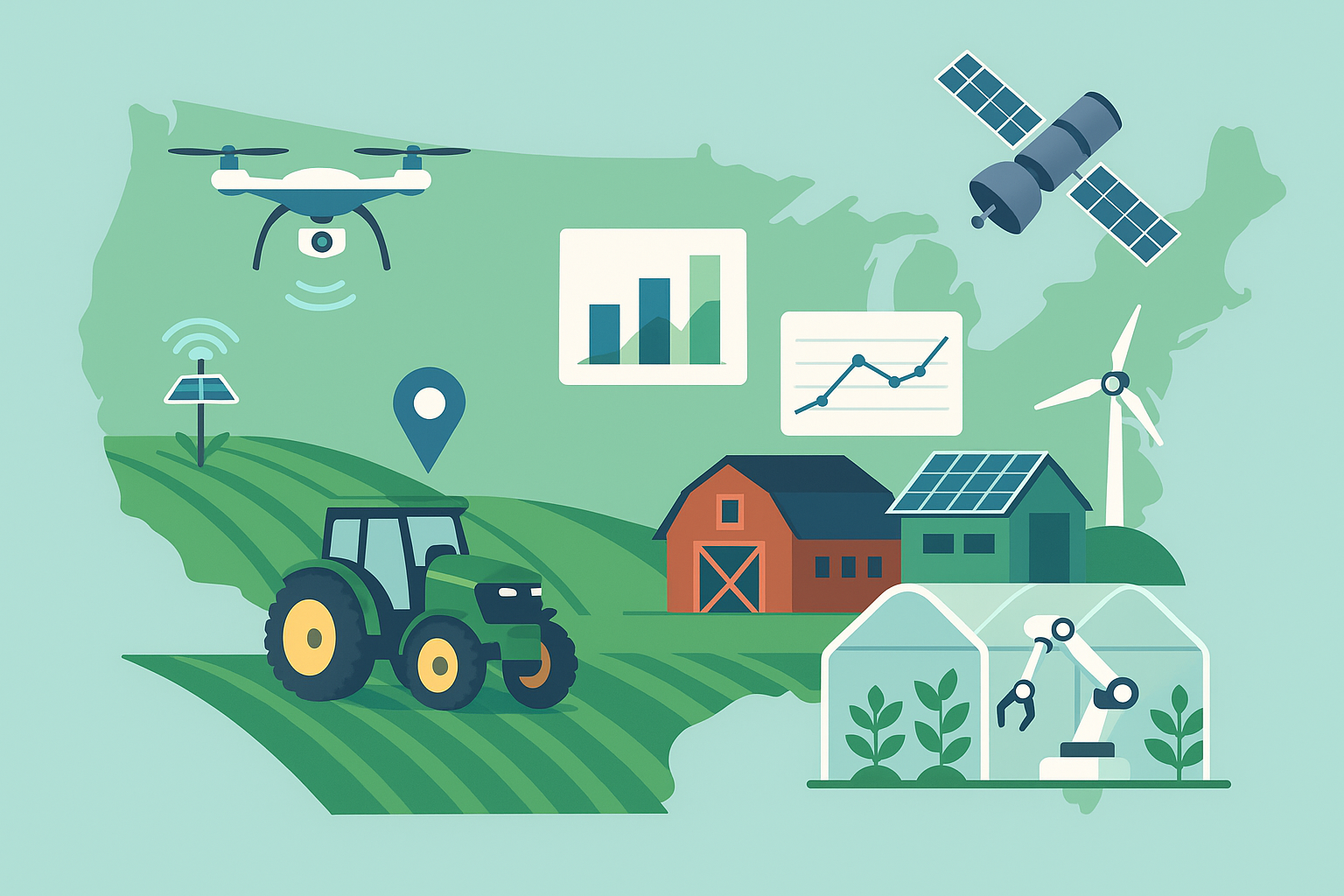
For decades, agriculture’s digital eyes have been everywhere: camera-equipped drones, satellite imagery, multispectral sensors. Now, the industry is beginning to adopt digital ears. Bioacoustic monitoring—using low-power microphones and machine learning to detect insects and vertebrate pests by their sounds—offers farmers a continuous, noninvasive way to know what’s moving in a field, greenhouse, orchard, or grain bin without waiting for trap counts or visual scouting. The technology promises earlier detection, better timing of interventions, and fewer blanket pesticide applications, aligning with both profitability and sustainability goals.
What Bioacoustic Pest Monitoring Actually Listens For
Most agricultural pests produce distinctive acoustic signatures. These can be airborne sounds such as wingbeats and flight buzzes, or substrate-borne vibrations produced when insects chew, probe, or move within plant tissues and stored commodities. Examples include:
- Airborne tonal signals from flying insects in orchards and fields (e.g., fruit flies, whiteflies, moths) captured by weatherized microphones.
- Characteristic clicks, scrapes, and rustles from stored-grain insects inside silos and warehouses, detected by contact sensors or embedded microphones.
- Stridulation and chirps (e.g., crickets, katydids) and rodent activity patterns around field edges and storage areas.
In practice, systems filter for narrow frequency bands and patterns associated with target species. By sampling short audio snippets throughout the day, devices can infer presence, relative activity, and time-of-day patterns—data that feed directly into integrated pest management (IPM) decisions.
How the Technology Works
Hardware at the Edge
Modern nodes are designed to be left in the field for entire seasons. Key components include:
- MEMS microphones or contact transducers enclosed in weatherproof housings with wind screens to reduce turbulence noise.
- Low-power microcontrollers capable of running on-device signal processing (TinyML) to avoid streaming raw audio.
- Connectivity via LoRaWAN, NB-IoT, or LTE-M for sparse data transmission—only detections and summaries, not continuous recordings.
- Solar panels and ruggedized batteries sized for cloudy stretches and high-temperature environments.
Signal Processing and Machine Learning
Rather than transmitting audio, devices convert it into compact features such as spectrogram “fingerprints” or a small set of frequency and time-domain statistics. Lightweight classifiers then estimate the likelihood of specific pests. Models are trained on labeled acoustic libraries, often tailored by crop and region to reduce false positives. Typical steps include:
- Band-pass filtering to focus on species-relevant frequencies and exclude tractors, human voices, and wind rumble.
- Noise-robust feature extraction (e.g., mel-frequency coefficients) on short frames of audio.
- On-device classification to trigger detections, with configurable confidence thresholds that balance sensitivity and specificity.
The result is a trickle of actionable alerts instead of a flood of data. Dashboards aggregate detections across the farm, visualize activity heatmaps, and flag anomalies that warrant scouting or targeted treatment.
Where It’s Being Applied
Orchards and Vineyards
Airborne detection of small fruit pests is an early use case. Distributed nodes along orchard rows can indicate when flight activity begins at dusk or after a temperature change, informing the timing of mating disruption or the need to refresh lures and traps. Because acoustic monitors run continuously, they can catch sporadic inflight events between scheduled scouting rounds.
Protected Cropping and Greenhouses
Greenhouses offer an acoustically controlled environment, improving detection accuracy. Systems can be tuned to identify target pests like whiteflies and fungus gnats while ignoring beneficials. Continuous monitoring helps evaluate whether biological control releases are suppressing pest activity without resorting to broad-spectrum sprays.
Row Crops
In broadacre settings, nodes are placed at field edges, near water sources, and in known pressure zones. The aim is early warning. Acoustic detections trigger human scouting or camera checks before thresholds are crossed, narrowing the window for precise interventions.
Stored Grain and Postharvest
Within bins and warehouses, microphones or vibration sensors can detect chewing and movement by weevils, borers, and beetles even when insects are hidden. This allows earlier fumigation decisions, reduces product loss, and supports compliance documentation for quality audits.
From Alerts to Action: Integrating With IPM
Acoustic data fit naturally into IPM frameworks that emphasize prevention, monitoring, and threshold-based control:
- Validation: Acoustic alerts direct scouts to specific blocks, saving labor by narrowing search areas.
- Timing: Knowing when pests are most active helps schedule sprays for maximum contact or optimize the placement of pheromone dispensers.
- Selectivity: If detections cluster at edges or specific microclimates, growers can consider banded treatments instead of whole-field applications.
- Evaluation: Post-treatment activity curves help evaluate efficacy, supporting resistance management and cost control.
Many growers pair bioacoustic nodes with existing traps, using audio as the “always-on” sentinel and traps as the physical confirmation. Over time, farms build a local acoustic baseline—what “quiet” looks like by season—improving confidence in alerts.
Economics: What the Numbers Look Like
Costs vary with connectivity and density, but a typical setup includes a small number of devices per block or bin, a connectivity plan, and a software subscription. Potential savings come from fewer unnecessary sprays, targeted applications, and reduced losses.
Illustrative scenario for a 40-hectare orchard:
- Hardware: 12 nodes at key points (edges, low spots, risk blocks).
- Annualized cost: devices amortized over several seasons plus software and connectivity.
- Benefits: avoiding one broad-spectrum spray across the entire orchard can offset a large fraction of the annual system cost; an additional partial-area treatment avoided or optimized timing for mating disruption can move the system into net savings.
The ROI strengthens when labor is tight, travel between blocks is long, or quality premiums depend on reduced residues and better pest outcomes. In stored grain, preventing even a small percentage of loss can justify a system quickly.
Deployment Considerations
Field conditions can make or break acoustic performance. Practical tips include:
- Placement: Avoid direct exposure to irrigation streams and heavy foliage rub; mount at a consistent height where the target insects fly or feed.
- Wind mitigation: Use proper windscreens and place nodes where wind shear is lower; software can ignore high-wind intervals.
- Calibration period: Expect a few weeks to tune sensitivity and thresholds to local noise (machinery schedules, road traffic).
- Power and maintenance: Keep solar panels clear of dust and debris; check seals after storms; schedule firmware updates off-peak.
- Data integration: Connect detections to farm management platforms so alerts appear alongside scouting logs, weather, and treatments.
Accuracy, Limitations, and What’s Next
Bioacoustic systems are not a silver bullet. Their usefulness depends on:
- Species specificity: Many pests produce similar frequency content; models must learn patterns beyond a single tone to avoid confusion.
- Environmental noise: Rain, irrigation, and heavy machinery can mask signals. Systems typically down-weight or skip analysis during high-noise intervals.
- Behavioral variability: Flight activity changes with temperature and humidity; biting and chewing are intermittent. Continuous monitoring helps, but short windows may miss events.
- Local training data: Site-specific models outperform generic ones. Providers that curate regional acoustic libraries tend to deliver better results.
Active research and product development are improving robustness with multimodal sensing. For example, combining audio with microclimate data and trap counts reduces false positives, while substrate vibration sensing augments microphones for hidden pests. Edge models are getting more efficient, enabling richer analysis without draining batteries or sending raw audio off-farm.
Data, Privacy, and Biosecurity
Because devices are “listening,” privacy questions arise. In agriculture settings, best practices focus on minimizing risk while preserving utility:
- On-device processing: Classify on the node and transmit only detections and summary metrics, not raw audio.
- Frequency filtering: Limit sampling to bands relevant to insects and mechanical signatures; this reduces the chance of capturing intelligible speech.
- Data ownership and portability: Ensure growers can export detection logs for compliance and audit purposes.
For biosecurity, acoustic monitoring offers a chance to detect invasive species early. Regional networks, even if sparse, can provide authorities and cooperatives with early warnings, complementing manual trapping programs.
How to Evaluate a System Before You Buy
Not all solutions are created equal. Consider the following questions:
- Which target pests are supported for your crop and region, and how were models trained and validated?
- What is the detection performance in noisy conditions typical for your farm (wind, irrigation, road noise)?
- Can the system integrate with your existing trap network and farm management software?
- What is the power profile and expected maintenance schedule, including firmware updates and weatherproofing?
- Is there a clear plan for tuning thresholds during the first season and support for interpreting alerts?
The Bigger Picture
Bioacoustic monitoring fills a gap between occasional human scouting and fully autonomous visual systems. It is continuous, relatively low-cost, and noninvasive. As acoustic libraries grow and edge AI improves, these digital ears will get better at telling the difference between a beneficial hoverfly and a damaging moth, between harmless rustle and costly infestation. For growers trying to do more with less—less chemical input, less labor, less uncertainty—listening may become as essential as looking.