Software & Web Development

Data Science & Robotics Development

Calc LLC provide high quality services at very competitive rate

Early May 2026 U.S. Ag Weather Outlook and Field Guidance

Early May 2026 U.S. Ag Weather Outlook and Field Guidance

Early May U.S. ag weather remains variable: scattered, brief storms across Plains, Corn Belt, and Mid-South amid warm, humid South; mostly dry California and Desert Southwest; periodic light precip Pacific Northwest. Expect alternating fieldwork windows with breezy days; localized severe, flooding, and fire risks; monitor disease, irrigation, and heat stress.

Weather
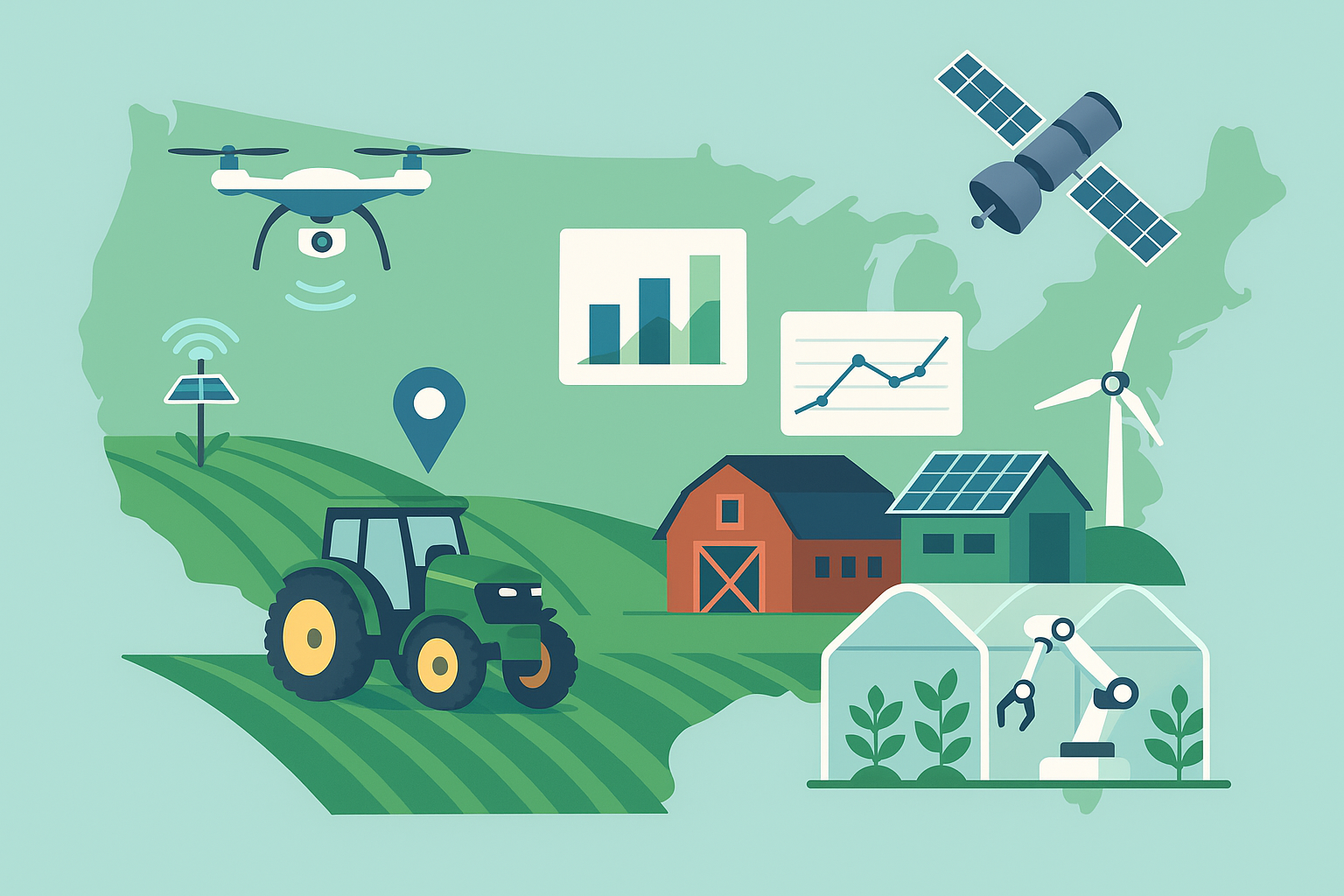
Cold Plasma Comes to the Farm: Cleaner Seeds, Safer Produce, and Nitrogen from Air

Cold plasma, a room-temperature ionized gas, offers farms residue-free seed priming and sanitization, produce disinfection, plasma-activated water, and on-site nitrate production from air. Benefits include reduced chemicals, water, and logistics; modular, renewable-ready hardware. Success depends on dose control, uniform exposure, energy efficiency, and validation, with smarter, integrated systems improving ROI.

Tech

Quiet Moves, Big Stakes: Incremental Budget and Rulemaking Steps Are Steering U.S. Agriculture This Week

U.S. ag policy saw positioning, not headlines, across budgets, USDA/EPA rules, biofuels credits, labor, water, and interstate standards. Stakeholders pressed for clarity on timelines, funding, and compliance. Expect incremental notices and guidance shaping planting, contracts, and investments; monitor pesticide/ESA, animal health, and trade risks as appropriations and rulemakings advance.

Politics
U.S. Agriculture Policy in October: Current Landscape and 7-Day Outlook

U.S. Agriculture Policy in October: Current Landscape and 7-Day Outlook

The report outlines October’s U.S. agriculture policy landscape, emphasizing funding decisions, farm safety net oversight, trade and biofuel moves, pesticide regulation, labor, and water issues. It previews near-term actions across Congress, USDA, EPA, courts, and states, highlights stakes for farm income, food prices, exports, and offers a seven-day watchlist.

U.S. Markets Brace for Inflation Data and Bank Earnings as Long-End Yields Steer Risk

U.S. Markets Brace for Inflation Data and Bank Earnings as Long-End Yields Steer Risk

Markets treaded cautiously ahead of inflation data and bank earnings, with equities rotating defensively, long-end yields and real rates steering the dollar and valuations, and commodities/credit rangebound. Focus shifts to CPI/PPI, retail sales, housing, auctions, and earnings. Expect choppy, data-dependent trading as disinflation-versus-growth dynamics shape risk appetite.

October 10’s Lasting Imprint on U.S. Agriculture

October 10’s Lasting Imprint on U.S. Agriculture

Across history, October 10 marked shocks that reshaped U.S. agriculture: 1871 fires spurred safer grain logistics and land stewardship; 1963’s test ban reduced radioactive milk fallout; 2018’s Hurricane Michael devastated harvests and timber; 2008’s market crash strained farm credit. The throughline: invest in resilience, risk management, and public institutions.

U.S. Ag Weather: Widespread Northern Frost, Midweek Plains Storm, and Diverging Harvest Windows

U.S. Ag Weather: Widespread Northern Frost, Midweek Plains Storm, and Diverging Harvest Windows

Early-autumn U.S. ag weather featured northern chill with frost, frontal rains from Southern Plains to Mid-South, cool/showery Northwest, and dry, warm West/Southeast; Florida had downpours. Harvest favored West/Southeast, slower Mid-South/Ohio Valley. Next 7 days: brief cool north, then expanding midweek rains West-to-Plains/Valleys with wind, localized flooding, and mountain snow.

Ultrafine Bubbles for Irrigation: Stable Oxygen, Cleaner Lines, Predictable Fertigation

Ultrafine Bubbles for Irrigation: Stable Oxygen, Cleaner Lines, Predictable Fertigation

Ultrafine (nanobubble) irrigation boosts dissolved oxygen delivery to roots, improving respiration, microbial balance, line cleanliness, and distribution uniformity. Generated via hydrodynamic, membrane, or electrochemical systems using air or oxygen, they suit hydroponics, drip, and orchards. Benefits are context-dependent; successful adoption requires instrumentation, filtration, cautious chemistry, and piloted ROI evaluation.

U.S. Agriculture Policy Snapshot: Budgets, Disaster Aid, Trade, Biofuels, and the Week Ahead

U.S. Agriculture Policy Snapshot: Budgets, Disaster Aid, Trade, Biofuels, and the Week Ahead

U.S. farm policy debate centers on funding, disaster aid vs. insurance, trade access, biofuels rules, environmental compliance, competition in livestock, and nutrition programs. Expect routine but consequential reports, hearings, and regulatory steps this week. Producers should maintain program readiness, monitor compliance shifts, hedge logistics, and assess decarbonization market opportunities.

7-Day Macro Outlook: Inflation Prints, Fed Messaging, Treasury Supply, and Earnings in Focus

7-Day Macro Outlook: Inflation Prints, Fed Messaging, Treasury Supply, and Earnings in Focus

Markets hinge on upcoming inflation, labor, Fed communications, and Treasury supply, alongside early earnings. Outcomes will steer rates, dollar, and equities via term premium, real yields, and risk appetite. Scenarios span softer disinflation, sticky inflation, or growth cooling, with auction results and earnings guidance shaping cross-asset moves.

Fire, Flood, and Freight: How October 9 Repeatedly Reshaped American Agriculture

Fire, Flood, and Freight: How October 9 Repeatedly Reshaped American Agriculture

Across October 9 milestones, U.S. agriculture confronts shocks and adapts: the 1871 Chicago and Peshtigo fires reshaped grain trade and land management; 2002 port reopening unclogged exports; 2017 Wine Country fires complicated harvests; 2016 Matthew floods swamped Carolina farms—spotlighting risk, redundancy, standards, and climate-driven resilience.