Software & Web Development

Data Science & Robotics Development

Calc LLC provide high quality services at very competitive rate

Early May 2026 U.S. Ag Weather Outlook and Field Guidance

Early May 2026 U.S. Ag Weather Outlook and Field Guidance

Early May U.S. ag weather remains variable: scattered, brief storms across Plains, Corn Belt, and Mid-South amid warm, humid South; mostly dry California and Desert Southwest; periodic light precip Pacific Northwest. Expect alternating fieldwork windows with breezy days; localized severe, flooding, and fire risks; monitor disease, irrigation, and heat stress.

Weather
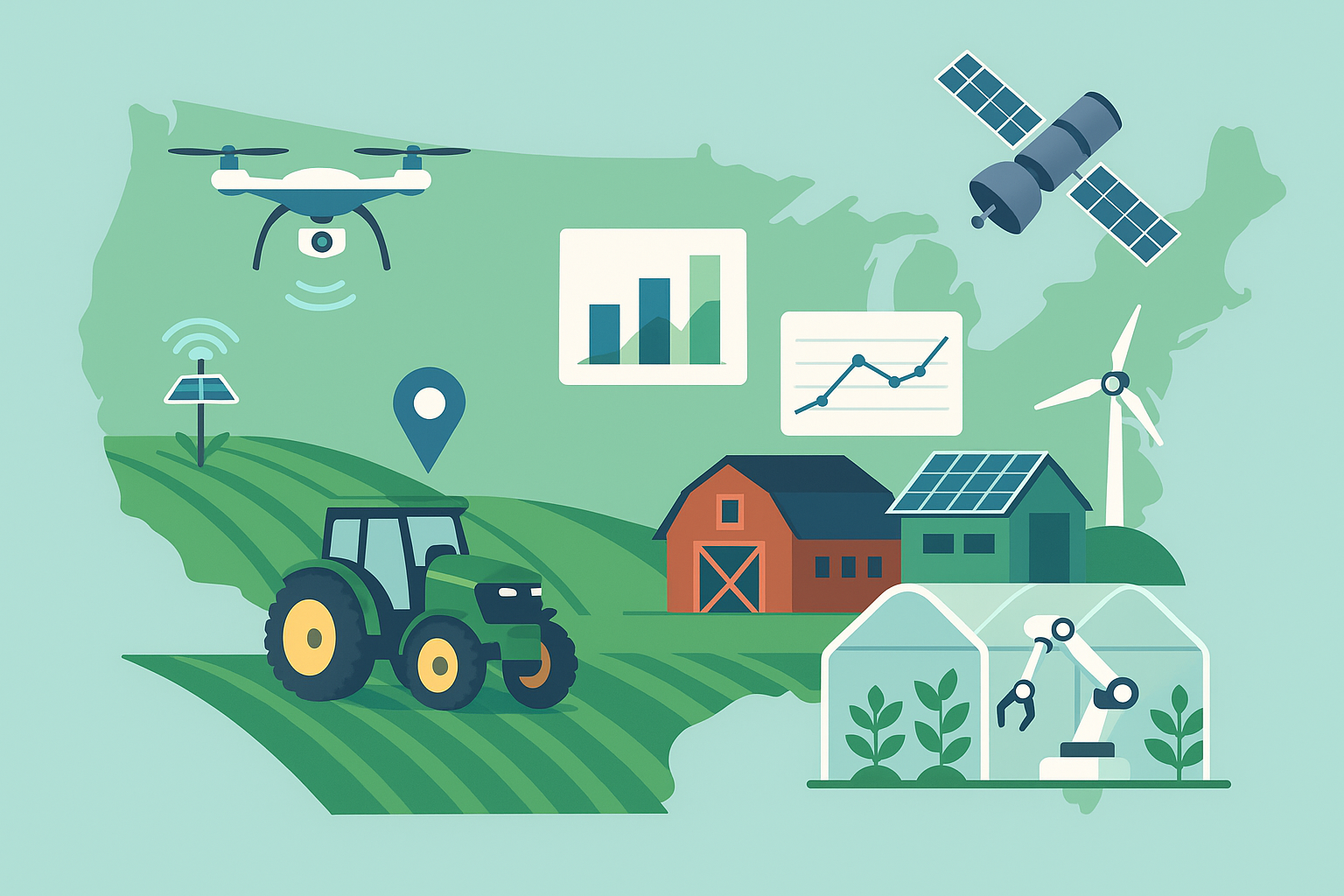
Cold Plasma Comes to the Farm: Cleaner Seeds, Safer Produce, and Nitrogen from Air

Cold plasma, a room-temperature ionized gas, offers farms residue-free seed priming and sanitization, produce disinfection, plasma-activated water, and on-site nitrate production from air. Benefits include reduced chemicals, water, and logistics; modular, renewable-ready hardware. Success depends on dose control, uniform exposure, energy efficiency, and validation, with smarter, integrated systems improving ROI.

Tech

Quiet Moves, Big Stakes: Incremental Budget and Rulemaking Steps Are Steering U.S. Agriculture This Week

U.S. ag policy saw positioning, not headlines, across budgets, USDA/EPA rules, biofuels credits, labor, water, and interstate standards. Stakeholders pressed for clarity on timelines, funding, and compliance. Expect incremental notices and guidance shaping planting, contracts, and investments; monitor pesticide/ESA, animal health, and trade risks as appropriations and rulemakings advance.

Politics
October 12: The Day That Connects American Agriculture Across Centuries

October 12: The Day That Connects American Agriculture Across Centuries

October 12 threads American agriculture’s past and present: from the Columbian Exchange’s transformative and tragic legacy to National Farmers Day celebrations, evolving farm realities, and 2011 trade deals expanding export markets. Amid harvest, it invites honoring farmers, recognizing Indigenous knowledge, and focusing on policies, infrastructure, and conservation sustaining rural communities.

U.S. Farm Weather Outlook: Favorable Harvest Windows, PNW Showers, and Patchy Frost Risk

U.S. Farm Weather Outlook: Favorable Harvest Windows, PNW Showers, and Patchy Frost Risk

U.S. farm weather stayed mostly favorable, with dry or light, brief showers and breezy fronts mainly across northern regions. The Pacific Northwest turns periodically wet; California and the Southwest remain dry. Next week features quick disturbances, cooler nights, and patchy frost risk, supporting ongoing harvest and winter wheat progress.

Cosmic-Ray Neutron Sensing Delivers Field-Scale Soil Moisture for Smarter Irrigation

Cosmic-Ray Neutron Sensing Delivers Field-Scale Soil Moisture for Smarter Irrigation

Cosmic-ray neutron sensing offers field-scale soil moisture without probes, averaging hectares by counting neutrons moderated by hydrogen. It bridges point sensors and satellites, guiding irrigation, VRI validation, and water accounting. After calibration and corrections, CRNS integrates with automation; rovers and sensor fusion enhance placement and insight, despite canopy/drip limitations.

U.S. Agriculture Policy: What Moved in 24 Hours and What to Watch This Week

U.S. Agriculture Policy: What Moved in 24 Hours and What to Watch This Week

U.S. agriculture policy saw positioning, not breakthroughs: appropriations tweaks, regulatory filings, trade and labor signals, and disaster designations shaped risks. Next week’s catalysts include possible Ag–FDA funding action, midweek rule postings, and USDA export data. Stakeholders should monitor primary feeds, deadlines, and adjust plans for labor, compliance, and export flows.

US Markets Q4 Playbook: Inflation’s Last Mile, Fed Path, Treasury Supply, and the Week Ahead

US Markets Q4 Playbook: Inflation’s Last Mile, Fed Path, Treasury Supply, and the Week Ahead

Markets were driven by inflation’s “last mile,” consumer durability, Fed policy timing, and Treasury supply as earnings season intensified. Cross-asset moves tracked real yields, dollar strength, and energy. The coming week brings holiday-thinned liquidity, mid-month data, Fed speak, and OPEX. Scenarios span soft landing to growth scare; expect episodic volatility.

October 11 in American Agriculture: Trade Truces, Tempests, and the Data That Move Markets

October 11 in American Agriculture: Trade Truces, Tempests, and the Data That Move Markets

October 11 has repeatedly shaped U.S. agriculture: 2019’s China 'phase one' truce lifted markets; 2018’s Hurricane Michael devastated crops; a 2019 Plains blizzard buried sugar beets; the 2013 shutdown silenced USDA data; and Lewis’s 1809 death recalls exploration’s legacy—underscoring trade exposure, weather volatility, data needs, and historical land-use impacts.

U.S. Ag Weather Weekly: Harvest Windows, Frost Risk, and a Practical 7-Day Outlook

U.S. Ag Weather Weekly: Harvest Windows, Frost Risk, and a Practical 7-Day Outlook

A region-by-region U.S. ag weather update reports variable mid-October fronts, cool nights, and spotty rains. Expect intermittent showers in central/eastern states, frequent Pacific Northwest moisture, and mostly dry California/Southwest. Key themes: brief harvest windows, frost risk in northern/interior areas, periodic gusty winds, uneven winter wheat moisture, localized fire weather.

Closing the Nitrogen Loop: Turning Manure Ammonia Into Fertilizer

Closing the Nitrogen Loop: Turning Manure Ammonia Into Fertilizer

Livestock farms are adopting systems to capture ammonia from manure—via membranes, stripping, or electrochemical units—converting it into ammonium fertilizers. Targeted deployment cuts odors and particulate precursors, conserves nitrogen, and offsets fertilizer costs. Success hinges on right-sizing, pretreatment, diligent operations, and supportive policies, with sensor-driven, modular designs accelerating adoption.