Software & Web Development

Data Science & Robotics Development

Calc LLC provide high quality services at very competitive rate

Planting-Season Policy Watch: U.S. Agriculture’s 7‑Day Outlook

Planting-Season Policy Watch: U.S. Agriculture’s 7‑Day Outlook

U.S. farm policy is in a positioning phase as planting begins: Congress and agencies weigh funding, E15 summer rules, labor/H-2A, livestock competition, water/permits, trade enforcement, and animal health. No major changes yet, but weekly data, hearings, and possible waivers or rulings could quickly shift costs, compliance, and demand.

Politics

Decoding the Tape: A Scenario-Based Seven-Day U.S. Macro and Markets Outlook

Scenario-based seven‑day U.S. market outlook: read moves via front‑end yields, curve, breakevens, equity leadership/breadth, credit spreads, dollar, oil and gold. Base case is range‑bound; risks: hawkish on hotter inflation, dovish on weaker growth. Bottom line: inflation vs growth will set the volatility regime; watch Fed, auctions, earnings, labor.

Macro

April 11 in American Agriculture: Diplomacy, Disaster, and Discovery

April 11 has repeatedly reshaped U.S. agriculture: 1803’s surprise Louisiana Purchase offer opened export routes and vast farmlands; 1965’s Palm Sunday tornadoes spurred warnings and risk tools; and 1899’s birth of chemist Percy Julian advanced soybean industries. Seasonally, the date often marks fieldwork ramp-ups plus frost and livestock challenges.

History
Late-Summer U.S. Ag Policy Outlook: Deadlines, Risk, Rules, and Trade

Late-Summer U.S. Ag Policy Outlook: Deadlines, Risk, Rules, and Trade

U.S. agriculture policy is in a late-summer holding pattern, with fewer congressional moves and more agency, state, and court activity. Priorities: funding continuity, disaster risk management, regulatory disputes, and trade. Watch federal releases, appropriations signals, regulatory notices, disaster declarations, trade steps, and court actions affecting compliance and cash flow.

Inflation and Labor in Focus: PCE and the Jobs Report to Shape Rates and Risk into September

Inflation and Labor in Focus: PCE and the Jobs Report to Shape Rates and Risk into September

Markets navigated thin, month‑end liquidity ahead of Labor Day, weighing GDP revisions, jobless claims, and housing/trade data while positioning for July PCE and next week’s jobs report. With growth resilient yet slowing and inflation mixed, the Fed remains data‑dependent; outcomes will steer rates, the dollar, and cross‑asset leadership.

August 29: When Weather, Markets, and Policy Converge in U.S. Agriculture

August 29: When Weather, Markets, and Policy Converge in U.S. Agriculture

August 29 is a recurring pivot in U.S. agriculture: from Shays’ Rebellion’s courthouse protest (1786) to Gulf hurricanes Katrina, Isaac, and Ida disrupting crops and export logistics. Late-August crop vulnerability and supply-chain concentration magnify risk, spurring on-farm hardening, insurance, logistics resilience, and preparedness that reshape policy and producer decision-making.

Soft‑Landing in the Balance: A Data‑Driven Late‑Summer Market Recap and Outlook

Soft‑Landing in the Balance: A Data‑Driven Late‑Summer Market Recap and Outlook

Markets traded cautiously, data-dependent and month-end sensitive. Soft-landing remains base case as investors parse inflation, labor and Fed signals; yields oscillate, dollar range-bound, commodities mixed, credit stable, volatility subdued. Upcoming core PCE, job data, ISM and Treasury supply will steer rate-cut timing, curve shape, sector rotation and FX into September.

August 28’s Imprint on U.S. Agriculture: Price Controls, Storms, and Civil Rights

August 28’s Imprint on U.S. Agriculture: Price Controls, Storms, and Civil Rights

August 28 repeatedly reshaped U.S. agriculture: 1941’s OPA launched wartime price controls; the 1893 Sea Islands Hurricane devastated coastal farms; 2011’s Irene flooded Northeast fields; and 1963’s March on Washington advanced civil-rights reforms for farmers. Together, these moments inform today’s policies on prices, disaster resilience, and equity.

Late-August U.S. Agricultural Weather Brief: Regional 7-Day Outlook, Hazards, and Fieldwork Guidance

Late-August U.S. Agricultural Weather Brief: Regional 7-Day Outlook, Hazards, and Fieldwork Guidance

Late-August U.S. ag update: Expect heat/humidity stress in the South, scattered but uneven storms across central/eastern belts, monsoon showers in the Southwest, and tropical-season risks for the Southeast/Delta. Field windows short and flexible. Monitor NWS/mesonet for localized rain, severe, flooding, fire/smoke, and disease; adjust irrigation, spraying, harvest, and livestock plans.

A Field Guide to Agrivoltaics: Harvesting Food and Power on the Same Acre

A Field Guide to Agrivoltaics: Harvesting Food and Power on the Same Acre

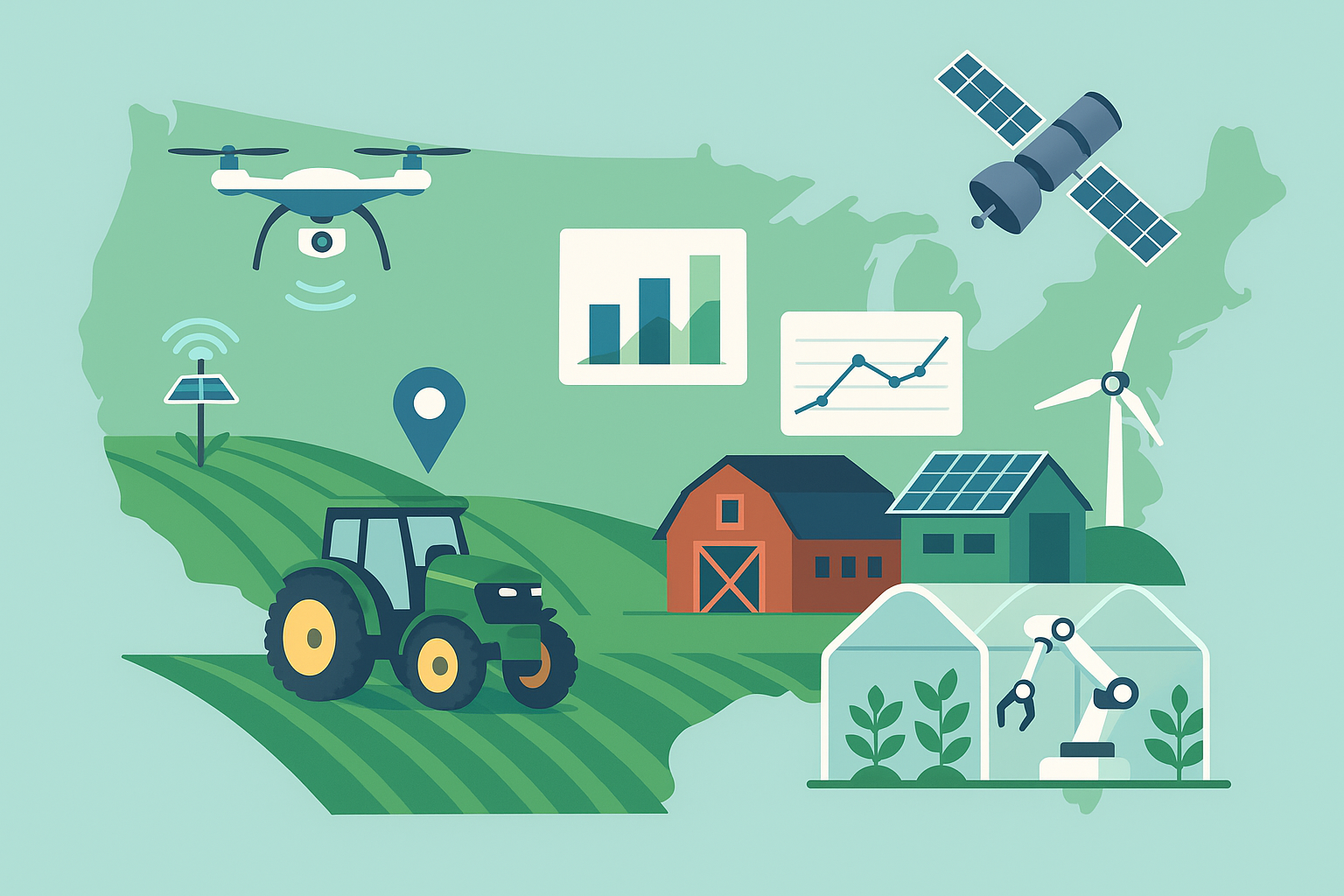
Agrivoltaics co-locates crops and solar, using elevated or spaced PV to create shade, save water, and generate on-farm power. Design variants suit climates and crops, with careful planning for equipment access, economics, and policy. Success hinges on balancing light, water, and operations; innovations promise smarter controls and biodiversity gains.

U.S. Agriculture Policy This Week: Recess Lull, Regulatory Watch, and Disaster Preparedness

U.S. Agriculture Policy This Week: Recess Lull, Regulatory Watch, and Disaster Preparedness

With Congress in recess before the Sept. 30 fiscal deadline, U.S. agriculture pivots to agency actions, regulatory timelines, and disaster readiness. USDA programs, H‑2A compliance, biofuel credit data, and market transparency dominate. The week ahead centers on weather risks, weekly USDA reports, holiday-adjusted schedules, and positioning for funding debates.