Software & Web Development

Data Science & Robotics Development

Calc LLC provide high quality services at very competitive rate

Early May 2026 U.S. Ag Weather Outlook and Field Guidance

Early May 2026 U.S. Ag Weather Outlook and Field Guidance

Early May U.S. ag weather remains variable: scattered, brief storms across Plains, Corn Belt, and Mid-South amid warm, humid South; mostly dry California and Desert Southwest; periodic light precip Pacific Northwest. Expect alternating fieldwork windows with breezy days; localized severe, flooding, and fire risks; monitor disease, irrigation, and heat stress.

Weather
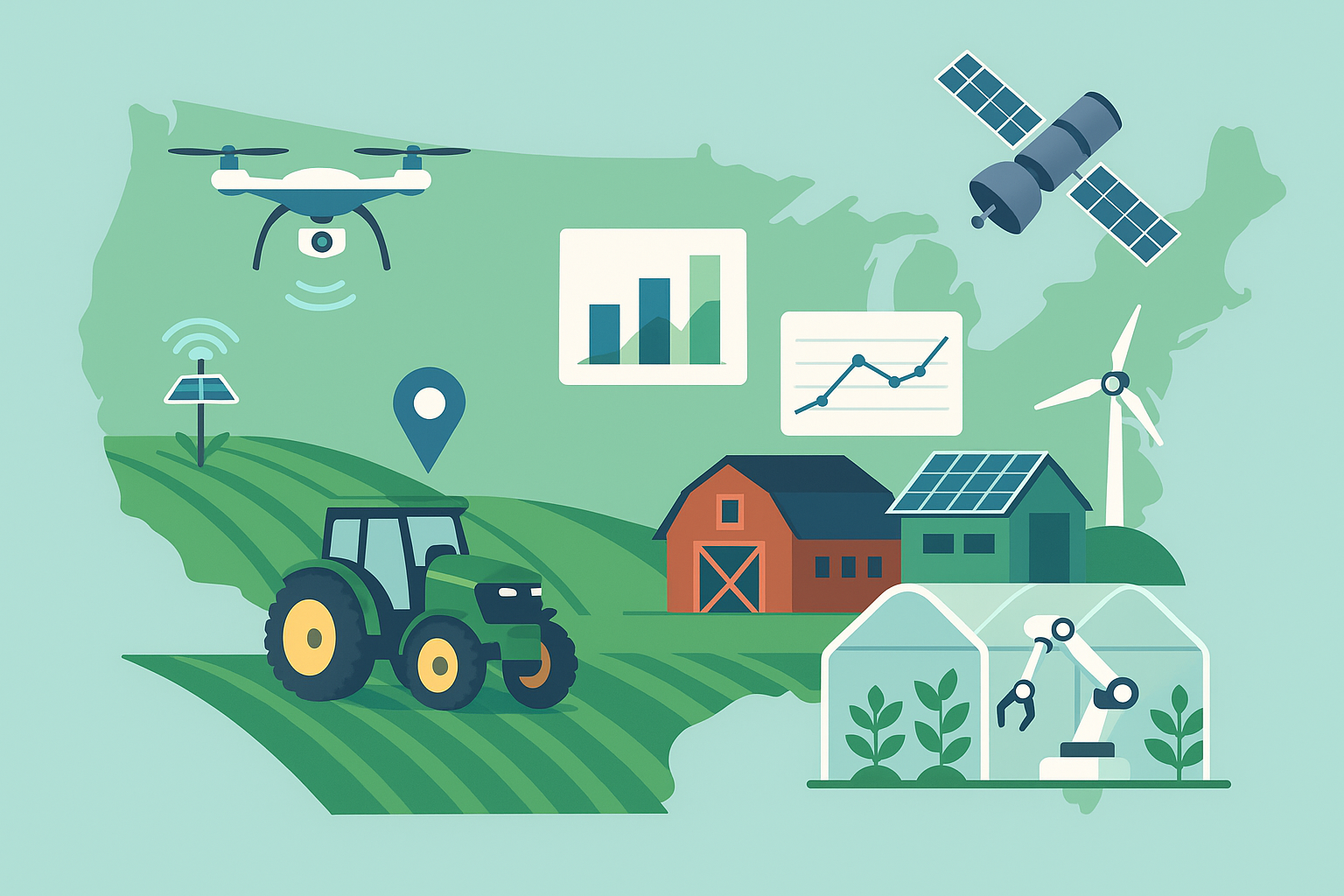
Cold Plasma Comes to the Farm: Cleaner Seeds, Safer Produce, and Nitrogen from Air

Cold plasma, a room-temperature ionized gas, offers farms residue-free seed priming and sanitization, produce disinfection, plasma-activated water, and on-site nitrate production from air. Benefits include reduced chemicals, water, and logistics; modular, renewable-ready hardware. Success depends on dose control, uniform exposure, energy efficiency, and validation, with smarter, integrated systems improving ROI.

Tech

Quiet Moves, Big Stakes: Incremental Budget and Rulemaking Steps Are Steering U.S. Agriculture This Week

U.S. ag policy saw positioning, not headlines, across budgets, USDA/EPA rules, biofuels credits, labor, water, and interstate standards. Stakeholders pressed for clarity on timelines, funding, and compliance. Expect incremental notices and guidance shaping planting, contracts, and investments; monitor pesticide/ESA, animal health, and trade risks as appropriations and rulemakings advance.

Politics
September 17: The Day That Changed American Agriculture—Twice

September 17: The Day That Changed American Agriculture—Twice

September 17 links two pivots in U.S. agriculture: the 1787 Constitution, whose commerce, taxing, patents, and standards clauses still govern markets, seeds, and farm programs; and 1862’s Battle of Antietam, which ravaged fields and hastened emancipation, reshaping farm labor, mechanization, and today’s debates over equity, stewardship, and support.

Early Fall U.S. Agricultural Weather Outlook: Harvest Windows, Risks, and 7-Day Regional Guidance

Early Fall U.S. Agricultural Weather Outlook: Harvest Windows, Risks, and 7-Day Regional Guidance

Early fall brings variable showers across the Midwest, warmth and dryness in the southern tier and West, and scattered coastal/Southwest storms. Next seven days: fronts target Northern Plains-to-Northeast with uneven rain while South stays hot, West largely dry. Best fieldwork windows West/High Plains; watch downpours, heat, isolated high-elevation frost, tropics.

Plasma-Activated Water: On-Demand, Chlorine-Free Sanitation for Irrigation, Hydroponics, and Postharvest

Plasma-Activated Water: On-Demand, Chlorine-Free Sanitation for Irrigation, Hydroponics, and Postharvest

Plasma-activated water (PAW) uses cold plasma to generate short-lived oxidants, delivering on-demand, chlorine-free sanitation for irrigation lines, hydroponics, nurseries, seeds, and postharvest washes. Effective yet decay-prone, it requires monitoring and sensible dosing; energy use is modest, materials/safety matter, and it can reduce chemical purchases alongside filtration or UV.

Quiet but Consequential: Funding, Farm Bill, and Regulatory Timing Shape 2025 U.S. Agriculture

Quiet but Consequential: Funding, Farm Bill, and Regulatory Timing Shape 2025 U.S. Agriculture

U.S. agriculture spent the past day positioning on three fronts: a continuing resolution to stabilize WIC, inspections, loans and conservation; staff-level Farm Bill talks over commodities, SNAP and climate funding; and regulatory timing on livestock competition, pesticides and labor. Next week’s signals will shape 2025 planting, markets and cash flow.

Soft-Landing Stress Test: Front-End Rates, Earnings Revisions, and Catalyst-Driven Flows

Soft-Landing Stress Test: Front-End Rates, Earnings Revisions, and Catalyst-Driven Flows

The piece outlines a U.S. macro tug-of-war: disinflation versus resilient-but-cooling growth and a cautious Fed. It maps market drivers, risks, and scenario paths (soft-landing, sticky inflation, growth scare); highlights upcoming data, Fed signals, issuance, and options-expiration mechanics. Focus now: front-end yields, earnings revisions, credit primary tone, positioning.

September 16: The Date That Keeps Remaking American Agriculture

September 16: The Date That Keeps Remaking American Agriculture

Across 130 years, September 16 repeatedly reshaped U.S. agriculture: the 1893 Cherokee Outlet land run remapped the Southern Plains; the 1928 Okeechobee hurricane spurred levees and highlighted farmworker vulnerability; the 1940 peacetime draft transformed labor and mechanization; and 2004’s Hurricane Ivan tested Gulf crops, accelerating resilience investments.

What Mattered and What’s Next: The Mid‑Month Macro Playbook

What Mattered and What’s Next: The Mid‑Month Macro Playbook

Markets pivot on inflation progress, growth resilience, and Fed path. Mid‑month data, Treasury supply, and buyback blackouts drive cross‑asset moves: yields steering equities, dollar/oil shaping conditions, credit gauging confidence. Watch retail sales, production, housing, labor claims, and Fed signals. Scenario outcomes hinge on growth-inflation mix and liquidity.

September 15: Turning Points in American Agriculture

September 15: Turning Points in American Agriculture

September 15 repeatedly marks turning points in U.S. agriculture: Washington’s response to the Whiskey Rebellion, Khrushchev’s farm diplomacy opening, a 2022 rail-strike avert, the 2006 spinach E. coli reckoning, and Florence’s 2018 floods—illustrating how policy, technology, supply chains, and climate shocks shape farms, markets, and food safety.