Software & Web Development

Data Science & Robotics Development

Calc LLC provide high quality services at very competitive rate

Early May 2026 U.S. Ag Weather Outlook and Field Guidance

Early May 2026 U.S. Ag Weather Outlook and Field Guidance

Early May U.S. ag weather remains variable: scattered, brief storms across Plains, Corn Belt, and Mid-South amid warm, humid South; mostly dry California and Desert Southwest; periodic light precip Pacific Northwest. Expect alternating fieldwork windows with breezy days; localized severe, flooding, and fire risks; monitor disease, irrigation, and heat stress.

Weather
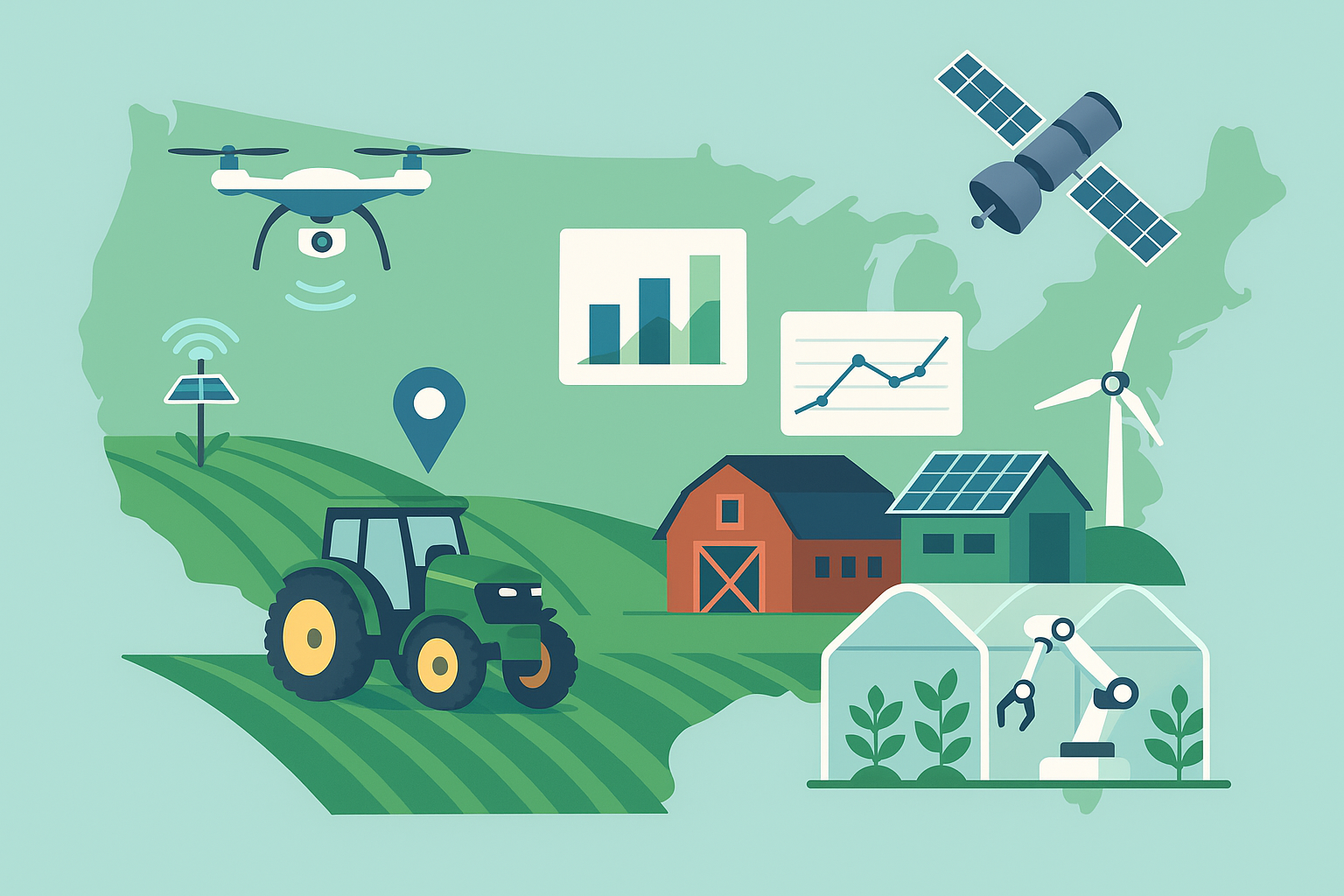
Cold Plasma Comes to the Farm: Cleaner Seeds, Safer Produce, and Nitrogen from Air

Cold plasma, a room-temperature ionized gas, offers farms residue-free seed priming and sanitization, produce disinfection, plasma-activated water, and on-site nitrate production from air. Benefits include reduced chemicals, water, and logistics; modular, renewable-ready hardware. Success depends on dose control, uniform exposure, energy efficiency, and validation, with smarter, integrated systems improving ROI.

Tech

Quiet Moves, Big Stakes: Incremental Budget and Rulemaking Steps Are Steering U.S. Agriculture This Week

U.S. ag policy saw positioning, not headlines, across budgets, USDA/EPA rules, biofuels credits, labor, water, and interstate standards. Stakeholders pressed for clarity on timelines, funding, and compliance. Expect incremental notices and guidance shaping planting, contracts, and investments; monitor pesticide/ESA, animal health, and trade risks as appropriations and rulemakings advance.

Politics
U.S. Ag Policy Watch: Fault Lines, Daily Signals, and the Seven-Day Outlook

U.S. Ag Policy Watch: Fault Lines, Daily Signals, and the Seven-Day Outlook

Analysis outlines U.S. agriculture’s current fault lines: congressional appropriations and farm-bill implementation, nutrition debates, USDA/EPA rulemaking, biofuels, trade disputes, labor and input costs, and statehouse initiatives. It flags key dockets, hearings, and court cases to monitor over the next week, emphasizing how fast-moving decisions reshape programs, compliance, and farm margins.

PCE in Focus: Markets Brace for a Data-Heavy Week Shaping the Fed’s Path

PCE in Focus: Markets Brace for a Data-Heavy Week Shaping the Fed’s Path

Markets are bracing for PCE inflation after jobless claims and Q4 GDP revisions, with month-end positioning tightening ranges. Outcomes will steer Fed cut expectations, front-end yields, dollar, and sector leadership. Next week’s ISM and payrolls extend the test, amid scenarios spanning disinflation or re-acceleration and elevated liquidity/communication risks.

February 27: Lincoln, Steinbeck, and Wounded Knee—Land, Labor, and Sovereignty in U.S. Agriculture

February 27: Lincoln, Steinbeck, and Wounded Knee—Land, Labor, and Sovereignty in U.S. Agriculture

On February 27, three milestones shaped U.S. agriculture: Lincoln’s 1860 speech paving way for homesteading, USDA, and land‑grant universities; Steinbeck’s 1902 birth and searing portrayals of migrant labor; and 1973’s Wounded Knee occupation asserting Native sovereignty—together reframing land access, knowledge, labor rights, and food/land governance today.

Lightning in a Box: On-Farm Plasma Nitrogen for Local, Low-Carbon Fertilizer

Lightning in a Box: On-Farm Plasma Nitrogen for Local, Low-Carbon Fertilizer

Plasma nitrogen fixation makes nitrate fertilizer on‑farm from air, water, and electricity, promising resilient, low‑carbon supply. Containerized units produce nitric solutions for fertigation and split applications, leveraging cheap renewables. Economics hinge on efficiency and power prices; benefits include reduced logistics, dosing, and lower emissions, with safety, permitting, and scalability challenges.

U.S. Ag Policy Daily: Safety Net, Conservation, Pesticides, Biofuels, Labor, and Trade—What Producers Should Watch Now

U.S. Ag Policy Daily: Safety Net, Conservation, Pesticides, Biofuels, Labor, and Trade—What Producers Should Watch Now

U.S. farm policy debates intensified across safety net design, disaster aid, conservation/climate, pesticides, biofuels, labor, and trade, without a decisive federal move. Fiscal limits, regulatory certainty, and market access frame the politics. Expect incremental shifts via rules, appropriations, courts, or states; producers should monitor programs, compliance, and market signals.

Rates-Led and Data-Dependent: US Markets Into PCE and Month-End

Rates-Led and Data-Dependent: US Markets Into PCE and Month-End

US markets are rates‑led and data‑dependent, with month‑end rebalancing and Treasury supply shaping liquidity ahead of Friday’s PCE. Claims, GDP revisions, and durable goods inform growth/disinflation. Outcomes steer curve, dollar, equities, and credit; next week’s ISM/JOLTS extend the signal. Strategies favor flexible duration, quality equities, and up‑in‑quality credit.

February 26: The Quiet Date That Shaped U.S. Farm Labor, Western Lands, and Watersheds

February 26: The Quiet Date That Shaped U.S. Farm Labor, Western Lands, and Watersheds

February 26 threads key milestones in U.S. agriculture: the 1885 Foran Act reshaping farm labor; 1919 Grand Canyon protection elevating Colorado River stewardship and Tribal issues; 1929 Grand Teton balancing parks and ranching; and 1972 Buffalo Creek sharpening rural risk management—together underscoring governance over land, water, labor, and resilience.