Software & Web Development

Data Science & Robotics Development

Calc LLC provide high quality services at very competitive rate

Planting-Season Policy Watch: U.S. Agriculture’s 7‑Day Outlook

Planting-Season Policy Watch: U.S. Agriculture’s 7‑Day Outlook

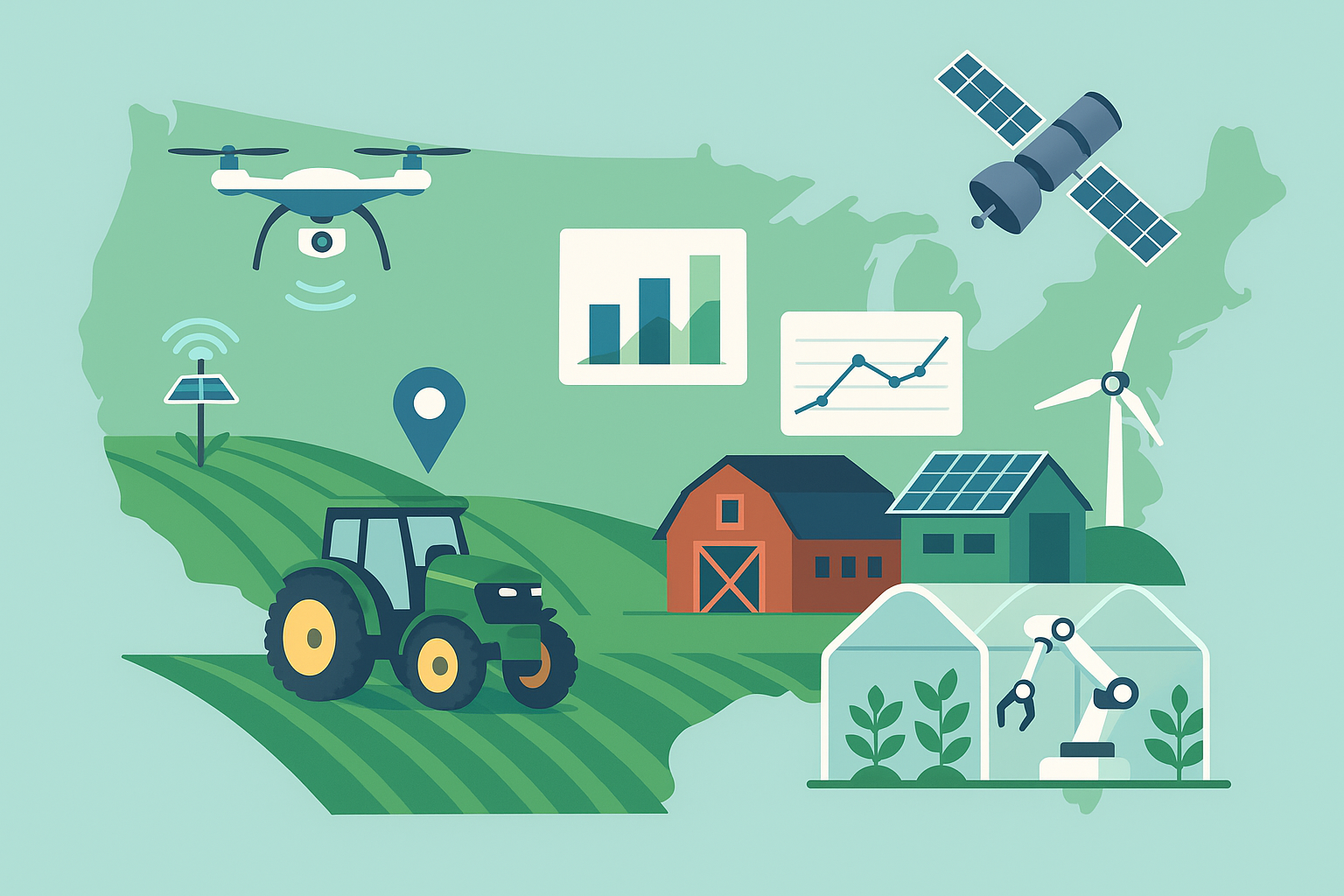
U.S. farm policy is in a positioning phase as planting begins: Congress and agencies weigh funding, E15 summer rules, labor/H-2A, livestock competition, water/permits, trade enforcement, and animal health. No major changes yet, but weekly data, hearings, and possible waivers or rulings could quickly shift costs, compliance, and demand.

Politics

Decoding the Tape: A Scenario-Based Seven-Day U.S. Macro and Markets Outlook

Scenario-based seven‑day U.S. market outlook: read moves via front‑end yields, curve, breakevens, equity leadership/breadth, credit spreads, dollar, oil and gold. Base case is range‑bound; risks: hawkish on hotter inflation, dovish on weaker growth. Bottom line: inflation vs growth will set the volatility regime; watch Fed, auctions, earnings, labor.

Macro

April 11 in American Agriculture: Diplomacy, Disaster, and Discovery

April 11 has repeatedly reshaped U.S. agriculture: 1803’s surprise Louisiana Purchase offer opened export routes and vast farmlands; 1965’s Palm Sunday tornadoes spurred warnings and risk tools; and 1899’s birth of chemist Percy Julian advanced soybean industries. Seasonally, the date often marks fieldwork ramp-ups plus frost and livestock challenges.

History
U.S. Ag Policy Flashpoints: Farm Bill Tradeoffs, Riders, Trade, Biofuels, and the Week Ahead

U.S. Ag Policy Flashpoints: Farm Bill Tradeoffs, Riders, Trade, Biofuels, and the Week Ahead

U.S. agriculture policy debates sharpen as planting begins, focusing on farm bill trade-offs, appropriations riders, trade frictions, biofuels rules, conservation and water jurisdiction, labor, and state actions. A seven-day watchlist flags hearings, regulatory dockets, export and fuel updates, comment deadlines, weather risks, and potential court or trade shocks.

After the Holiday Lull: Labor, Services Inflation, and Fed Signals Set the Week’s Market Tone

After the Holiday Lull: Labor, Services Inflation, and Fed Signals Set the Week’s Market Tone

With markets quiet over Good Friday, attention shifts to Sunday futures for price discovery. Investors will parse labor data, services inflation, and Fed signals, steering expectations for rate cuts. Treasury supply, energy moves, and Fed communications could sway rates, equities, dollar, and credit, with Monday's open reflecting growth-versus-inflation narratives.

April 5, 1933: The Day the CCC Put Conservation to Work on America’s Farms

April 5, 1933: The Day the CCC Put Conservation to Work on America’s Farms

On April 5, 1933, FDR launched the Civilian Conservation Corps, marrying Depression-era jobs with urgent conservation to combat erosion, drought, and the Dust Bowl. CCC crews built terraces, shelterbelts, and water projects, planted billions of trees, and forged institutions whose locally tailored, science-guided model underpins today’s agricultural conservation and resilience.

Early April U.S. Ag Weather Outlook: 7-day Hazards and Regional Guidance

Early April U.S. Ag Weather Outlook: 7-day Hazards and Regional Guidance

Early April brings fast-moving systems, temperature swings, and uneven precipitation across farm regions. Monitor late frosts north, severe storms and flooding from the Plains into the Mississippi/Ohio Valleys, winds/fire in the High Plains/Southwest, and mountain snow. Use brief dry windows for fieldwork; adjust planting, spraying, frost protection, and irrigation.

Nanobubble Irrigation: Tiny Bubbles Transforming Water, Roots, and Farm Efficiency

Nanobubble Irrigation: Tiny Bubbles Transforming Water, Roots, and Farm Efficiency

Nanobubble irrigation uses ultra-fine oxygenated bubbles to elevate and stabilize dissolved oxygen, reduce biofilm and emitter clogging, enhance root vigor, nutrient uptake, and potentially cut emissions and chemicals. Systems retrofit inline; benefits vary by soils, temperature, hydraulics; trials, monitoring, and economics/energy trade-offs guide adoption across greenhouses, hydroponics, and warm-region drip.

U.S. Ag Policy This Week: Key Moves, Compliance Risks, and a Seven-Day Watchlist

U.S. Ag Policy This Week: Key Moves, Compliance Risks, and a Seven-Day Watchlist

Despite no major federal shifts in the past day, U.S. agriculture faces an active policy landscape across Congress, agencies, courts, and states. Watch appropriations, pesticide/water rules, biofuels, trade disputes, and state measures. Producers should monitor compliance notices, program deadlines, and reports this week, setting alerts and documenting operations.

U.S. Macro Pulse: 24-Hour Market Wrap and 7-Day Cross-Asset Playbook

U.S. Macro Pulse: 24-Hour Market Wrap and 7-Day Cross-Asset Playbook

Markets navigated shifting growth-inflation-Fed expectations, with rates repricing steering equity leadership, credit tone, and dollar moves amid quarter-start positioning and data sensitivity. The week ahead hinges on labor, inflation, growth gauges, Fed speak, Treasury supply, and earnings, with scenarios shaping curve dynamics, sector rotation, risk appetite, and volatility.

April 4 in U.S. Agriculture: From Freedom to Farm to Pandemic Whiplash

April 4 in U.S. Agriculture: From Freedom to Farm to Pandemic Whiplash

April 4 marks pivotal U.S. farm turning points: 1996’s Freedom to Farm shifted support toward markets, insurance, and conservation; 1917 wartime mobilization reoriented production; 1968 deepened farm-labor advocacy; and 2020 exposed supply-chain fragility. Together they show policy, prices, and people intertwine—guiding future safety nets, processing investment, and labor-centered reforms.