Software & Web Development

Data Science & Robotics Development

Calc LLC provide high quality services at very competitive rate

Early May 2026 U.S. Ag Weather Outlook and Field Guidance

Early May 2026 U.S. Ag Weather Outlook and Field Guidance

Early May U.S. ag weather remains variable: scattered, brief storms across Plains, Corn Belt, and Mid-South amid warm, humid South; mostly dry California and Desert Southwest; periodic light precip Pacific Northwest. Expect alternating fieldwork windows with breezy days; localized severe, flooding, and fire risks; monitor disease, irrigation, and heat stress.

Weather
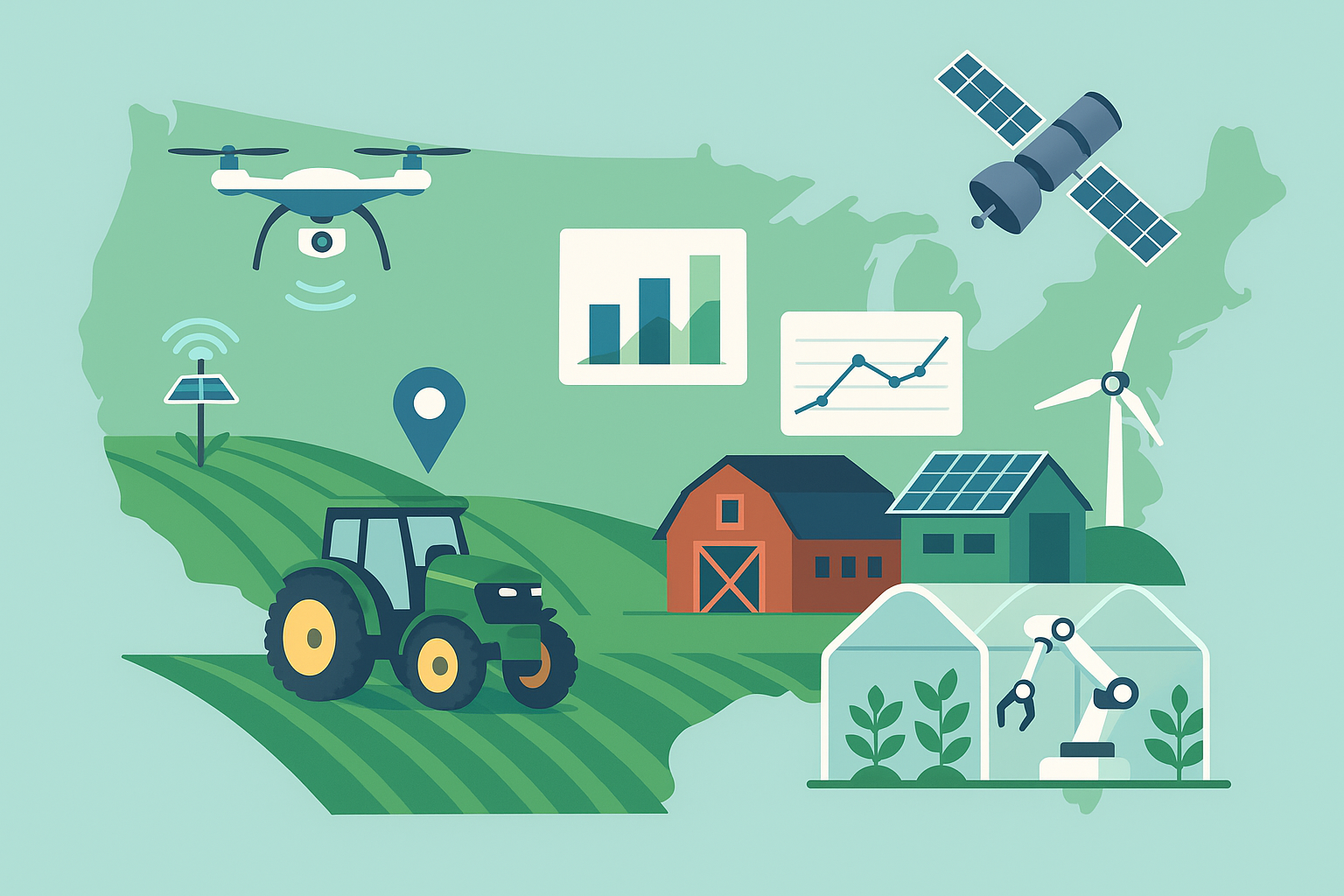
Cold Plasma Comes to the Farm: Cleaner Seeds, Safer Produce, and Nitrogen from Air

Cold plasma, a room-temperature ionized gas, offers farms residue-free seed priming and sanitization, produce disinfection, plasma-activated water, and on-site nitrate production from air. Benefits include reduced chemicals, water, and logistics; modular, renewable-ready hardware. Success depends on dose control, uniform exposure, energy efficiency, and validation, with smarter, integrated systems improving ROI.

Tech

Quiet Moves, Big Stakes: Incremental Budget and Rulemaking Steps Are Steering U.S. Agriculture This Week

U.S. ag policy saw positioning, not headlines, across budgets, USDA/EPA rules, biofuels credits, labor, water, and interstate standards. Stakeholders pressed for clarity on timelines, funding, and compliance. Expect incremental notices and guidance shaping planting, contracts, and investments; monitor pesticide/ESA, animal health, and trade risks as appropriations and rulemakings advance.

Politics
U.S. Agriculture Policy at the New Year: State of Play and Week-One Outlook

U.S. Agriculture Policy at the New Year: State of Play and Week-One Outlook

As Congress and agencies restart in early January, U.S. agriculture eyes appropriations, farm bill tweaks, regulatory clarity, and agency rollouts. Priorities include conservation and climate programs, biofuels, trade access, labor rules, and litigation risks. Early-week signals will guide budgets, risk management, compliance planning, and market opportunities for producers and lenders.

Year-End Market Wrap: Quiet, Flow-Driven Session as Liquidity Thins; Focus Turns to Early-January Data and Reopening of Primary Markets

Year-End Market Wrap: Quiet, Flow-Driven Session as Liquidity Thins; Focus Turns to Early-January Data and Reopening of Primary Markets

Year-end U.S. markets were quiet, thin, and flow-driven: equities churned on rebalancing, Treasuries and the dollar held steady, commodities and credit stayed range-bound, and funding was orderly. Attention now shifts to early-January catalysts—ISM, labor data, FOMC minutes, and a reopening primary calendar—likely restoring liquidity and lifting volatility.

From Emancipation to Ethanol: How December 31 Shaped U.S. Agriculture

From Emancipation to Ethanol: How December 31 Shaped U.S. Agriculture

December 31 has repeatedly reshaped U.S. agriculture, marking the Bracero Program’s end, the Clean Air Act’s launch, DDT’s ban, ethanol tax credit and tariff expirations, a devastating 1996 flood, and Emancipation’s eve—illustrating how policy deadlines and weather events redirect labor, technology, environmental standards, markets, and land stewardship.

Late-December U.S. Ag Weather Outlook: Frost/Freeze Risks, Foggy Valleys, and Two Storm Windows in the Next 7 Days

Late-December U.S. Ag Weather Outlook: Frost/Freeze Risks, Foggy Valleys, and Two Storm Windows in the Next 7 Days

Late-December ag weather features brief calm, frequent fronts, and two storm windows early and late week. Expect widespread overnight frost/freeze, West Coast fog/showers, interior West and northern tier snow, Plains clippers, and South/East rain. Plan for livestock protection, field-access limits, and storage/transport hazards; monitor local NWS updates.

Soil-Powered Sensors: Harvesting Microbial Energy for Battery-Free Field Monitoring

Soil-Powered Sensors: Harvesting Microbial Energy for Battery-Free Field Monitoring

Soil-powered sensors harvest microbe-generated electricity via carbon electrodes to enable battery-free, multi-year monitoring of moisture, temperature, EC and redox. Duty-cycled electronics, supercapacitors and LoRaWAN support sparse transmissions. Benefits include reduced maintenance, better irrigation and salinity management, less e-waste, though performance depends on soil conditions; installation quality and cold/dry constraints remain.

U.S. Agriculture Policy at Year’s Turn: Key Fronts and 7-Day Outlook

U.S. Agriculture Policy at Year’s Turn: Key Fronts and 7-Day Outlook

U.S. agriculture policy enters a quiet holiday stretch, with early January poised to reset agendas. Watch appropriations/Farm Bill timing, disaster aid, H-2A labor rules, biofuels signals, trade developments, environmental regulations, and animal health updates. Expect agency notices, committee plans, and state initiatives; align budgets, labor, compliance, and grant applications accordingly.

Year-End Technicals Dominate U.S. Markets; Early-January Data and Fed Minutes in Focus

Year-End Technicals Dominate U.S. Markets; Early-January Data and Fed Minutes in Focus

Year-end trading was driven by thin liquidity, positioning, and funding dynamics rather than new data. Attention shifts to early January catalysts—ISM, JOLTS, ADP, claims, ISM Services, payrolls, FOMC minutes, and heavy issuance—which will guide rates, dollar, equities, and credit as liquidity normalizes and policy expectations for 2026 are reassessed.

From Treaty to Table: The Gadsden Purchase and the Making of America’s Winter Produce Belt

From Treaty to Table: The Gadsden Purchase and the Making of America’s Winter Produce Belt

Signed December 30, 1853, the Gadsden Purchase secured a southern rail corridor and 29,670 square miles for $10 million, reshaping agriculture in southern Arizona and New Mexico. Irrigated Yuma greens and Mesilla pecans flourished; ranching expanded; cross-border supply chains grew. Today, water governance, Indigenous rights, and climate pressures drive adaptation.