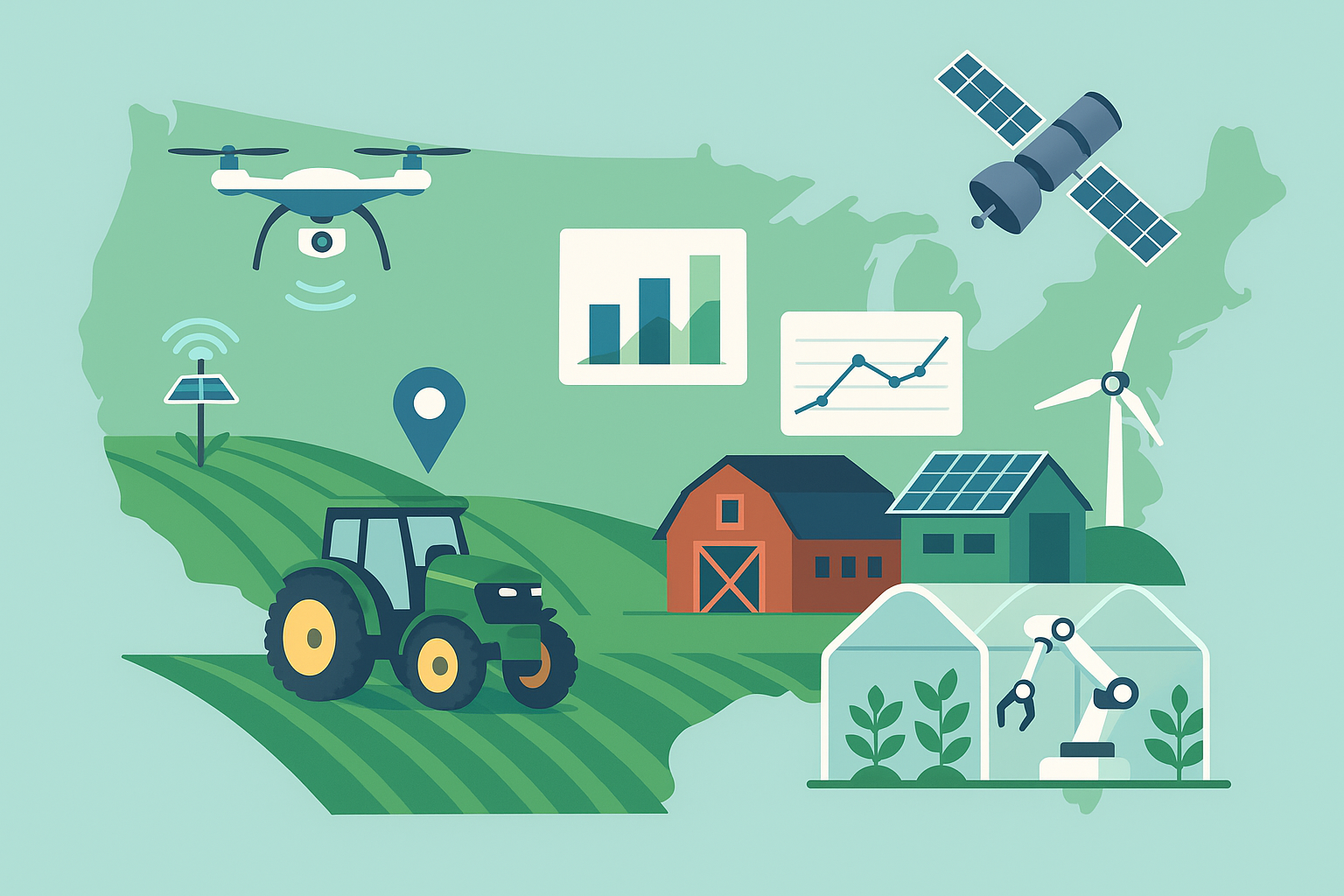
Solar panels and crops have long competed for the same acreage. A new wave of agrivoltaic systems flips that rivalry into a partnership, using spectrally selective and dynamically controlled photovoltaics to deliver both harvests and electrons from a single field. The core idea is straightforward: plants do not use all wavelengths of sunlight equally, and they do not need full intensity all day. By engineering solar materials and trackers to share light with crops in the right colors, places, and moments, farms can stabilize income, ease heat stress on plants, save water, and add low-carbon power without sacrificing productivity.
Light quality, not just quantity, drives plant performance
Photosynthetically active radiation (PAR) spans roughly 400–700 nm, with plants using blue and red wavelengths most efficiently. Green and near-infrared light contribute too—especially under dense canopies—but with different roles in morphology, signaling, and heat. Diffuse light also matters: when clouds or a canopy scatter photons, deeper leaves photosynthesize more evenly, often improving whole-plant efficiency compared with harsh midday sun.
Agrivoltaics 2.0 exploits these nuances. Rather than simply casting shade, modern systems aim to transmit or redirect the wavelengths crops need, diffuse direct beams that cause leaf scorching, and time partial shading to align with crop phenology and daily stress patterns.
Spectrally selective photovoltaics: harvesting the “extra” light
Conventional crystalline silicon panels harvest a wide swath of the solar spectrum and block most light beneath them. Emerging thin-film technologies open a more surgical approach:
- Perovskite and organic photovoltaics (OPV): These can be tuned to absorb specific bands—often emphasizing near‑infrared and parts of green—while transmitting more red/blue for photosynthesis. Semi‑transparent modules mounted overhead or as greenhouse glazing let useful light through while generating power.
- Luminescent solar concentrators (LSCs): Dyes in transparent sheets convert UV or blue photons to red emissions, guiding them to PV cells at the edges. Crops receive softened, more diffuse light underneath; the edges produce electricity.
- Micro‑aperture and patterned PV: Arrays with deliberate “skylights” or micro‑structured gaps create a dappled, forest‑like light field that reduces leaf temperature and sunburn risk while maintaining acceptable daily light integral (DLI).
These materials are advancing fast but still grappling with durability, scaling, and cost. Perovskites, for instance, have achieved high lab efficiencies; field stability, moisture resistance, and responsible end‑of‑life handling remain active areas of work. OPV modules offer lightweight, flexible formats with lower efficiency but easier integration in greenhouses or trellis‑like structures.
Dynamic, crop‑aware tracking turns shade into a resource
Sun‑tracking mounts can do more than maximize kilowatt‑hours. With weather forecasts, canopy sensors, and plant growth models, trackers can tilt to modulate light and heat for the crop and then chase the sun when plants need less protection.
- Diurnal strategies: Slightly increased morning and late‑afternoon light to boost photosynthesis when stomata are open and conditions are cooler; added midday shading during heat spikes to curb transpiration and fruit sunscald.
- Phenology‑aware control: More light during vegetative growth; gentler regimes around flowering and fruit set to reduce stress; tailored shading for fruit coloration and quality in specialty crops.
- Backtracking with agronomic constraints: Trackers already “backtrack” to avoid self‑shading. Crop‑aware algorithms add constraints such as minimum row‑floor irradiance, harvest corridor widths, and worker comfort thresholds.
The control stack typically blends edge sensors (leaf temperature, soil moisture, canopy light), short‑term weather prediction, and a rules engine. Some pilots have shown that even simple heuristics—such as a leaf‑temperature setpoint—can meaningfully reduce plant stress without large energy penalties.
Water, microclimate, and resilience
Partial, well‑managed shade lowers canopy and soil temperatures, reducing evapotranspiration. This can translate into fewer irrigation cycles, steadier soil moisture, and improved water‑use efficiency. Diffuse light also lowers the risk of sunburn on fruit and heat‑induced flower or fruit drop.
Agrivoltaic structures can mitigate wind and hail exposure and provide sheltered alleys that improve worker safety during extreme heat. Conversely, poorly designed systems can create humid microclimates that favor disease or impede airflow. Ventilation, row orientation, and canopy management are therefore central design choices, not afterthoughts.
What the numbers look like
Outcomes vary widely by crop, climate, and design. Field trials in several regions have reported one or more of the following under well‑designed agrivoltaics:
- Stable or moderately reduced yields for sun‑loving crops, offset by energy revenue; neutral or improved yields for shade‑tolerant plants such as leafy greens, berries, and some herbs.
- Improved water‑use efficiency and reduced irrigation needs during hot, dry periods.
- Better fruit quality metrics for heat‑sensitive specialty crops (for example, lower sunscald incidence).
Where land is constrained, doubling the productivity of a hectare—food and energy together—can be decisive. The trade‑off between crop yield and electricity output is no longer zero‑sum when light is shared intentionally rather than blocked indiscriminately.
Farm economics and the policy puzzle
Revenue stacking is the main draw. Power purchase agreements or net‑metering reduce exposure to volatile electricity prices; the field remains productive for food or fodder. Incentives can further tip the scales:
- Capital support: Investment tax credits, grants for rural energy projects, or low‑interest financing can reduce upfront cost.
- Grid value: Agrivoltaics near load centers can ease transmission constraints compared to remote solar farms, though interconnection queues remain a bottleneck in many regions.
- Insurance and compliance: Clear rules ensure crops remain “primary use” where required, and that farm programs and crop insurance stay intact.
Labor logistics matter too. Elevated racking increases steel and foundation costs but allows normal tractor passes and harvesting; lower‑cost structures may suit hand‑harvested crops. The optimal design depends on existing equipment, field layout, and local wage and energy prices.
Design playbook: matching systems to crops
- Leafy greens and herbs: High tolerance for partial shade; benefit from cooler canopies. Semi‑transparent or patterned PV and east‑west vertical bifacial arrays often work well.
- Berries and vines: Sensitive to sunburn and heat spikes; dynamic shading can protect fruit quality. Row spacing must preserve airflow to reduce disease pressure.
- Orchards: Elevated structures or aisle‑mounted vertical modules maintain machinery clearance. Light distribution and pruning regimes must be co‑designed.
- Forage and pasture: Vertical bifacial modules align well with grazing; panel fences can double as windbreaks while allowing animal movement.
- Greenhouses: Spectrally selective glazing, OPV films, or LSCs can supply power and tune interior light while preserving uniformity.
Across all categories, pilot plots are invaluable. Light mapping, thermal imaging, and side‑by‑side controls help dial in spacing, tilt, and tracking strategies before scaling.
Environmental and food safety considerations
- Biodiversity: Planting native or pollinator‑friendly understory species in non‑cropped zones improves habitat and soil health.
- Runoff and soil: Design drainage to prevent erosion and manage concentrated flow from panel edges; maintain vegetative cover beneath arrays.
- Materials and end‑of‑life: Choose certified modules with robust encapsulation. For thin‑films and perovskites, favor products with established recycling pathways and containment strategies. Plan decommissioning and recycling at the outset.
- Food safety: Keep glass breakage risk low with appropriate wind/hail ratings and maintenance protocols; segregate electrical equipment from produce handling areas.
What’s next: software and materials converge
Three developments are pushing agrivoltaics into the mainstream:
- Better models: Crop‑aware digital twins grounded in canopy physics and local sensor data are making tracker decisions more precise.
- New PV stacks: Tandem perovskite‑silicon modules and improved OPV stability promise higher energy yields while preserving crop‑friendly spectra.
- Standardization: Design guidelines, interconnection templates, and agronomic playbooks are reducing soft costs and permitting friction.
When implemented thoughtfully, spectrally selective and dynamic agrivoltaics turn sunlight from a contested resource into a managed input—one that can be budgeted like water or nutrients. That reframing is powerful in a warming, water‑stressed world.
Glossary
- Agrivoltaics: Co‑location of agriculture and photovoltaic electricity generation.
- PAR (Photosynthetically Active Radiation): Light wavelengths plants use for photosynthesis, roughly 400–700 nm.
- Luminescent solar concentrator (LSC): A transparent sheet that shifts and guides light to PV cells at its edges.
- OPV (Organic Photovoltaics): Solar cells using organic semiconductors, offering tunable spectra and flexibility.
- Perovskite PV: A class of thin‑film solar cells with high potential efficiency and spectrum tunability.
Further reading
- National Renewable Energy Laboratory (NREL) resources on agrivoltaics: https://www.nrel.gov/solar/agrivoltaics.html
- Fraunhofer ISE overview and publications on agrivoltaics: https://www.ise.fraunhofer.de/en/fields-of-research/photovoltaics/agrivoltaics.html
- IEA PVPS report series on PV and agriculture co‑location: https://iea-pvps.org
- University extension briefs on crop performance under partial shade and solar canopies (region‑specific; check your state or national extension service).