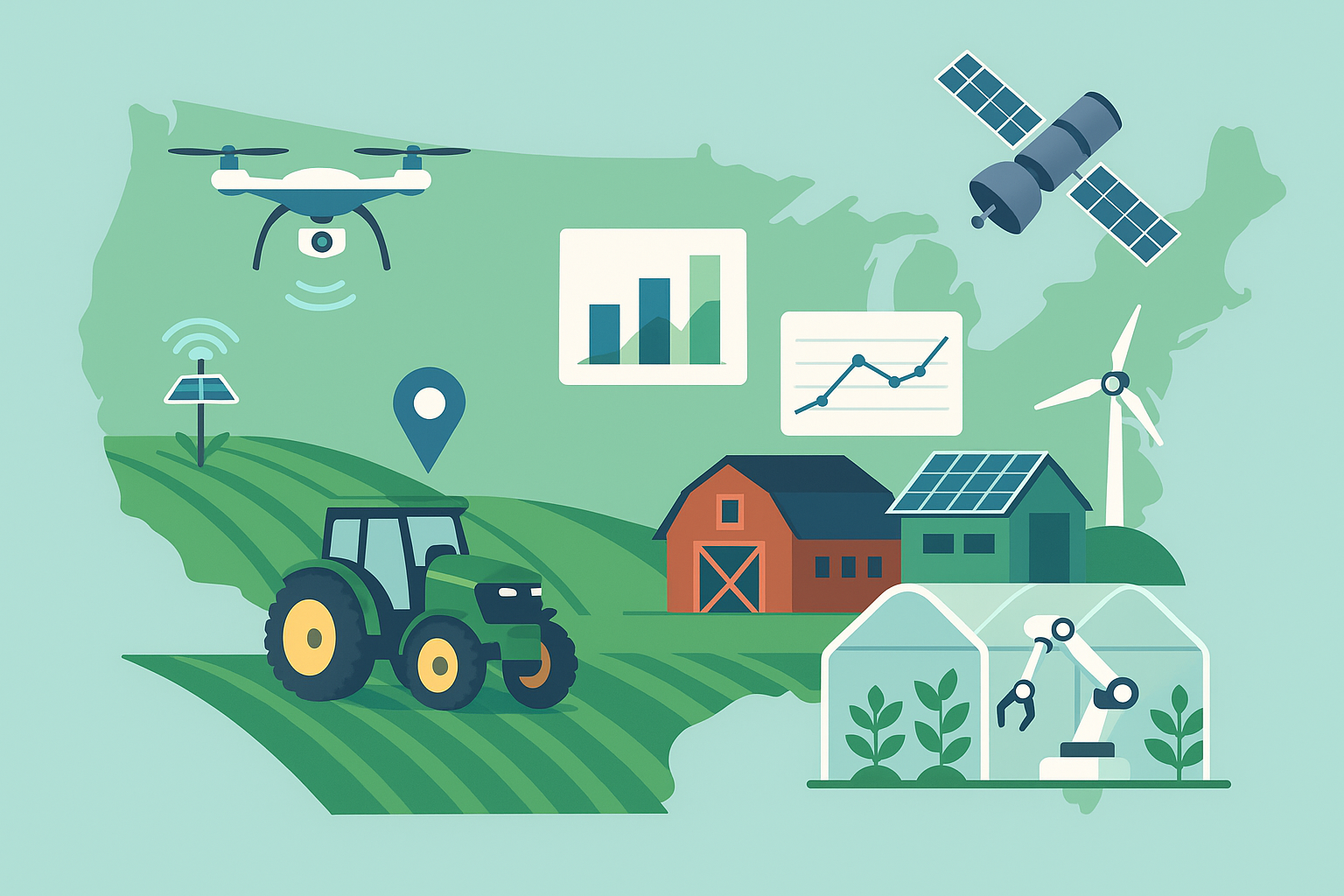
Biodegradable sensors are coming to the farm field, promising data without e‑waste
For years, farmers have been told to “measure what you manage.” Soil moisture probes, nitrate sensors, canopy-temperature loggers, and micro-weather stations have migrated from research plots to commercial farms. But that digital success carries a practical, often overlooked cost: retrieving, servicing, and disposing of thousands of tiny devices spread across large acreage. A new class of “transient” or biodegradable sensors aims to solve that problem by delivering season-long data and then safely dissolving back into the environment.
What makes a sensor biodegradable?
Biodegradable ag sensors swap conventional plastics, glass, and copper-heavy circuit boards for materials designed to break down naturally after use. Researchers and early-stage startups are combining:
- Substrates from cellulose (paper), silk fibroin, or other biopolymers instead of rigid FR-4 circuit boards.
- Conductive elements made from carbon-based inks, doped cellulose, or thin layers of metals like magnesium and zinc that corrode safely to trace nutrients.
- Sensing layers derived from ion-selective membranes (for nitrate, pH), printed carbon composites (for moisture and salinity), or biodegradable thermistors (for temperature).
- Natural encapsulants—shellac, plant-based waxes, or silk—tuned to delay water ingress until a defined service life ends.
These devices are engineered to function for a set period—often one growing season—and then disintegrate or mineralize under typical soil conditions, leaving behind no persistent microplastics or hazardous heavy metals.
How they work in the field
From a grower’s perspective, the workflow is familiar: place the sensors at target depths or attach them to drip lines, map their locations, and stream data to a farm platform. The differences are under the hood.
- Sensing modalities: Early prototypes focus on the high-value metrics that most influence irrigation and fertilization—volumetric water content, electrical conductivity (as a proxy for salinity), nitrate concentration, soil temperature, and occasionally pH. Printed ion-selective electrodes can infer nitrate in the soil solution, while impedance-based designs track moisture and salinity dynamics.
- Power: Without long-lived lithium cells, power comes from ultra-low-energy designs. Options include thin paper batteries using zinc and manganese dioxide that slowly dissolve; energy harvesting from temperature gradients or light at the soil surface; and soil-microbial fuel cells that sip micro-watts as microbes metabolize organic matter. Duty cycles are conservative: the sensor sleeps most of the time and wakes briefly to read and transmit.
- Connectivity: Short bursts over low-power wide-area networks (LPWAN) such as LoRaWAN carry small payloads hundreds of meters to a gateway. In dense plantings or inside greenhouses, near-field options (NFC/RFID) let workers scan tags during routine passes, avoiding constant radio use.
- End-of-life: Encapsulation slowly hydrates and opens after weeks to months, triggering corrosion of the conductive paths and dissolution of the substrate. The breakdown rate depends on moisture, temperature, soil texture, and microbial activity; manufacturers specify an expected operating window and a degradation profile.
Why biodegradable beats “deploy and retrieve”
Conventional networks scale well in small plots but hit friction on large acreages: retrieving hundreds of buried probes costs labor, disrupts roots, and risks damage to irrigation lines. Some growers simply abandon cheap sensors in place, creating a long-term e-waste problem and potential contamination risk if batteries fail. Biodegradable designs target that pain point.
- Lower total installed cost: A single device might cost more than a bare-bones plastic tag, but the savings from avoiding retrieval labor, fewer broken emitters, and reduced truck rolls close the gap—especially in seasonal vegetables and grains where fields rotate frequently.
- Denser spatial coverage: If sensors don’t need to be dug up, agronomists can afford to place more of them per hectare for better zone-by-zone insight, improving variable-rate irrigation and nitrogen timing.
- Environmental assurance: Eliminating persistent plastics and lithium coin cells aligns with retailer and processor sustainability programs and simplifies compliance with tightening waste regulations.
What early trials are showing
University-led pilots and grower co-ops have trialed biodegradable soil probes in irrigated vegetables, vineyards, and cereal test blocks. Reported outcomes include:
- Irrigation timing: Printed moisture sensors captured infiltration and drying curves that matched reference probes closely enough to automate valve schedules on test rows. Data latency was kept low with once-per-hour updates, sufficient for surface and drip systems.
- Nitrogen side-dressing: Ion-selective nitrate patches placed at root-zone depth helped flag zones where early applications were leaching below the active root layer, informing split applications and tighter spoon-feeding plans.
- Greenhouse crops: In substrate-grown lettuce and strawberries, compostable tags embedded in grow bags provided pH and EC snapshots during fertigation without adding hard-to-remove plastics to the waste stream.
These are not mass-market products yet, and performance still varies by soil type and management system. But the signal is clear: for short-lived measurement needs, “use and lose” can be a feature, not a flaw.
Limits and lessons learned
As with most new categories, the constraints are as important as the promise.
- Calibration drift: Biodegradable materials can absorb water or ions over time, shifting baselines. Vendors address this with factory calibration curves, on-board temperature compensation, and recommended replacement intervals. Cross-checking a few sites with a reference probe remains good practice.
- Power budget: Energy harvesting is fickle underground, and microbial fuel cells provide tiny currents. Expect conservative sampling rates and narrow payloads to preserve life; not every use case fits.
- Soil variability: Degradation timelines change with pH, salinity, and biology. A device that lasts 16 weeks in loam may fail sooner in hot, wet sand or persist longer in cool clay. Clear spec sheets and local trials help set expectations.
- Data continuity: Seasonal devices create gaps unless replenished on schedule. Tying deployments to planting dates, irrigation set-outs, or herbicide passes helps maintain cadence.
Materials and safety: what actually goes into the soil?
Responsible designs use small amounts of metals already common in agriculture—magnesium and zinc—bound within biodegradable matrices. Encapsulants are natural polymers. The total mass per unit is typically a few grams, and life-cycle assessments focus on whether residues alter microbial communities or nutrient balances. Early ecotoxicology screens are encouraging, but third-party verification is essential. Look for:
- Declarations of absence of PFAS, halogenated flame retardants, and persistent synthetic polymers.
- Breakdown and mineralization data under composting and field conditions, not just laboratory tests.
- Toxicity and plant response assays on representative soils for your region.
Integration with farm data systems
Biodegradable hardware doesn’t mean throwaway data. Farm platforms ingest sensor streams via standard protocols (MQTT, LoRaWAN application servers) and fuse them with satellite imagery, weather forecasts, and machine logs. Practical integrations include:
- Variable-rate irrigation: Zone maps update when sensors indicate differential drying, prompting dynamic valve timing and flow adjustments.
- Nitrate leaching risk: When rainfall or irrigation volumes push water below the sensed root-zone nitrate, alerts suggest delaying the next fertigation pulse or reducing rates.
- Model calibration: Transient sensors provide seasonal ground truth to tune soil-water balance models, even if you rely on remote sensing the rest of the year.
Regulatory and standards landscape
There is no single global standard for “biodegradable electronics” yet. Vendors often cite compostability standards developed for packaging (such as EN 13432 or ASTM D6400), but open-field soil conditions differ. Expect continued development of:
- Test methods specific to agricultural soils and variable climates.
- Guidelines for acceptable residuals and safe metal loading per hectare.
- Data security profiles for low-power, intermittent devices in mixed farm networks.
Procurement programs tied to sustainability targets may begin to prefer field-proven biodegradable options where functionally equivalent, especially for annual crops and leased land where retrieval is expensive.
What to ask before you buy
- Operating life and replacement cadence for your crop cycle and climate.
- Validated accuracy ranges for your soil textures and salinity levels.
- Power and connectivity plans: gateway density, battery or harvesting strategy, and expected check-in frequency.
- Breakdown profile and independent assessments of residues in soil.
- Data ownership, API access, and integration with your existing farm management system.
- Total cost of ownership compared with reusable probes when retrieval labor is included.
The road to mainstream adoption
Between 2025 and 2030, the most likely path to scale runs through targeted niches where retrieval is impractical and data density pays off: seasonal vegetables, broadacre pilots to calibrate remote-sensing models, and protected agriculture seeking waste-free substrates. As materials science improves and certification frameworks mature, expect a broader menu of biodegradable tags—some reading plant sap or canopy signals rather than soil alone—paired with gateways that serve both permanent and transient nodes.
The promise is simple: more measurements where they matter, fewer trips with a shovel, and no long-lived debris left behind. For farms wrestling with both data gaps and sustainability goals, that combination is hard to ignore.