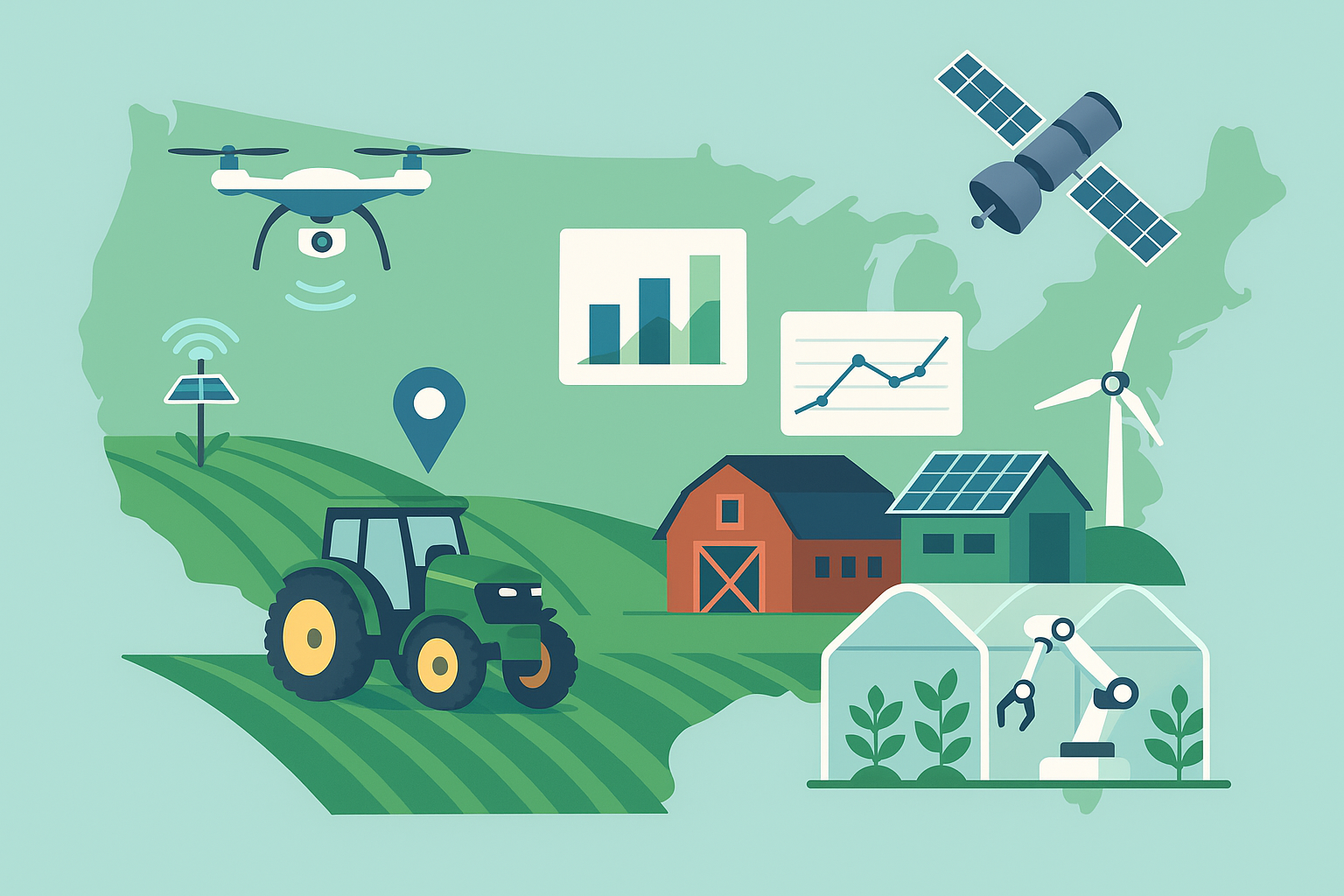
For more than a century, the global food system has relied on centralized ammonia plants to turn natural gas into nitrogen fertilizer. That model is being quietly challenged by a new class of farm-scale “green ammonia” microplants that make fertilizer where it’s used, using only air, water and renewable electricity. If these modular systems mature, they could reshape fertilizer supply chains, reduce volatility for growers, cut emissions, and open the door to truly local nutrient sovereignty.
Why ammonia, and why now
Nitrogen is the yield-limiting nutrient in most cropping systems. Ammonia (NH3) is the cornerstone: it’s the base molecule used to produce anhydrous ammonia, urea, and UAN solutions. Conventional production uses natural gas both as fuel and feedstock, and it tends to be concentrated in large plants tied to pipelines and ports. When energy markets swing or logistics falter, farms feel it first through price spikes and delivery delays.
Green ammonia changes two variables at once. First, hydrogen is sourced from water electrolysis rather than natural gas. Second, production can be scaled down and distributed, bringing fertilizer manufacturing to the farm gate. With renewables or low-carbon grid power, the carbon intensity drops; with on-site production, availability and price stability improve.
What a farm-scale green ammonia system looks like
Today’s microplants are typically containerized, skid-mounted units that can produce on the order of a few hundred kilograms to several tonnes of ammonia per day. While designs vary, most share four building blocks:
- Water purification and electrolysis: A deionization stage cleans water for the electrolyzer, which splits H2O into hydrogen and oxygen. Modern PEM or alkaline electrolyzers convert electricity to hydrogen at about 50–55 kWh per kilogram of H2.
- Nitrogen from air: A compact air separation unit (often pressure swing adsorption or membrane-based) strips oxygen to deliver high-purity nitrogen.
- Ammonia synthesis loop: Hydrogen and nitrogen are combined over an iron- or ruthenium-based catalyst in a pressurized reactor. Small-scale designs mirror the Haber–Bosch process at lower throughput, and some use innovations—electrified heating, intensified reactors, or absorbent-enhanced loops—to run efficiently at modest scales.
- Storage and handling: Ammonia is stored as a liquid, either refrigerated or, more commonly on farms, at ambient temperature under moderate pressure (about 10 bar). Existing anhydrous ammonia infrastructure—nurse tanks, applicators, safety gear—can often be leveraged.
Rule of thumb: making one tonne of ammonia via green pathways typically requires about 9–12 megawatt-hours of electricity once you include hydrogen, nitrogen separation, and synthesis. That anchors the economics and sizing for farm deployment.
Right-sizing for real farms
How big a plant does a farm need? Work backward from nitrogen needs. Anhydrous ammonia is 82% nitrogen by weight.
- If a corn operation applies around 200 lb of N per acre, that’s roughly 91 kg of nitrogen. Meeting that with ammonia requires about 111 kg of NH3 per acre.
- At 2,000 acres, annual demand would be about 220 tonnes of ammonia. A 1 tonne/day unit, running most of the year, could cover that with a margin for downtime and share agreements with neighbors.
On the power side, a farm targeting 200 tonnes per year might plan for 2–3 GWh of annual electricity. Depending on location, that aligns with roughly 1.5–2.5 MW of solar, ~1–2 MW of wind, or a hybrid plus grid interconnection. Some systems are designed to ramp with renewable output, producing more ammonia during sunny or windy periods and throttling back when power is scarce or expensive.
Economics: what pencils out
Three variables dominate the cost of green ammonia on the farm:
- Electricity price and availability: Because power is the biggest operating cost, every $10/MWh shift can move delivered ammonia cost by roughly $100 per tonne at typical efficiencies.
- Capital costs and utilization: Containerized systems reduce installation complexity but still require meaningful capital. Higher utilization (more hours per year) spreads that cost. Flexible operation can improve economics if it captures low-priced electricity.
- Co-products and incentives: Oxygen from electrolysis can be used on-site (for aquaculture or grain aeration) in some settings. Depending on jurisdiction, clean hydrogen or clean fertilizer incentives, renewable energy credits, and carbon markets for emission reductions can materially improve project returns.
Under favorable conditions—low-cost renewables, good capacity factor, and supportive policy—farm-scale green ammonia can be competitive with delivered conventional fertilizer, especially when volatility, transport fees, and seasonal premiums are considered. Under high electricity prices or low run-hours, costs rise, and a cooperative or regional hub model may make more sense than a single-farm unit.
Environmental and agronomic impacts
- Lower lifecycle emissions: Conventional ammonia production is a notable industrial emitter. Replacing fossil-derived hydrogen with electrolysis powered by low-carbon electricity can substantially cut lifecycle CO2 per tonne of fertilizer.
- Reduced transport and storage emissions: On-site production trims trucking miles and the attendant fuel use and losses.
- Farm-level nutrient stewardship: Producing on-site doesn’t change nitrogen-use efficiency by itself, but it pairs well with split applications, variable-rate technologies, and nitrification inhibitors. The result can be more precise timing and lower nitrous oxide emissions from fields.
Ammonia can also serve as a seasonal energy carrier for the farm, but using it directly as a fuel remains early-stage. For now, its most bankable role is the one growers already know: a reliable nitrogen source when and where it’s needed.
Safety and compliance
Anhydrous ammonia is an effective fertilizer and a hazardous chemical. Any on-farm plant must meet established standards for pressurized vessels, relief systems, gas detection, ventilation, and emergency response. Operators need training, PPE, and clear procedures for startup, shutdown, and maintenance. Local regulations may impose process safety rules above certain storage thresholds, require reporting, and involve fire authorities in permitting. The best designs assume farm conditions—dust, vibration, temperature swings—and build in conservative safety margins and remote monitoring.
Powering the plant: integration options
- Renewables + grid: Pair on-site solar or wind with a grid tie to smooth variability. Some sites add batteries sized for hour-to-hour balancing, keeping the ammonia loop stable while chasing off-peak tariffs.
- Renewables only: In locations with abundant wind or solar, the plant can run opportunistically. Modern micro-reactors and electrolyzers tolerate turndown and ramping, though very intermittent operation can lower annual output and raise unit costs.
- Energy management software: Forecast-driven control systems optimize against power prices, weather, fertilizer demand, and storage levels to maximize economic value.
Emerging designs and what’s next
Innovation is happening across the stack:
- Electrified and intensified reactors: Smaller catalyst beds with improved heat management allow efficient synthesis at modest scales.
- Dynamic operation: Systems designed to start and stop quickly can follow renewables more closely, improving economics where power is cheap but variable.
- Alternative fixation pathways: Beyond Haber–Bosch, research is advancing plasma and electrochemical routes that could further simplify small-scale plants. Most remain pre-commercial but could reduce pressure and temperature requirements in the future.
How growers are deploying
Early adopters tend to be:
- Large row-crop operations with steady ammonia demand and room for siting equipment and storage.
- Cooperatives and custom applicators that can spread capital cost over many members while using existing nurse tank fleets and applicators.
- Renewable-rich farms that already operate or host wind and solar and can monetize excess electricity locally.
Pilots have shown farmers value guaranteed availability during narrow application windows as much as headline cost per tonne. Several projects are structured with take-or-pay offtake among neighboring farms, creating a micro-hub that runs efficiently year-round.
Practical checklist for a project
- Quantify demand: Map nitrogen needs by crop and timing to size the plant and storage.
- Assess power: Evaluate grid capacity, interconnection timelines, renewable potential, and tariffs.
- Site and permit: Choose a location with setback distances, access for tankers and field equipment, and space for safe storage. Start permitting early.
- Select technology and partner: Compare electrolyzer types, reactor designs, turndown capabilities, and service models (purchase vs. lease vs. offtake contract).
- Plan O&M: Define who operates the plant, maintenance schedules, spare parts inventory, and remote monitoring.
- Integrate agronomy: Coordinate production with application logistics, variable-rate plans, and inventory buffers.
- Model incentives and risk: Include potential credits, insurance, and hedges against fertilizer and power price swings.
The bigger picture
Distributed green ammonia won’t replace every large plant. Centralized production will remain efficient for global trade and industrial uses. But in regions with volatile fertilizer delivery, strong renewable resources, or ambitious decarbonization goals, farm-scale ammonia can add resilience and autonomy. It gives growers another lever: when power is cheap and clean, make fertilizer; when markets tighten, rely less on long, fragile supply lines.
Most agricultural technologies promise incremental gains. This one rethinks where and how a foundational input is made. If early projects continue to prove reliable and competitive, green ammonia microplants could become as familiar on the landscape as grain bins and pivots—quietly turning air, water, and electrons into the yield that feeds us.