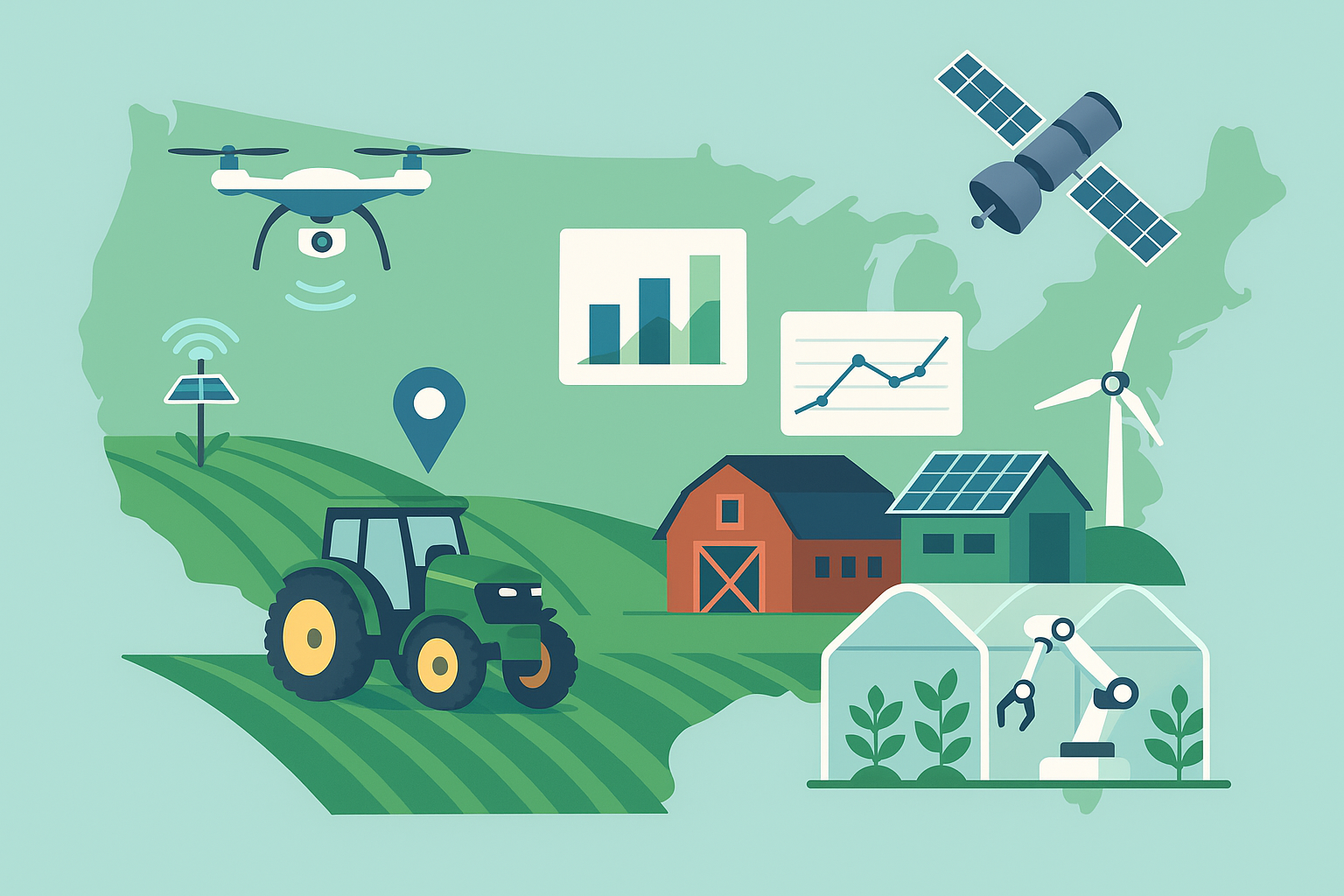
Agrivoltaics: How Co-Locating Solar Panels and Crops Is Reshaping Farmland
Agrivoltaics—also called solar sharing or dual-use solar—pairs working farmland with elevated or strategically spaced photovoltaic (PV) panels. Instead of competing for land, crops and solar infrastructure operate together, with each influencing the microclimate, water use, and economics of the other. As extreme weather, water stress, and energy costs intensify, agrivoltaics is moving from a novel pilot to a serious option for growers, ranchers, and rural communities.
What Agrivoltaics Actually Does
- Creates partial shade that can lower plant heat stress and reduce evapotranspiration.
- Generates on-farm electricity that can offset irrigation, refrigeration, and processing loads or be sold to the grid.
- Modifies wind and moisture dynamics at canopy level, sometimes improving soil moisture retention.
- Enables vegetation management under arrays—often pasture or groundcovers—that supports biodiversity and reduces mowing costs.
Well-designed systems aim for a “sweet spot” where crops remain agronomically productive and the PV system delivers strong energy yields. That balance depends on climate, crop selection, panel height and spacing, and how water and light are managed across the seasons.
System Designs Farmers Are Actually Using
- Raised, wide-row arrays: Panels are mounted higher than typical ground-mounted solar (often 10 feet or more at the low edge) with wider spacing and taller posts to allow tractors or hand labor beneath. Row orientation and tilt are tuned to strike a light–shade balance.
- Vertical bifacial fences: Upright, double-sided panels mounted like hedgerows. These cast narrower moving shadows, can reduce wind pressure, and leave open sky above for crops. They often integrate well with pastures and orchard alleys.
- Tracker-based systems: Single-axis trackers that rotate panels during the day. With tailored algorithms, operators can “feather” panels to temper shade during flowering or fruit set and increase it during high-heat periods.
- Greenhouse-integrated PV: Semitransparent or patterned modules in greenhouse glazing deliver filtered light while powering fans, pumps, and climate controls.
Which Crops Benefit—and Which Don’t
Agrivoltaics isn’t universally beneficial. The crop–climate–design trio determines outcomes.
- Shade-tolerant and cool-season crops: Leafy greens, brassicas, some herbs, lettuces, spinach, and certain berries often maintain yields under partial shade and can improve in quality during heat waves.
- Heat- and moisture-stressed regions: In arid and semi-arid areas, moderate shading can reduce irrigation needs and protect crops from sunscald, with reported water savings in many trials.
- Pasture and forage: Mixed grasses and legumes typically do well with intermittent shade. Sheep grazing is common under arrays and can replace mechanical mowing.
- Sun-demanding staples: Corn and many small grains often require high light for top yields; they may underperform unless the array is very tall and widely spaced.
- Perennials and orchards: Careful layout (e.g., vertical bifacial “fences” between rows) can limit shade on canopies while generating power from previously unproductive alleys.
Water, Soil, and Microclimate
Panels alter the field environment in ways that can be leveraged:
- Water use: Shade lowers leaf and soil temperatures, reducing evapotranspiration. In many trials, irrigation demand drops during peak heat. Panel drip lines can concentrate rainfall, which suggests targeted mulching or sub-surface drip.
- Soil health: Cooler soils and less evaporation help maintain moisture, benefiting microbial activity. Groundcovers and rotational grazing under arrays can build organic matter if wheel traffic is managed.
- Wind and frost: Arrays can alter wind patterns. In some topographies this reduces desiccation; in frost-prone sites, cold air drainage may be affected, requiring attention to layout and monitoring.
Farm Operations and Equipment Access
The most frequent operational complaints come from mismatches between array geometry and farm equipment. Planning for access is non-negotiable:
- Set post spacing and array height to accommodate your widest implement plus margin for turning and safety.
- Standardize aisle widths across blocks to streamline bed preparation and harvest logistics.
- Define chemical use protocols near electrical equipment; maintain buffer zones around inverters and combiner boxes.
- Design dedicated service lanes for solar maintenance that do not disrupt cropping patterns.
Economics: Stacking Value Streams
Agrivoltaics changes the farm’s profit mix by adding energy revenue and resilience benefits. Key factors:
- Capital costs: Elevated or widely spaced racking, longer piles, and stronger foundations typically add cost versus conventional solar. Interconnection and grid upgrades can be significant line items.
- Energy value: On-site consumption (irrigation pumps, cold storage, barns) can hedge against rising electricity prices. Excess generation may be sold through net metering, power purchase agreements (PPAs), or community solar models, depending on local rules.
- Crops and quality: Yield may hold steady or drop slightly under shade, but quality premiums (e.g., reduced sunscald, extended harvest windows) can offset volume changes.
- O&M savings: Managed grazing and perennial groundcovers reduce mowing and erosion control costs. Remote monitoring can detect irrigation failures or heat stress earlier.
- Risk and resilience: Revenue diversification can buffer drought years or price swings. Backup power capability supports cold chains and animal welfare during outages.
Financial performance hinges on site specifics: solar resource, electricity rates, interconnection queue times, crops, labor patterns, and the terms of any developer partnership. Many projects use long-term leases or revenue-sharing agreements that shift capital and performance risk between parties.
Policy, Permitting, and Community Acceptance
Local land-use rules and public opinion are decisive. Emerging best practices include:
- Dual-use definitions: Some jurisdictions define agrivoltaics with minimum agricultural productivity thresholds or access requirements, qualifying projects for farmland tax status or incentives.
- Pollinator-friendly standards: Seed mixes and maintenance plans can improve ecological value and public perception around arrays.
- Decommissioning plans: Clear end-of-life removal and soil restoration commitments reduce long-term landowner risk.
- Visual and cultural considerations: Setbacks, landscaping, and glare analysis address neighbors’ concerns; engagement with farmworker communities ensures safe operations.
Design Principles That Drive Results
- Match light to crop physiology: Use historical solar and temperature data to set target daily light integral (DLI). Consider adjustable tilts or tracker strategies to protect sensitive phenological stages.
- Engineer for water: Capture and redistribute panel runoff. Pair with efficient irrigation (drip, subsurface) and mulches to exploit the cooler microclimate.
- Think in zones: Plant most shade-tolerant crops near the panel rows, sun-loving varieties in the wider inter-rows. Rotate annually to manage pests and soil compaction.
- Instrument the field: Low-cost sensors for soil moisture, canopy temperature, and PAR (photosynthetically active radiation) guide irrigation and tilt adjustments.
- Plan O&M together: Align solar maintenance windows with farm calendars; coordinate herbicide use, harvest schedules, and grazing rotations with electrical safety protocols.
Common Pitfalls and How to Avoid Them
- Underestimating shade patterns: Model sun angles across seasons to avoid unexpected deep shade bands. Field-test with temporary shade structures before committing.
- Equipment conflicts: Verify clearance for your tallest implements and harvest bins; prototype turning maneuvers on paper and in the field.
- Interconnection delays: Grid queues can outlast crop rotations. Start utility studies early and consider right-sizing to existing service capacity.
- Soil compaction during construction: Specify construction mats and traffic plans; decompact and regrade beds afterward.
- Wildlife and fencing: Design fencing to balance livestock, wildlife corridors, and security; prevent nesting in electrical enclosures.
How Farmers Can Evaluate a Site
- Baseline your farm loads: Gather 12–24 months of electric bills; meter large pumps and cold storage to size the array intelligently.
- Map soil and microtopography: Identify areas prone to ponding, frost, or compaction; prioritize resilient blocks for first-phase deployment.
- Run light and yield scenarios: Use simple shade simulations and trial plots to test candidate crops for your climate and market.
- Engage partners early: Developers, agronomists, and irrigation specialists should co-design the layout, racking, and water systems.
- Stress-test the business case: Consider energy price variability, incentive sunsets, and potential crop yield shifts. Include O&M, insurance, and decommissioning line items.
Innovation on the Horizon
- Smart trackers with crop-aware controls: Algorithms that adjust tilt to balance DLI targets, heat stress thresholds, and grid price signals.
- Semitransparent and spectrally selective modules: Materials that pass key wavelengths for photosynthesis while converting others to electricity.
- Integrated water systems: Guttered racking that channels panel runoff to storage, paired with precision irrigation and fertigation.
- Robotics and automation: Compact autonomous weeders and harvest aids designed for the clearances and lanes of agrivoltaic fields.
- Biodiversity-positive layouts: Habitat corridors, native groundcovers, and hedgerows that enhance pest control and pollination while stabilizing soils.
Bottom Line
Agrivoltaics is not a silver bullet, nor is it a one-size-fits-all template. It’s a design discipline that blends agronomy, power engineering, and practical farm operations. Where climate stress and energy volatility threaten margins, the approach can turn a liability—excess heat and sun—into a productive asset. Success depends on aligning crops with light, rethinking equipment access, and structuring fair partnerships that reward both food and energy production on the same acre.