Software & Web Development

Data Science & Robotics Development

Calc LLC provide high quality services at very competitive rate

Early May 2026 U.S. Ag Weather Outlook and Field Guidance

Early May 2026 U.S. Ag Weather Outlook and Field Guidance

Early May U.S. ag weather remains variable: scattered, brief storms across Plains, Corn Belt, and Mid-South amid warm, humid South; mostly dry California and Desert Southwest; periodic light precip Pacific Northwest. Expect alternating fieldwork windows with breezy days; localized severe, flooding, and fire risks; monitor disease, irrigation, and heat stress.

Weather
Cold Plasma Comes to the Farm: Cleaner Seeds, Safer Produce, and Nitrogen from Air

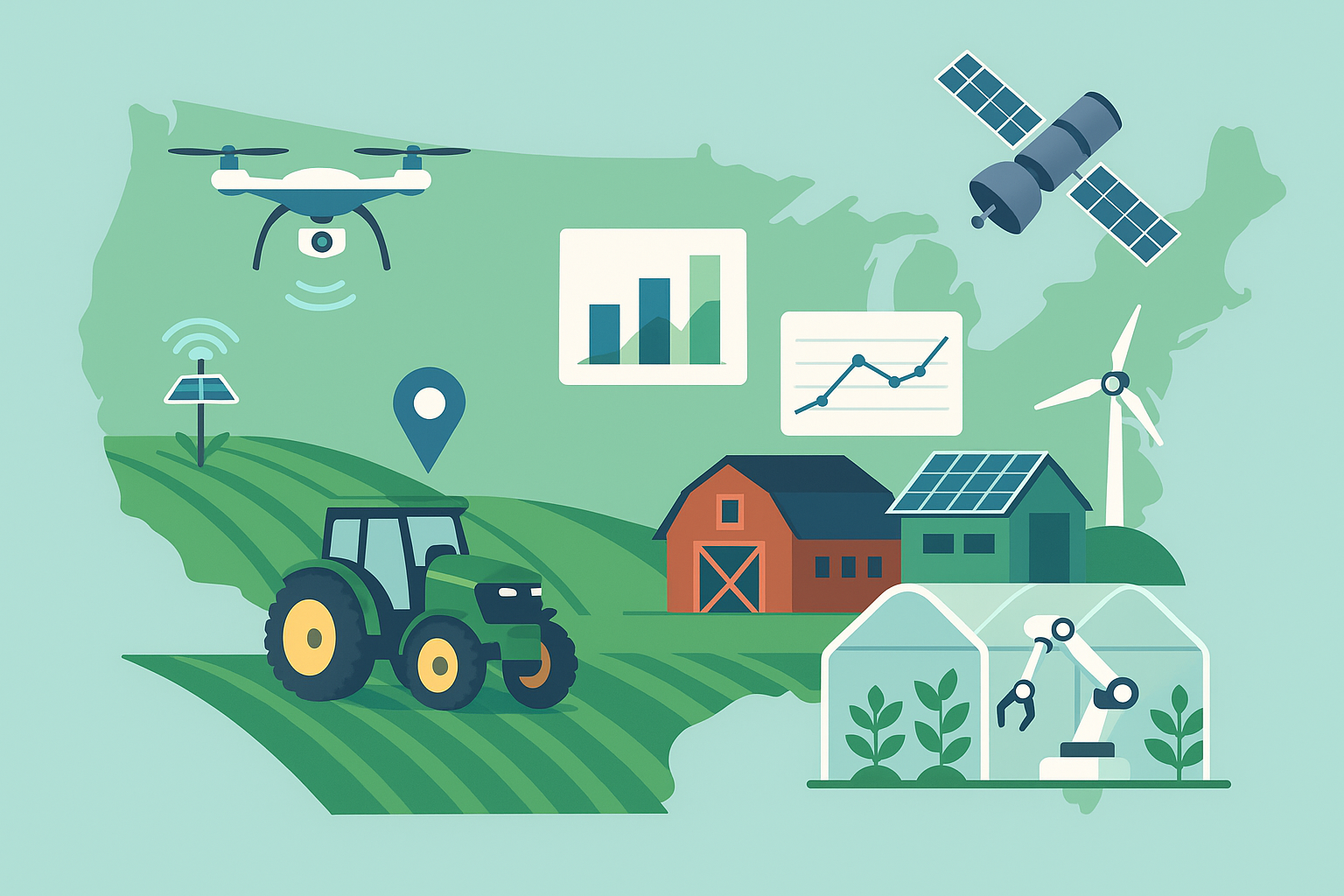
Cold plasma, a room-temperature ionized gas, offers farms residue-free seed priming and sanitization, produce disinfection, plasma-activated water, and on-site nitrate production from air. Benefits include reduced chemicals, water, and logistics; modular, renewable-ready hardware. Success depends on dose control, uniform exposure, energy efficiency, and validation, with smarter, integrated systems improving ROI.

Tech

Quiet Moves, Big Stakes: Incremental Budget and Rulemaking Steps Are Steering U.S. Agriculture This Week

U.S. ag policy saw positioning, not headlines, across budgets, USDA/EPA rules, biofuels credits, labor, water, and interstate standards. Stakeholders pressed for clarity on timelines, funding, and compliance. Expect incremental notices and guidance shaping planting, contracts, and investments; monitor pesticide/ESA, animal health, and trade risks as appropriations and rulemakings advance.

Politics
Behind the Scenes in U.S. Agriculture Policy: Funding Negotiations, Farm Bill Framework, and the Week Ahead

Behind the Scenes in U.S. Agriculture Policy: Funding Negotiations, Farm Bill Framework, and the Week Ahead

U.S. agriculture policy saw quiet but active maneuvering: budget and Farm Bill talks continued under tight constraints, agencies advanced routine programs, and stakeholders pressed priorities on insurance, conservation, nutrition, biofuels, and trade. The coming week may bring outlines, funding signals, and regulatory updates amid fiscal, legal, and weather-related risks.

Reading the Tape: A 24-Hour Cross-Asset Guide to US Macro Drivers

Reading the Tape: A 24-Hour Cross-Asset Guide to US Macro Drivers

Markets hinge on disinflation versus growth resilience, Fed-driven rate repricing, and earnings. Moves in real yields, dollar, and breadth steer equities, credit, and commodities. Near-term catalysts: claims, PMIs, housing, inflation pipeline, Treasury supply, Fed remarks, earnings. Scenarios span soft landing, growth scare, or reflation; watch real yields, breadth, and spreads.

November 18: How a Quiet Date Shaped American Agriculture

November 18: How a Quiet Date Shaped American Agriculture

November 18 has repeatedly reshaped U.S. agriculture: 1883’s “Day of Two Noons” synchronized markets; the 1903 Panama Canal treaty reconfigured trade routes; 2011 appropriations sustained USDA/FDA operations; a 2005 House vote foreshadowed program trims. Seasonally, mid‑November marks harvest wrap‑ups, winter stewardship, and shifting basis and marketing rhythms.

Biodegradable Farm Sensors Deliver Season-Long Data Without e‑Waste

Biodegradable Farm Sensors Deliver Season-Long Data Without e‑Waste

Biodegradable farm sensors deliver season-long data on moisture, salinity, nitrate, temperature, and pH, then dissolve, avoiding e‑waste and retrieval labor. Built from cellulose, silk, and safe metals, they use ultra‑low power and LPWAN. Trials show irrigation and nitrogen gains; limits include calibration drift, power, soil variability, and evolving standards.

U.S. Ag Policy This Week: Farm Bill Fault Lines, Funding Uncertainty, and Regulatory Signals Shaping 2026 Plans

U.S. Ag Policy This Week: Farm Bill Fault Lines, Funding Uncertainty, and Regulatory Signals Shaping 2026 Plans

U.S. agriculture policy remained focused on funding stability and farm bill negotiations, with debates over crop insurance, conservation, commodity supports and SNAP. Agencies advanced pesticide-ESA integration, labor and competition rules. States and courts added pressure. Producers should watch appropriations, USDA/EPA notices, labor guidance, and trade signals shaping 2026 planning.

Week Ahead: Mid-Month Data and Treasury Supply to Steer Rates, Risk Sentiment, and Soft-Landing Odds

Week Ahead: Mid-Month Data and Treasury Supply to Steer Rates, Risk Sentiment, and Soft-Landing Odds

With thin weekend liquidity, markets await mid-month catalysts: housing data, jobless claims, PMIs, Fed minutes, and Treasury auctions. Investors weigh consumer resilience, disinflation breadth, policy timing, and term premium dynamics. Rates volatility will steer cross-asset moves, with equity breadth, credit spreads, and auction results signaling soft-landing odds.

The November 17 Effect: How a Single Date Keeps Reshaping U.S. Agriculture

The November 17 Effect: How a Single Date Keeps Reshaping U.S. Agriculture

November 17 has repeatedly influenced U.S. agriculture: the House’s 1993 NAFTA vote integrated North American farm trade; Suez Canal’s 1869 opening reshaped grain competition; a 1995 shutdown disrupted USDA services; 2017 launched Farm-City Week; and Congress’s 1800 debut foreshadowed farm policy—together shaping markets, logistics, planning, and prices.

U.S. Agriculture Policy Brief: Funding Standoff, Farm Bill Negotiations, and a 7‑Day Watchlist

U.S. Agriculture Policy Brief: Funding Standoff, Farm Bill Negotiations, and a 7‑Day Watchlist

U.S. ag policy saw positioning, not decisions: farm bill funding debates, stopgap appropriations, H‑2A wage rules, biofuels access, trade frictions, disease surveillance, pesticide-ESA compliance, competition rules, and dairy pricing reviews. Uncertainty impacts 2025 budgets, labor, and risk management; watch for near-term texts, dockets, and guidance that shape planting and marketing.