Software & Web Development

Data Science & Robotics Development

Calc LLC provide high quality services at very competitive rate

Early May 2026 U.S. Ag Weather Outlook and Field Guidance

Early May 2026 U.S. Ag Weather Outlook and Field Guidance

Early May U.S. ag weather remains variable: scattered, brief storms across Plains, Corn Belt, and Mid-South amid warm, humid South; mostly dry California and Desert Southwest; periodic light precip Pacific Northwest. Expect alternating fieldwork windows with breezy days; localized severe, flooding, and fire risks; monitor disease, irrigation, and heat stress.

Weather
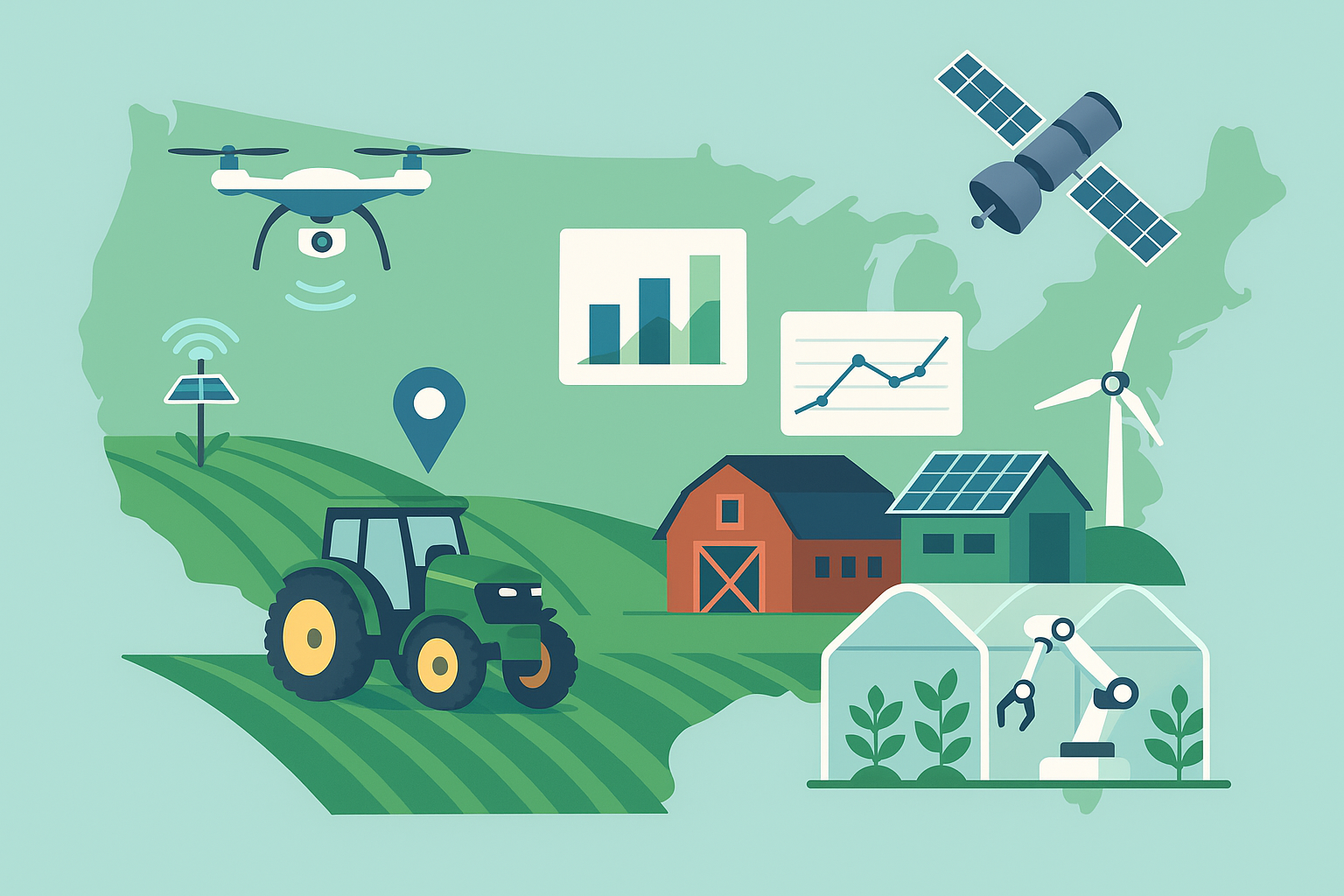
Cold Plasma Comes to the Farm: Cleaner Seeds, Safer Produce, and Nitrogen from Air

Cold plasma, a room-temperature ionized gas, offers farms residue-free seed priming and sanitization, produce disinfection, plasma-activated water, and on-site nitrate production from air. Benefits include reduced chemicals, water, and logistics; modular, renewable-ready hardware. Success depends on dose control, uniform exposure, energy efficiency, and validation, with smarter, integrated systems improving ROI.

Tech

Quiet Moves, Big Stakes: Incremental Budget and Rulemaking Steps Are Steering U.S. Agriculture This Week

U.S. ag policy saw positioning, not headlines, across budgets, USDA/EPA rules, biofuels credits, labor, water, and interstate standards. Stakeholders pressed for clarity on timelines, funding, and compliance. Expect incremental notices and guidance shaping planting, contracts, and investments; monitor pesticide/ESA, animal health, and trade risks as appropriations and rulemakings advance.

Politics
US Macro & Markets: Jackson Hole Recap and Week Ahead — PCE, GDP, Durable Goods, Treasury Auctions (Aug 25–31, 2025)

US Macro & Markets: Jackson Hole Recap and Week Ahead — PCE, GDP, Durable Goods, Treasury Auctions (Aug 25–31, 2025)

With US cash markets closed, the weekend was quiet as investors parsed Jackson Hole signals on the Fed’s path. The coming week is data-heavy: July PCE inflation and personal spending, Q2 GDP (second estimate), July durable goods, August Consumer Confidence, weekly jobless claims, and mid-week Treasury auctions. Key risks include the Fed’s reaction to inflation progress, labor-market cooling, hurricane-season energy volatility, and thin month-end liquidity. Market focus: whether data sustain a soft-landing. Hotter PCE could lift yields and the dollar; cooler prints support duration and risk assets. Watch curves, breakevens, the dollar, oil, and credit spreads.

August 24 in U.S. Agriculture: Storms, Shocks, and Safeguards

August 24 in U.S. Agriculture: Storms, Shocks, and Safeguards

On August 24, U.S. agriculture has repeatedly hit turning points: 1992’s Hurricane Andrew devastated South Florida’s nurseries and tropical fruit sector, spurring insurance uptake and policy reforms; 1857’s Ohio Life failure triggered the Panic, collapsing grain prices and credit; 1912’s creation of the Alaska Territory enabled research and settlement that seeded today’s niche northern farming; and 2010’s massive Salmonella-linked egg recall tightened biosecurity and traceability. Together, these episodes highlight how weather, finance, governance, and food safety shape farm resilience.

On This Day in U.S. Agriculture: Andrew’s Landfall, the 1857 Panic, and the Patent Office Spared

On This Day in U.S. Agriculture: Andrew’s Landfall, the 1857 Panic, and the Patent Office Spared

On August 24, pivotal moments reshaped U.S. agriculture: in 1992, Hurricane Andrew ravaged South Florida’s nurseries, tropical fruit, and vegetables, spurring stronger structures, risk management, and insurance reforms; in 1857, the Ohio Life collapse triggered a panic that crushed grain prices and credit, tying farm fortunes to finance and trade; and in 1814, the Patent Office’s survival preserved agricultural innovation. Together, they underscore today’s priorities—climate resilience, financial preparedness, and sustained R&D—to protect production, markets, and labor across vulnerable specialty-crop and commodity regions.

U.S. Corn Market – 24‑Hour Summary & 7‑Day Outlook

U.S. Corn Market – 24‑Hour Summary & 7‑Day Outlook

U.S. corn futures were mixed over the last 24 hours, with September contracts closing at $3.83/bu and December slightly higher at $4.06½/bu. Prices remain under pressure from record projected production of 16.7 billion bushels, though hot, dry Midwest weather could limit yield gains. Export demand is steady but faces competition from Brazil’s large crop. Market sentiment is cautious, with funds holding significant short positions. Over the next week, weather will be the key driver; continued dryness could support prices, while improved rainfall may push futures lower.

U.S. Ag Weather: Southern Heat, Plains/East Storms, Dry West — 24-Hour Snapshot & 7-Day Outlook

U.S. Ag Weather: Southern Heat, Plains/East Storms, Dry West — 24-Hour Snapshot & 7-Day Outlook

Late-summer U.S. ag weather features persistent heat across the Southern Plains, Delta, Southeast, California’s Central Valley and Southwest deserts, while scattered thunderstorms along frontal zones affect the Plains, Midwest, Northeast, and daily sea-breeze/monsoon convection hits the Southeast and Four Corners. The West stays largely dry. Expect variable fieldwork windows, localized heavy rain, gusty winds, and brief flooding; disease pressure rises in corn/soy and cotton/peanuts. Risks include heat stress, episodic wind/hail, and intermittent wildfire smoke. Plan irrigation for high ET in the West, target post-frontal windows, protect livestock, and monitor National Hurricane Center updates.

August 24 in U.S. Agriculture: Hurricane Andrew, the Salad Bowl Strike, and the Napa Quake

August 24 in U.S. Agriculture: Hurricane Andrew, the Salad Bowl Strike, and the Napa Quake

On August 24, U.S. agriculture has faced pivotal shocks and shifts: Hurricane Andrew (1992) devastated South Florida’s nurseries and tropical fruit sector, prompting stronger building codes and risk management; the Salad Bowl strike (1970) ignited in Salinas, driving boycotts and reforms that culminated in California’s Agricultural Labor Relations Act; and the South Napa earthquake (2014) damaged winery infrastructure, spurring seismic upgrades and continuity planning. Together, these moments underscore resilience—hardening critical infrastructure, centering fair labor, and layering insurance, diversification, and contingency tools to navigate compounding climate and market risks.

USA Vegetable Market Outlook (Aug 22–28): Plentiful Summer Veg, Onions Easing, Potatoes Ramping, Tropical Watch Before Labor Day

USA Vegetable Market Outlook (Aug 22–28): Plentiful Summer Veg, Onions Easing, Potatoes Ramping, Tropical Watch Before Labor Day

Late-August U.S. vegetable supplies are seasonally plentiful, led by California’s Central Coast and the Midwest/East. New-crop Northwest onions and early WA/ID potatoes are ramping, easing markets, while tomatoes, peppers, cucumbers, squash, sweet corn, and green beans remain promotable. Leafy greens are steady, though heat can trim quality; tropical systems could disrupt Southeast harvests and freight. Reefer capacity is adequate but may tighten ahead of Labor Day as ads pull volume late week. Buyers: lean into promos on onions and summer veg, manage heat-sensitive items, pre-book capacity, and dual-source near storm zones.

Ag in History - 8/21/1856 - U.S.-Japan Agricultural Trade Roots Began

Ag in History - 8/21/1856 - U.S.-Japan Agricultural Trade Roots Began

On August 21, 1856, Townsend Harris, America’s first consul to Japan, arrived in Shimoda, initiating formal U.S.-Japan trade relations. This pivotal moment opened the door for agricultural exchange, introducing American crops like corn and wheat to Japan while bringing Japanese silk and tea to U.S. markets. The agreement fostered modernization in Japanese farming and expanded global agricultural trade, laying the groundwork for the interconnected food systems we know today.